

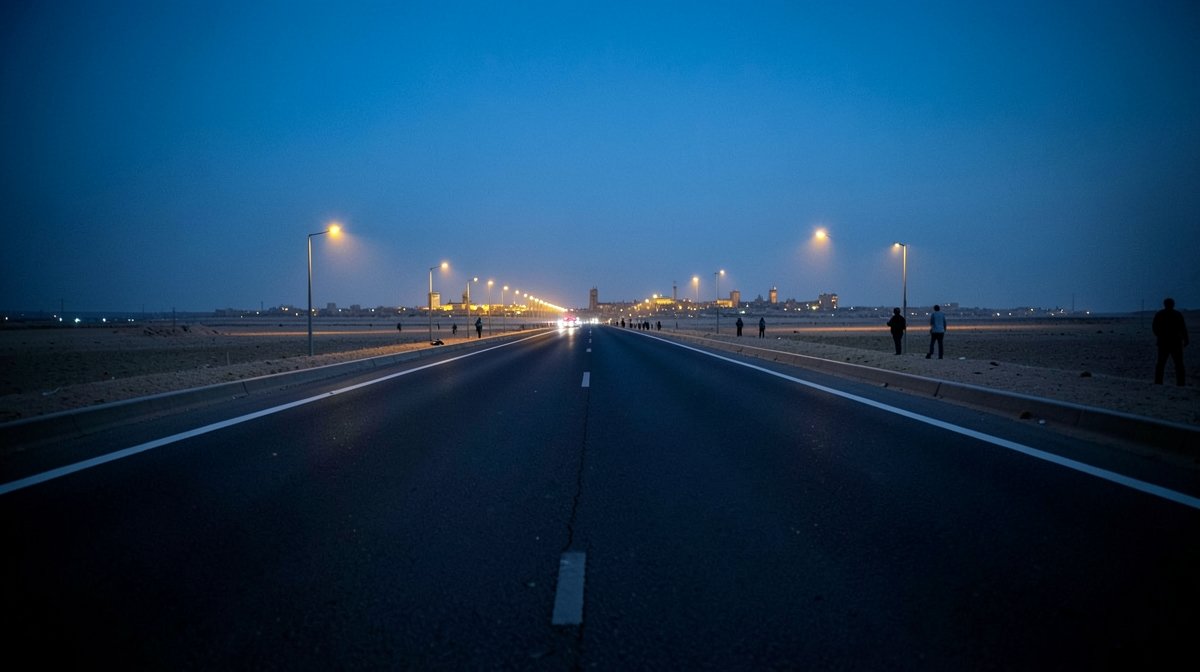
The New York Times reported on October 9, 2026, that days of deadly Houthi strikes have pushed the war in Yemen directly to the edge of Riyadh. The escalating violence demonstrates that the kingdom cannot easily neutralize sophisticated, targeted aerial assaults against its population centers.
Key Takeaways
- Houthi cross-border assaults now directly reach the Saudi capital.
- Sophisticated targeting methods bypass established defensive shields.
- Riyadh faces severe strategic constraints with no simple military remedy.
How Do Expanding Strikes Expose Saudi Security Limits?
Recent strikes expose critical defensive limitations because Houthi forces now operate sophisticated weaponry capable of traveling hundreds of miles to hit precise targets near Riyadh. When projectiles fly across vast desert corridors, radar systems face detection delays, leaving response crews minimal time to track, intercept, and destroy incoming threats.
Long-range strike capabilities alter the balance between offensive investments and defensive costs. An attacker launches relatively cheap guided munitions, while defenders must deploy expensive interceptor missiles to guard sprawling urban sectors. We have found that defending every airspace corridor quickly drains municipal resources and strains defensive stockpiles.
- Strategic threat assessment: Review commercial facility emergency procedures and establish off-site communications redundancy for regional operational centers.
Why Do Metropolitan Centers Face Heightened Air Risks?
Urban hubs face greater risks because concentrated infrastructure creates high-value targets that amplify panic and disrupt international transport. When hostile munitions target airports and metropolitan surroundings, civil aviation halts immediately. That operational disruption causes cascading delays across regional flight networks and damages commercial confidence.
How can civilian transit corridors remain secure under recurring cross-border bombardment? Interceptor batteries stationed around large population centers prioritize government installations and critical utilities, leaving secondary transport hubs exposed. Falling debris from mid-air interceptions also poses lethal hazards to densely populated neighborhoods on the ground.
- Transit route audit: Update corporate travel itineraries to avoid volatile airspace corridors and verify municipal shelter protocols near regional transit hubs.
What Policy Obstacles Restrict Riyadh From Striking Back?
Saudi Arabia faces severe policy constraints because standard retaliatory air operations have failed to dismantle dispersed Houthi command units. Striking launch points inside Yemen rarely prevents future volleys, as mobile crews relocate equipment rapidly into rugged terrain. Escalating military action also invites wider diplomatic scrutiny without guaranteeing safety for Saudi civilians.
Political leaders must balance physical deterrence against international diplomatic commitments. Direct military retaliation risks entangling the kingdom in wider regional confrontations while offering no clear path toward securing borders. Saudi authorities consequently find themselves trapped between ineffective tactical retaliation and vulnerable domestic infrastructure.
- Regional exposure review: Map critical supply dependencies across Gulf distribution hubs to prevent sudden transport disruptions during ongoing hostilities.
FAQ
Why are recent attacks reaching the Saudi capital?
Houthi forces have upgraded their guidance technology and flight ranges, allowing aerial weapons to bypass outlying defenses and travel deep into Saudi territory. These technological refinements bring strikes directly to the capital, turning distant border skirmishes into immediate security threats for metropolitan government and commercial centers.
What makes targeted aerial weapons difficult to counter?
Low-altitude flight profiles and erratic approach angles complicate tracking for conventional ground-based radars. Defenders must identify incoming targets within minutes, calculate interception trajectories, and deploy expensive anti-air missiles. This defensive exchange imposes huge logistical and economic strains on domestic defense networks over prolonged bombardment cycles.
How does this escalation alter regional stability?
Bringing strikes into major metropolitan areas shakes investor confidence, threatens international air traffic, and increases the likelihood of unintended escalation. As diplomatic solutions stall and military remedies prove ineffective, the threat of uncontained conflict across the Arabian Peninsula continues to rise.
As cross-border assaults reach the heart of Saudi Arabia, the strategic equation across the region shifts fundamentally. Without practical military solutions or dependable defensive perimeters, leaders must confront persistent security threats against critical metropolitan hubs.
Stay informed with accurate, up-to-date global news coverage.
Sources
- Days of Deadly Houthi Attacks Show Saudi Arabia’s Vulnerabilities (NYT > World News): https://www.nytimes.com/2026/10/09/world/middleeast/yemen-houthi-attack-saudi-arabia-airport-riyadh.html