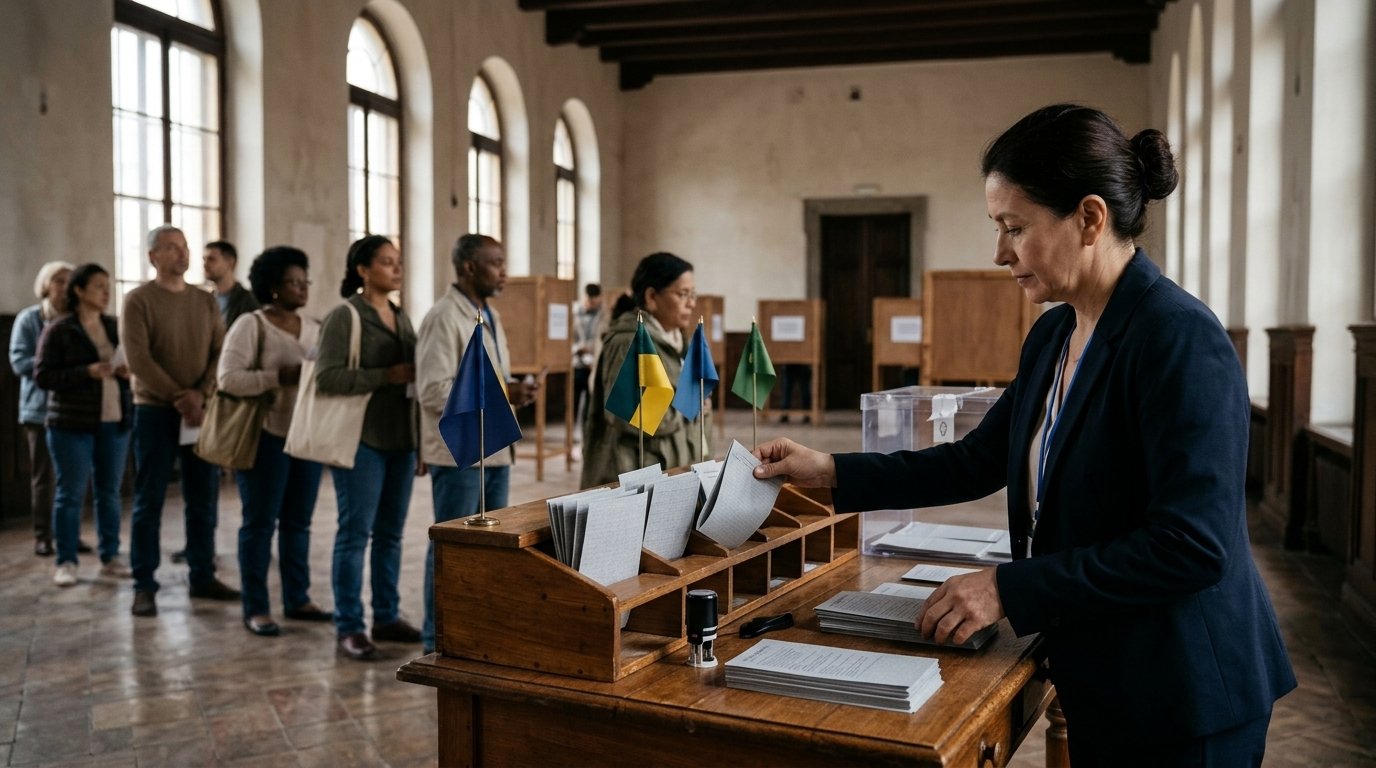
President Luiz Inácio Lula da Silva won a narrow presidential race against challenger Flávio Bolsonaro, The New York Times reported. The contest pitted the sitting president against the eldest son of the right-wing leader whom Lula defeated four years ago. This tight outcome confirms Lula's mandate while revealing deep political divisions.
Key Takeaways
- Luiz Inácio Lula da Silva defeated challenger Flávio Bolsonaro in a close presidential vote.
- The New York Times reported that the challenger is the eldest son of the right-wing leader beaten four years ago.
- The narrow margin signals ongoing political division across national institutions.
How Did the Presidential Contest Unfold Between the Candidates?
Luiz Inácio Lula da Silva secured victory by outpolling Flávio Bolsonaro in a close presidential race, The New York Times reported. The sitting president defended his office by keeping a slender lead over his rival. This slim margin shows that voters remain sharply divided between competing political visions.
Voters faced a stark choice between the incumbent administration and a conservative family dynasty. Lula emphasized his record in office, while Flávio Bolsonaro sought to reclaim the presidency four years after his father lost power. That dynamic turned the ballot into a direct referendum on executive leadership.
Because the margin separating the candidates was small, every vote carried weight. The competitive outcome demonstrates that neither faction holds an absolute majority. How will this divided public respond as the administration begins its next term?
- Track official tallies: Check certified electoral records to evaluate vote distribution across different regions.
Why Did the Bolsonaro Family Lineage Define the Campaign?
Flávio Bolsonaro entered the presidential election as the eldest son of the right-wing leader whom Lula defeated four years ago, The New York Times reported. That direct family connection turned the campaign into a rematch, giving conservatives an established standard-bearer to challenge the incumbent head of state.
Family ties gave Flávio Bolsonaro immediate name recognition and a loyal conservative base. That inheritance helped the challenger run a competitive race without spending years establishing national prominence. Yet it also tied his campaign directly to the previous administration that voters rejected four years earlier.
In our experience, family-led candidacies reinforce partisan loyalties rather than build broad consensus. Lula highlighted that contrast by pointing to his previous victory over the elder conservative leader. The close result confirms that the Bolsonaro family maintains considerable political influence.
- Monitor political alliances: Follow legislative coalitions to see how conservative factions align behind family leadership.
What Does a Narrow Victory Mean for Future Governance?
A narrow victory requires Luiz Inácio Lula da Silva to govern through negotiation rather than sweeping decrees, according to analysis following The New York Times report. The tight finish leaves the president with a contested mandate, making cooperation with legislative rivals essential to advance major policy goals.
Slim electoral margins limit an executive's power to pass contested measures without consensus. Because many voters backed Flávio Bolsonaro, the administration cannot ignore conservative priorities without facing stiff resistance. Lula must therefore assemble diverse coalitions to pass critical legislation.
Narrow victories also encourage opposition lawmakers to contest administrative decisions at every turn. When an incumbent wins by a thin edge, opponents remain energized for upcoming legislative sessions. That continuous pressure will test the president's ability to maintain governing stability.
- Assess legislative votes: Review parliamentary roll calls to gauge how effectively the president passes critical policy measures.
FAQ
Who won the recent presidential election in Brazil?
Luiz Inácio Lula da Silva won the presidential election, defeating challenger Flávio Bolsonaro in a close national vote, as reported by The New York Times. The victory secured another term for the sitting president after a determined conservative challenge.
What is the relationship between Flávio Bolsonaro and the former president?
Flávio Bolsonaro is the eldest son of the right-wing leader whom Luiz Inácio Lula da Silva defeated four years ago, according to The New York Times. He ran as the principal challenger seeking to return his conservative movement to executive power.
Why is the margin of victory significant for the country?
The victory was exceptionally narrow, The New York Times reported, showing that voters remain deeply divided. A tight outcome prevents executive dominance, requiring the administration to negotiate with opposition lawmakers to pass laws and sustain political stability across government institutions.
President Luiz Inácio Lula da Silva now prepares to lead a divided country after defeating Flávio Bolsonaro. The coming months will show whether the administration can build sufficient legislative support to enact its agenda. Observers will watch closely to see how executive power operates under such tight margins.
Stay informed with accurate, up-to-date global news coverage.
Sources
- What to Know About Brazil’s Election as Bolsonaro Faces Off With Lula (NYT > World News): https://www.nytimes.com/2026/10/25/world/americas/brazil-election-president-lula-bolsonaro.html