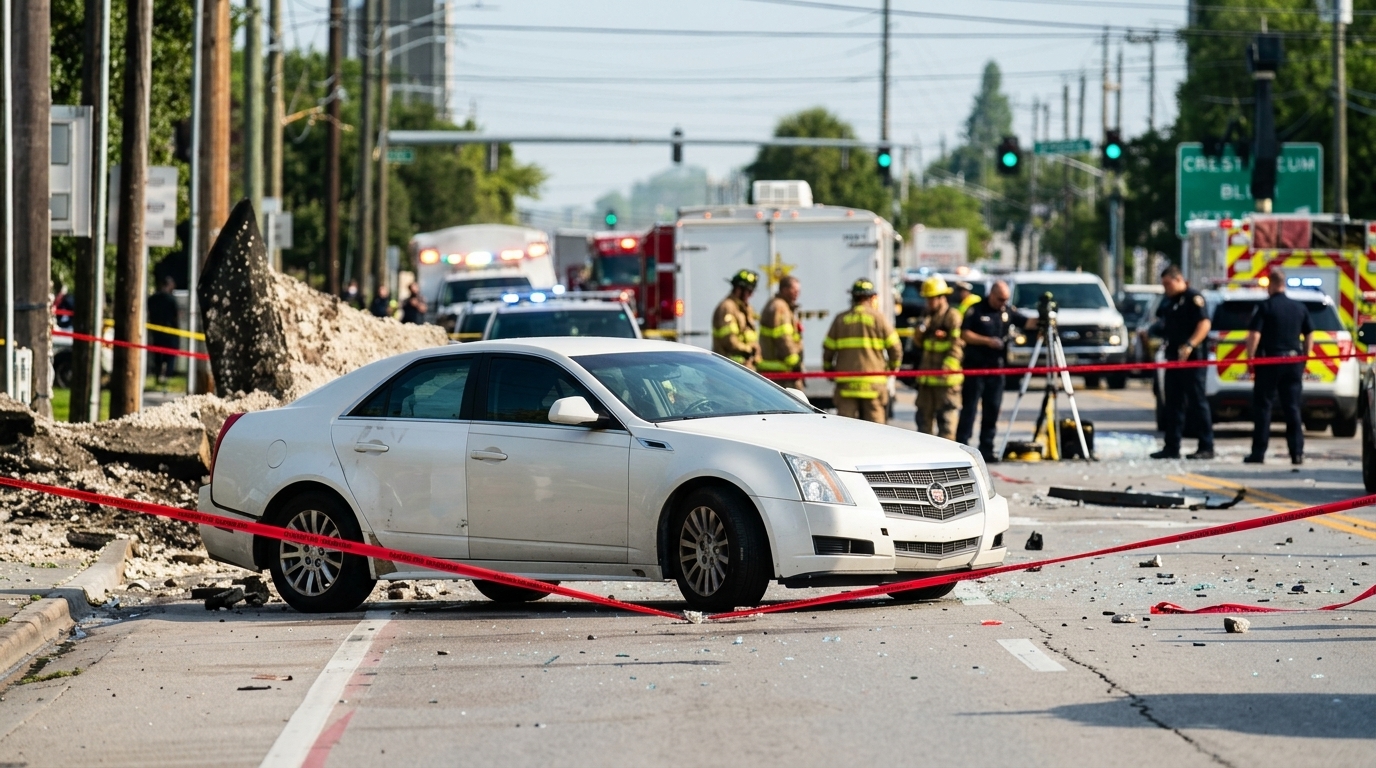
Nine people died when a small aircraft slammed into a Florida street near the Mar-a-Lago resort. Federal transportation officials immediately began reviewing the scene to determine why the flight ended in catastrophic failure on a public roadway. BBC News confirmed the death toll as emergency crews secured the surrounding area.
Key Takeaways
- Nine fatalities occurred after a small jet crashed on a public Florida street.
- Transportation Secretary Sean Duffy formally described the incident as a horrific tragedy.
- The crash site sat in close proximity to President Trump's Mar-a-Lago property.
- Federal authorities are evaluating flight conditions and ground safety protocols.
What Happened During the Florida Street Crash?
A small jet plunged directly onto a municipal street in Florida, killing nine people on impact and scattering wreckage across the thoroughfare. The incident occurred near President Trump's Mar-a-Lago resort, drawing immediate local emergency services and federal oversight to contain ground fires and secure perimeter integrity.
Local emergency teams cordoned off multiple blocks to treat the scene as an active recovery zone. When an aircraft comes down in a populated corridor, first responders must immediately suppress aviation fuel fires and prevent secondary structural damage. In our experience, catastrophic impacts on asphalt roads also damage municipal utilities and create serious hazards for nearby residents.
How do emergency personnel manage such high-risk crash perimeters? First responders establish tiered isolation zones that keep bystanders away while preserving structural flight fragments for investigators. Officials must treat every component as critical physical evidence to reconstruct the flight's final moments.
- Perimeter monitoring: Track local municipal transit updates to bypass closed road corridors during active aviation recovery operations.
How Are Federal Transportation Officials Responding?
Transportation Secretary Sean Duffy responded immediately to the crash, publicly characterizing the incident as a horrific tragedy while directing federal resources toward the site. Federal investigators focus on flight operational data, maintenance histories, and atmospheric conditions along the plane's planned flight path to identify the point of structural or operational failure.
When a fatal small aircraft disaster occurs, federal investigators coordinate directly with local police and municipal leaders. Teams methodically photograph debris patterns, inspect engine turbines, and gather air traffic communication recordings. That systematic process isolates mechanical breakdowns from environmental factors or pilot disorientation.
We've found that early official statements focus on securing evidence before public speculation spreads. Investigators analyze flight manifests and maintenance records to determine how the aircraft functioned leading up to the descent. This methodical inquiry prevents premature conclusions while authorities verify physical facts.
- Regulatory tracking: Monitor official agency briefing releases to verify technical findings before relying on unconfirmed social media reports.
What Does This Disaster Mean for Regional Air Safety?
The disaster brings renewed scrutiny to small jet operations in crowded suburban airspaces, particularly around high-profile locations like Mar-a-Lago. Federal aviation officials routinely review low-altitude flight paths near sensitive flight restrictions to protect residential neighborhoods and surface transportation routes from catastrophic mechanical failures.
Dense ground infrastructure leaves pilots with almost no survivable options when critical propulsion failure strikes during low-altitude maneuvers. A plane forced onto a roadway risks collisions with vehicles, utility poles, and residential structures. That reality forces regulators to re-evaluate approach corridors and emergency response contingencies across busy coastal regions.
Do regional transit planners need stricter buffers between suburban corridors and general aviation corridors? Planners must frequently review how close transit routes sit to approach vectors. Enhancing emergency landing training and tracking high-density corridors helps mitigate future ground-level disasters.
- Safety awareness: Review municipal emergency notification settings on your mobile device to receive immediate alerts regarding local transit disruptions.
FAQ
How many casualties were confirmed in the Florida plane crash?
BBC News reported that nine people died when the small jet came down on the Florida street. Emergency responders verified the fatalities at the scene while working to extinguish fires and secure the surrounding roadway.
Who addressed the incident on behalf of the federal government?
Transportation Secretary Sean Duffy addressed the disaster directly, calling the crash a horrific tragedy. His department oversees federal transit safety oversight and supports investigators as they examine the causes behind the catastrophic impact.
Where did the small aircraft crash occur?
The aircraft crashed on a public street in Florida in close physical proximity to President Trump's Mar-a-Lago resort. Local authorities established road closures around the neighborhood to facilitate recovery operations and federal evidence collection.
Federal investigators will continue piecing together technical evidence from the Florida crash site to establish the sequence of events. Understanding the mechanical and environmental factors behind this loss of life will help shape future general aviation oversight across metropolitan flight corridors.
Stay informed with accurate, up-to-date global news coverage.
Sources
- Nine killed as small jet crashes on Florida street (BBC News): https://www.bbc.co.uk/news/articles/cm369yy7lw73o?at_medium=RSS&at_campaign=rss