

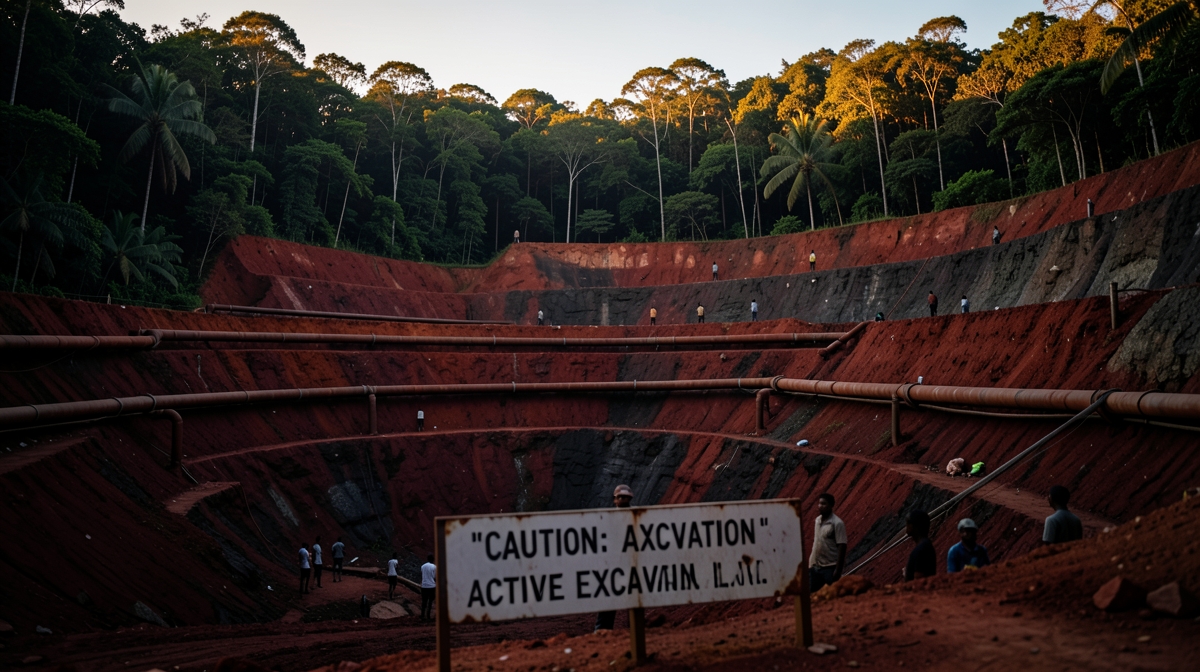
Four decades after shutting down amidst a devastating civil war, the Panguna copper mine on Bougainville is back in discussions for reopening. Surging worldwide demand for copper is driving this fresh push, as local authorities weigh whether mineral revenues can finance a new independent nation. Can economic ambition truly outweigh lingering historical trauma?
Key Takeaways
- Panguna copper mine remains shuttered after closing forty years ago during local conflict.
- Soaring global copper demand creates intense pressure to restart extraction on Bougainville.
- Revenue from mining could finance statehood, yet local residents fear renewed instability.
Why Is Bougainville Reconsidering the Panguna Mine?
The prospect of national sovereignty requires substantial financial revenue, and Panguna represents Bougainville's most valuable untapped asset. Leaders view mineral reserves as the practical foundation to fund public institutions for an emerging state, especially while rising international copper demand inflates potential extraction profits and attracts renewed foreign commercial attention.
According to reporting from The New York Times, the site has remained dormant for four decades. Extraction halted when local grievances over environmental damage and unequal wealth sharing triggered armed conflict. Reopening the site now offers fiscal independence, but leaders face the dilemma of relying on the very asset that divided them.
- Monitor sovereign finance: Track whether Bougainville establishes independent revenue streams before granting formal extraction permits.
What Risks Threaten the Reopening Effort?
Resuming operations risks reigniting historical grievances over environmental destruction and resource distribution that previously shattered the island. Deep-seated local opposition persists because past extraction caused widespread pollution, leaving communities distrustful of external promises and fearful that sudden wealth will once again destabilize fragile peace agreements among rival regional factions.
Mining operations fundamentally alter local ecosystems by generating massive waste runoff that contaminates nearby river systems. In our experience, unresolved disputes over land tenure amplify social friction when heavy equipment enters contested territories. Without unanimous communal consent, pushing ahead risks sparking localized protests that could escalate into broader civil violence.
- Assess local consensus: Watch for formal community agreements that address environmental liabilities prior to heavy machinery arriving on site.
How Does Surging Global Copper Demand Drive the Push?
Accelerating worldwide electrification and clean energy manufacturing have triggered soaring demand for raw copper, creating rare bargaining power for mineral-rich territories. High global market valuations tempt regional leaders to monetize dormant reserves quickly, ensuring that previously uneconomic or politically complex sites like Panguna attract serious interest from major international mining syndicates.
Rising commodity prices transform long-abandoned deposits into commercially viable targets despite massive rehabilitation overheads. The New York Times notes that heightened market demand has directly reignited interest in Bougainville after forty years of inactivity. However, high prices also compress political decision timelines, increasing the temptation to cut consultative corners.
- Track commodity valuations: Follow copper pricing trends to gauge how aggressively external investors push for access to dormant deposits.
FAQ
Why did Panguna mine shut down four decades ago?
Local protests against severe environmental degradation and inequitable revenue distribution escalated into a full-scale civil war on Bougainville. The prolonged armed conflict forced the mine operator to abandon extraction operations entirely, leaving the massive open-pit facility idle and unmaintained for forty continuous years.
How could the mine support Bougainville's bid for statehood?
An independent nation needs reliable tax revenue and export earnings to support administrative operations and basic public services. Mineral wealth from Panguna represents the island's primary economic engine, offering the fiscal capacity necessary to sustain sovereign governance without depending permanently on external development aid.
What concerns do local communities hold regarding the restart?
Residents worry that reopening the pit will bring back severe ecological damage and toxic tailings that once ruined surrounding valleys. Moreover, memories of historical violence leave citizens anxious that sudden mineral wealth will reignite factional conflicts before the government establishes secure regulatory safeguards.
Balancing the urgent need for national revenue against the delicate peace forged over decades will determine Bougainville's trajectory. If authorities prioritize transparent local consultations over rapid financial gains, they can preserve stability while building self-reliance.
Stay informed with accurate, up-to-date global news coverage.
Sources
- This Copper Mine Led to a Civil War. Can Reopening It Fund a New Nation? (NYT > World News): https://www.nytimes.com/2026/10/13/world/asia/bougainville-island-panguna-mine-pollution-reopening.html