
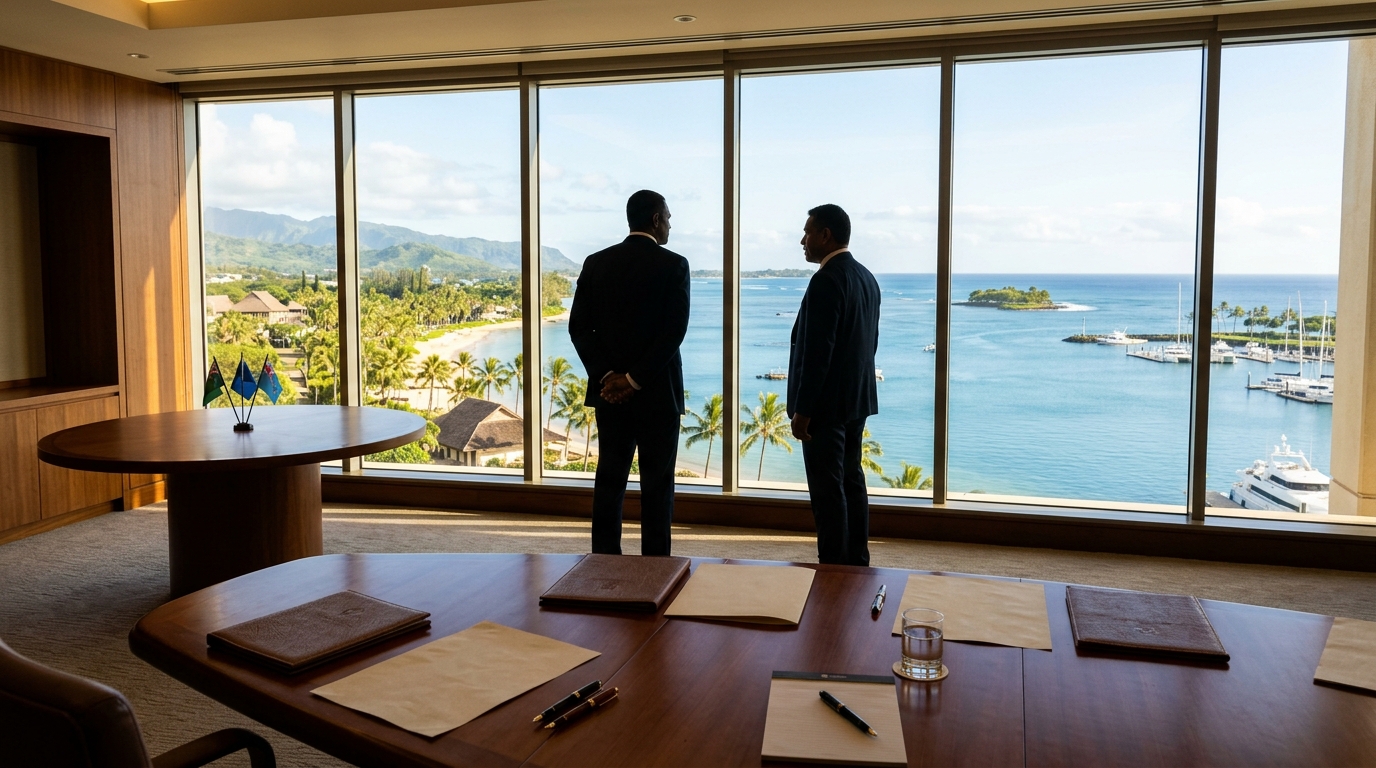
Solomon Islands leader Matthew Wale terminated the country's security pact with China to enter a formal treaty with Australia. The diplomatic reversal blocks Beijing from building military bases on the Pacific nation, reshaping defensive alignments across the region.
Key Takeaways
- Solomon Islands leader Matthew Wale confirmed the nation will scrap its security pact with China.
- A newly signed treaty with Australia explicitly precludes foreign powers from establishing military bases.
- The strategic diplomatic realignment resolves regional uncertainty created by the controversial 2022 Beijing pact.
Why Did Solomon Islands Cancel the China Security Pact?
Solomon Islands cancelled its security arrangement with Beijing to restore diplomatic stability and eliminate growing friction across the Pacific. Leader Matthew Wale stated that his country would no longer serve as a point of regional uncertainty, opting instead to anchor national protection within a transparent defense partnership alongside Australia.
Pacific neighbors grew alarmed after the 2022 Solomon Islands agreement with China raised fears that Beijing would establish military installations on the island, as The New York Times reported. By ending that accord, the government directly addresses allied worries over strategic expansion. How will neighboring governments adapt their own defense policies in response?
- Monitor diplomatic declarations: Track official government statements from Pacific island leaders to identify early realignments in regional defense commitments.
What Does the New Treaty With Australia Change?
The new treaty with Australia establishes Canberra as the primary security partner for Solomon Islands while outlawing foreign military outposts. According to The New York Times, this fresh bilateral accord strictly precludes Beijing from building armed bases on the territory, closing off external attempts to project military power.
Replacing the contentious Chinese arrangement with an Australian treaty shifts operational training, policing support, and maritime defense back toward established partners. This binding guarantee stabilizes local security operations without exposing the island nation to contested geopolitical rivalries between major global superpowers.
- Review security terms: Examine bilateral security treaty provisions to confirm whether mutual agreements explicitly prohibit foreign troop garrisons and bases.
How Does This Defense Shift Reshape Regional Stability?
The defense shift eliminates an urgent strategic risk that unsettled Pacific nations for years. As BBC News reported, terminating the controversial agreement with China relieves diplomatic pressure across Oceania, enabling Solomon Islands to cooperate closely with traditional neighbors rather than facilitating separate security spheres that complicate collective defense.
Canberra gains a reliable partner, while Solomon Islands secures dependable emergency assistance during civil unrest. In our experience, clear legal pacts lower regional tensions and prevent outside powers from exploiting domestic vulnerabilities. How will competing powers adjust to this strategic reality over time?
- Assess regional accords: Map allied defense agreements across Oceania to spot shifts in strategic access and base restrictions.
FAQ
What was the issue with the 2022 China agreement?
The 2022 agreement with China triggered extensive alarm among Pacific neighbors and Western allies, as The New York Times reported. Observers warned that the ambiguous security language could allow Beijing to station armed forces and construct permanent military bases on the islands, disrupting regional maritime stability.
Who announced the decision to change security partners?
Solomon Islands leader Matthew Wale announced the transition away from Beijing, as reported by BBC News. He declared that his nation would no longer remain a point of regional uncertainty, committing instead to a binding security treaty with Australia that guarantees domestic and territorial protection.
Does the Australian treaty allow foreign military bases?
No, the new accord with Australia strictly forbids foreign military installations on Solomon Islands territory, according to The New York Times. The treaty formally precludes China from constructing naval or military infrastructure on the Pacific island, locking in defensive guarantees through Canberra instead.
Diplomatic choices in Honiara demonstrate how regional treaties restore stability when geopolitical competition mounts. Matthew Wale's administration has replaced lingering defense ambiguities with a concrete partnership that safeguards the Pacific.
Stay informed with accurate, up-to-date global news coverage.
Sources
- Solomon Islands ends controversial security pact with China for Australian treaty (BBC News): https://www.bbc.co.uk/news/articles/ckdd1z2gvlgno?at_medium=RSS&at_campaign=rss