A tanker strike off the coast of the United Arab Emirates released crude oil directly into open waters, sending slicks toward nearby shorelines. As reported by BBC News, satellite imagery reveals oil spreading for miles along coastal beaches, creating an immediate ecological crisis for marine wildlife and vulnerable coastal ecosystems.
Key Takeaways
- A tanker strike caused a severe oil spill washing up on United Arab Emirates shores.
- Satellite imagery confirms crude slicks spreading for miles across coastal waters.
- BBC News reports direct environmental threats to vulnerable regional marine wildlife.
- Containment teams must track surface dispersion to protect sensitive coastal habitats.
How Far Has the Oil Slick Spread Across Regional Waters?
Satellite imagery shows crude slicks spreading across miles of ocean surface toward the shorelines of the United Arab Emirates. BBC News reported that the surface contamination stretches across extensive coastal stretches, coating beaches with thick petroleum residues that endanger nearshore marine zones and local maritime routes.
When crude discharges into open sea, surface currents and coastal winds push the floating oil toward land. Lighter petroleum compounds evaporate into the air, while heavier residues congeal into sticky tar mats that coat coastal sands. This physical contamination smothers intertidal zones and halts normal tidal exchange.
Can coastal containment barriers halt this spread before it coats deeper shoreline zones? Skimmers and floating booms struggle when open sea winds push slicks faster than crews can position protective gear. As wave action breaks slicks into smaller patches, tracking floating petroleum requires continuous aerial and orbital surveillance.
- Track dispersion vectors: Monitor commercial maritime radar and environmental satellite feeds for updated coastal trajectory maps.
Why Does Coastal Petroleum Contamination Threaten Marine Life?
Petroleum residue coats marine organisms directly, destroying natural thermal insulation and introducing toxic chemical compounds into local food chains. BBC News confirmed that the spreading spill directly threatens regional marine wildlife across affected shores, where coastal species face immediate smothering and acute exposure to floating hydrocarbons.
Floating crude clings to seabird plumage and mammal fur, preventing natural buoyancy and waterproofing. Fish ingest microscopic oil droplets that damage gills and compromise organ function. Meanwhile, intertidal invertebrates suffocate under heavy petroleum deposits that block oxygen exchange along the sand and rocky shallows.
Cleanup crews must act quickly to remove floating crude before sinking particles settle into coastal sea beds. Once heavy oil binds with sediment particles, the contamination persists in underwater layers for years, disrupting fish spawning grounds and destabilizing local benthic communities long after surface waters appear clear.
- Inspect coastal habitats: Check local environmental protection alerts for shoreline access restrictions and wildlife rescue coordination points.
What Steps Follow a Tanker Incident to Contain Ecological Damage?
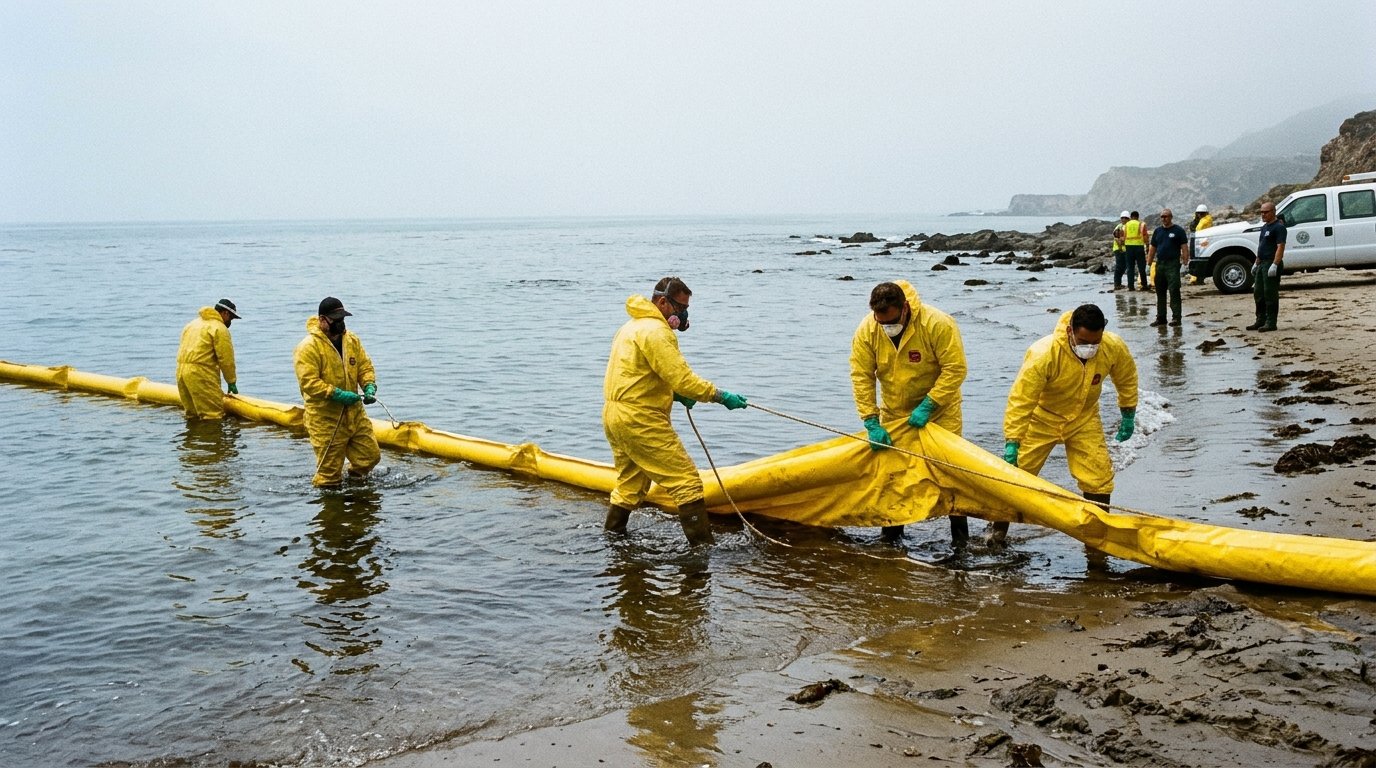
Emergency response protocols require immediate deployment of floating containment booms, mechanical skimmers, and dispersants around the stricken vessel. Environmental agencies must isolate the source of the leak, trap surface crude before waves disperse it, and direct contaminated currents away from sensitive mangrove habitats and coral reefs.
First responders deploy inflatable booms to encircle concentrated slicks, preventing winds from driving oil onto sandy beaches. Vacuum skimmers pump surface petroleum into temporary collection barges, separating seawater from crude. At the same time, specialized wildlife rehabilitation centers prepare intake stations to clean contaminated sea birds and turtles.
Remediation teams continue testing beach sand and coastal water quality to track volatile organic compounds. Authorities coordinate with salvage engineers to stabilize the damaged tanker hull, preventing secondary ruptures that could release additional petroleum into regional shipping lanes.
- Verify water safety: Review municipal marine notices before using coastal waters or consuming locally caught seafood.
FAQ
What caused the oil spill on UAE beaches?
A strike on an oil tanker released petroleum into surrounding waters, causing thick slicks to drift ashore. As reported by BBC News, satellite pictures confirm that the resulting spill has spread for miles along coastal beaches, threatening coastal ecosystems and wildlife.
Which environmental assets face the highest risk?
Coastal wildlife, shallow intertidal zones, and marine fauna face direct harm from the floating oil. The petroleum coats animals, impairs their respiration, and introduces toxic compounds into the food web, creating long-term risks for sensitive coastal nurseries and regional marine biodiversity.
How do authorities monitor spreading coastal slicks?
Monitoring teams rely on orbital satellite imagery and aerial reconnaissance flights to track the position of oil slicks. These observations reveal slick trajectories, allowing maritime response teams to position protective floating booms and mechanical skimmers ahead of incoming petroleum patches.
Protecting vulnerable coastal shorelines demands rapid containment measures, continuous orbital observation, and coordinated wildlife rehabilitation efforts across affected waters.
Stay informed with accurate, up-to-date global news coverage.
Sources
- Oil spill washes up on UAE beaches after tanker strike (BBC News): https://www.bbc.co.uk/news/articles/c6rey3n974g5o?at_medium=RSS&at_campaign=rss