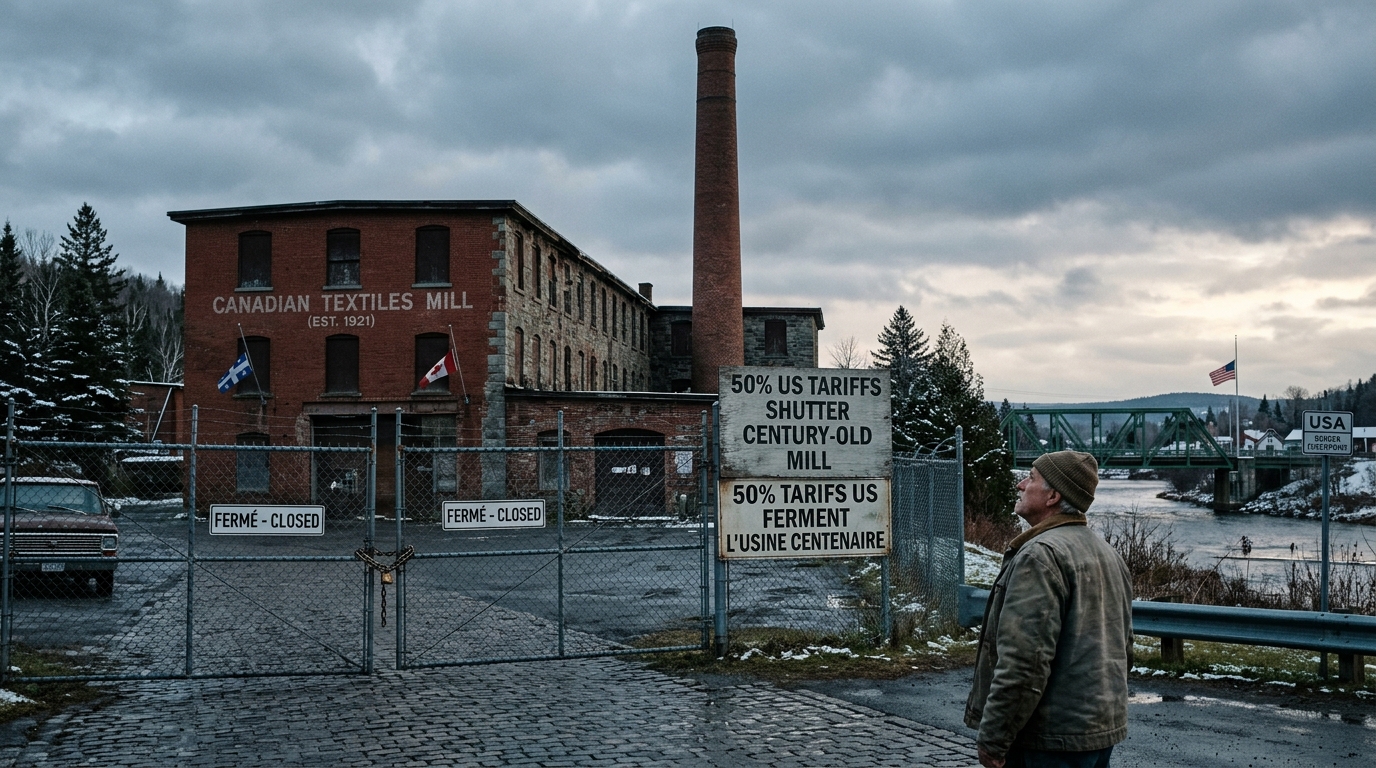
A punitive 50 percent tariff imposed by the United States has forced the indefinite closure of a century-old paper mill in Témiscaming, Quebec. The sudden cross-border duty instantly wiped out the facility's commercial viability, immediately putting hundreds of local mill employees out of work. Now, residents across the Canadian community are mobilizing to protect their town from permanent economic devastation.
Key Takeaways
- A 50 percent United States import tariff caused the indefinite shutdown of a historic paper mill in Témiscaming, Quebec.
- The abrupt trade measure immediately eliminated hundreds of local jobs in the single-industry Canadian manufacturing community.
- Local residents and workers are organizing active campaigns to rescue the town's foundational industrial base from collapse.
Why Did US Tariffs Force the Mill to Close?
Steep border levies directly destroyed the operational margins of the facility by pricing its exports out of the primary American market. When the United States enacted a 50 percent duty on the plant's output, trade costs doubled overnight. That sudden cost surge made ongoing export production unviable, leaving management with no choice except an indefinite suspension of all mill operations.
Industrial producers operating in single-facility communities depend heavily on open access to cross-border consumers. As reported by BBC News, the imposition of 50 percent duties immediately choked sales volume into the United States. Without viable alternative buyers to absorb capacity, operational losses mounted rapidly. When trade penalties eliminate profit margins entirely, how can a dedicated factory survive?
- Assess trade risk: Audit your supply contracts immediately to identify cross-border operations that lack protection against sudden tariff hikes.
What Happens to Communities Dependent on Single Mills?
Towns reliant on one primary industrial employer suffer severe localized shocks when sudden factory shutdowns eliminate municipal payrolls. In Témiscaming, the mill supported hundreds of households whose daily spending sustained surrounding shops, service providers, and schools. Halting production instantly threatens municipal tax revenue and risks triggering an immediate decline in local real estate and service commerce.
We have seen how sudden industrial halts unravel rural communities. The century-old mill formed the financial bedrock of Témiscaming for generations. When hundreds of industrial paychecks vanish simultaneously, regional retail shops lose their primary foot traffic. Municipal leaders must scramble to prevent working families from relocating. The resulting contraction strains public services just as residents require increased community assistance.
- Diversify municipal exposure: Support local business coalitions to attract secondary employers before trade barriers threaten single-industry towns.
How Are Local Residents Organizing to Save Their Town?
Témiscaming residents are organizing grassroots community coalitions to pressure government officials and secure emergency operational interventions. Mobilizing workers and regional leaders aims to keep the century-old site viable until trade penalties can be resolved. Community organizers focus on public advocacy, legal scrutiny of the duties, and potential public-private aid packages to preserve critical manufacturing assets.
Civic action creates vital political visibility during unexpected trade disputes. Residents know that allowing the facility to sit idle risks permanent machinery degradation and permanent workforce dispersal. By demonstrating regional solidarity, community members are actively demanding targeted trade relief. Their rapid mobilization highlights the urgent human cost behind aggressive cross-border tariff policies implemented without local transition windows.
- Build rapid coalitions: Mobilize local worker groups and trade associations promptly to lobby provincial authorities for targeted bridge financing.
FAQ
What caused the paper mill in Témiscaming to shut down?
The paper mill closed indefinitely after the United States imposed a 50 percent tariff on its products. BBC News reported that the heavy trade penalty destroyed export viability overnight, forcing the century-old Quebec facility to halt operations and leaving hundreds of industrial workers without employment.
How many workers are affected by the indefinite plant closure?
Hundreds of workers lost their jobs directly when the century-old paper mill suspended operations. Because Témiscaming is a small industrial town, the loss of these manufacturing paychecks reverberates across local businesses, impacting families, service workers, and overall municipal tax revenues throughout the entire community.
Can local community efforts reopen the shuttered Quebec mill?
Community campaigns raise vital visibility, but full resumption of operations depends on altering the 50 percent tariff or securing substantial emergency backing. Residents and local leaders continue to fight for state intervention, alternative market arrangements, or negotiated duty adjustments that could restore economic viability to the plant.
Aggressive trade friction produces direct collateral damage in specialized manufacturing regions. As the fight in Témiscaming demonstrates, industrial towns must confront international policy shifts with collective local resilience and strategic government engagement.
Stay informed with accurate, up-to-date global news coverage.
Sources
- Trump's tariffs could shutter this Canadian town - its residents are fighting to save it (BBC News): https://www.bbc.co.uk/news/articles/cmly016ep243o?at_medium=RSS&at_campaign=rss