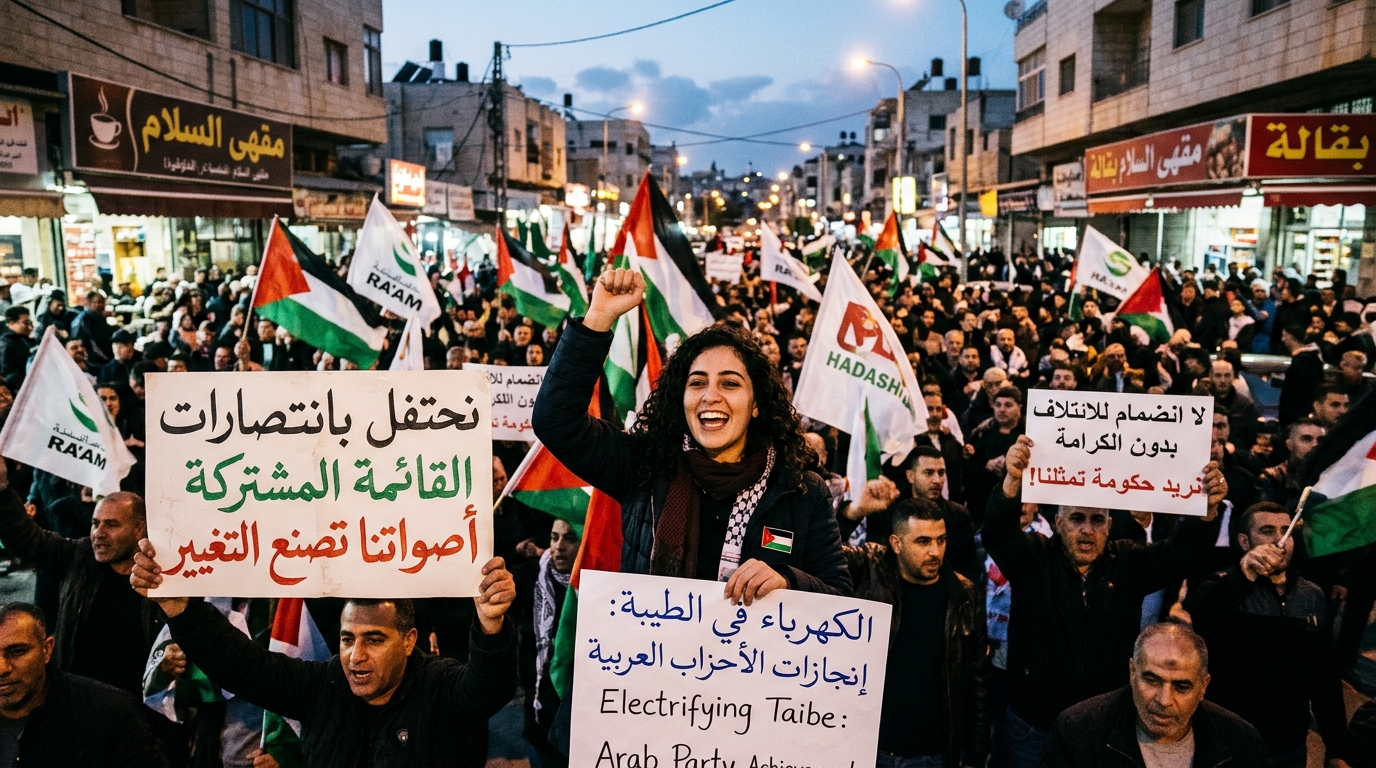
Electoral surges create immediate excitement on the ground, yet translating ballot box success into actual governing authority remains a steep institutional challenge. The New York Times reported on October 30, 2026, that significant gains for Arab-led parties electrified residents in the central Israeli town of Taibe. However, pushback across the country quickly underscored the political divide surrounding representation.
Key Takeaways
- Arab-led political factions achieved major gains that energized supporters in the central Israeli town of Taibe.
- Broad segments of voters across Israel continue to reject including Arab-led parties in any national governing coalition.
- Electoral participation highlights a persistent friction between legislative representation and actual executive power.
Why Did the Election Results Spark Excitement in Taibe?
Arab-led parties secured notable electoral advances, sparking jubilant celebrations across Taibe as residents welcomed stronger representation in parliament. Local voters celebrated these political gains because higher parliamentary tallies offer minority communities an amplified collective voice. Even so, the immediate joy in central Israel revealed deep community hopes for tangible civic improvements.
Community enthusiasm surged because democratic turnout serves as the primary tool for minority groups seeking civic equity. When towns like Taibe mobilize at the polls, they demonstrate clear political cohesion. Can sustained civic participation ultimately overcome persistent exclusion from executive authority? Grassroots voters continue searching for ways to convert ballot numbers into lasting community protection.
- Track local engagement: Monitor civic participation rates in regional municipalities to evaluate whether post-election momentum produces sustained political organizing.
What Prevents Arab-Led Parties From Entering the Governing Coalition?
Widespread resistance from voters elsewhere in the country blocks Arab-led parties from joining any national governing alliance. Despite the celebrations in Taibe, major voting blocs insist that Arab factions have no legitimate role in national leadership. This fundamental rejection prevents newly elected lawmakers from translating their legislative seats into ministerial authority.
Coalition math in a parliamentary system requires building stable majorities, yet political taboos often override raw seat counts. Opposing factions draw firm boundaries against minority integration, effectively neutralizing legislative gains. In our experience, when significant voter blocs veto potential partners, parliamentary deadlock inevitably follows, leaving minority representatives completely isolated on key national decisions.
- Analyze coalition statements: Review public commitments from party leaders during negotiations to identify which factions explicitly rule out shared governance.
How Will This Political Standoff Affect Local Communities?
Exclusion from cabinet negotiations threatens to stall essential public funding and infrastructure development for towns like Taibe. While Arab-led parties hold substantial seats, their lack of executive presence leaves municipal budgets vulnerable. Residents face continuing uncertainty over whether their energized ballot support will deliver actual public services or community investments.
Policy delivery relies directly on cabinet ministries that allocate regional resources. Without representation at the cabinet table, municipal leaders must confront bureaucratic hurdles with diminished influence. Grassroots voters often find their daily concerns about civic safety and planning sidelined. How long can national institutions maintain stability while sidelining a growing voting constituency? Effective municipal advocacy will inevitably demand alternative administrative strategies outside ordinary parliamentary channels.
- Support municipal initiatives: Follow independent regional development boards to see how local councils secure infrastructure resources without formal cabinet backing.
FAQ
What happened in Taibe following the recent vote?
Residents in the central Israeli town celebrated significant electoral gains achieved by Arab-led political parties. As The New York Times reported on October 30, 2026, the local mood was electrified by the vote, although residents questioned what practical improvements would follow.
Why is coalition inclusion such a major issue?
Cabinet participation determines how government funding and administrative power flow to municipalities. Without entering a governing coalition, Arab-led parties cannot control executive ministries or guarantee necessary budgets for local needs, leaving their elected representatives without direct influence over policy execution.
What is the primary barrier facing Arab lawmakers?
Widespread resistance across the Israeli electorate prevents major political factions from inviting Arab-led parties into governing agreements. Many voters maintain that Arab factions should have no role in governance, creating a firm political ceiling regardless of parliamentary seat totals.
Bridging the gap between democratic turnout and executive governance remains one of the defining challenges for regional stability. As towns like Taibe press forward, the debate over who belongs in the national cabinet will shape the democratic compact for years to come.
Stay informed with accurate, up-to-date global news coverage.
Sources
- An Arab Town in Israel Celebrates the Election but Wonders What Will Change (NYT > World News): https://www.nytimes.com/2026/10/30/world/middleeast/arab-voters-israel-election-taibe.html