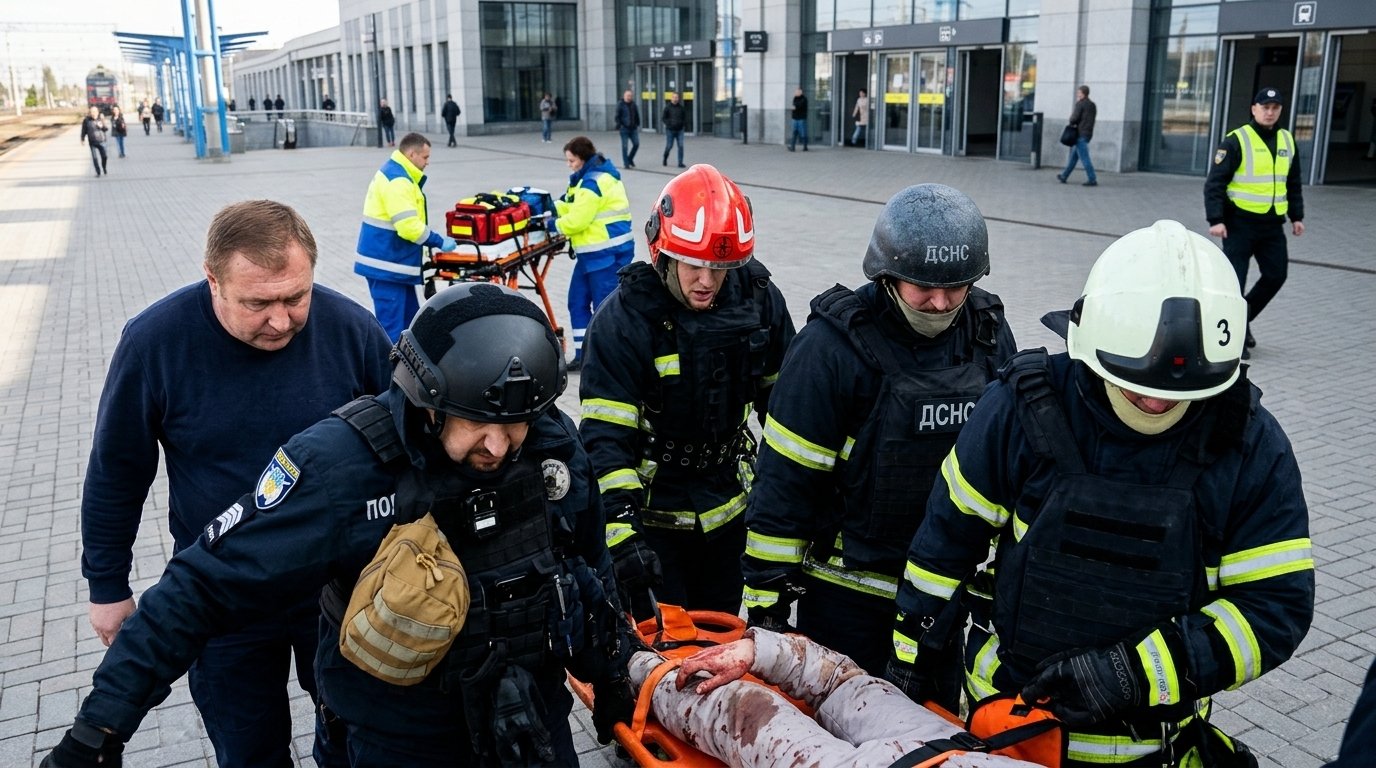
At least 14 people died and 14 others sustained injuries after an aerial drone struck a passenger train station in Dnipro. Ukrainian officials confirmed the assault targeted the transit hub in the central city, wounding an 11-year-old boy among the civilian casualties. The incident underscores severe vulnerabilities across transportation networks outside immediate front lines.
Key Takeaways
- A drone attack on a Dnipro train station killed 14 people and injured 14 others.
- Victims included an 11-year-old boy, according to accounts cited by BBC News.
- The New York Times noted strikes continued despite a local cease-fire in Oleshky.
- Transit hubs remain exposed to strikes far beyond localized pause zones.
What Happened During the Dnipro Rail Hub Strike?
The lethal attack hit a crowded rail facility in Dnipro, killing at least 14 civilians and wounding 14 more. BBC News reported that official accounts documented severe trauma among travelers, including an 11-year-old boy. Rail platforms disperse blast fragmentation across open spaces, creating lethal hazard zones for crowds waiting for trains.
Transit stops concentrate large groups of commuters in exposed boarding zones. When explosive drones strike metal roofs and concrete platforms, heavy structural debris multiplies the original blast damage. In our experience, crowded civilian transit junctions offer almost no perimeter shelter against rapid aerial strikes.
- Monitor transit advisories: Check regional civil defense announcements before entering major rail terminals during aerial alert windows.
Why Did Local Truces Fail to Protect Rail Corridors?
Local truces remain strictly confined to specific contact lines, leaving inland transportation nodes exposed to long-range aerial bombardment. The New York Times reported that while a rare local cease-fire held around Russian-occupied Oleshky, strikes continued against other communities. Geographically isolated pauses do not stop drone sorties launched against distant transport networks.
A regional pause near Oleshky restricts artillery across a narrow sector, but it leaves broader airspace contested. Long-range unmanned platforms bypass ground boundaries entirely. We've found that localized truces rarely translate into general safety. How can isolated ground truces protect civilians when aerial weapons operate across hundreds of kilometers?
- Track conflict zones: Distinguish localized frontline arrangements from broad national airspace warnings when assessing regional risk levels.
What Steps Must Relief Planners Take for Transit Hubs?
Relief planners must decentralize passenger movement and reinforce emergency triage units near major logistics nodes. Because rail infrastructure remains a frequent target, staging emergency medical crews outside vulnerable concourses reduces response times during mass-casualty events. Evacuation protocols must direct crowds into reinforced underground shelters rather than exposed surface platforms.
First responders in Dnipro had to treat at least 14 wounded survivors quickly. Rapid tourniquet deployment and on-site stabilization save lives when blast injuries cause heavy hemorrhaging. We've seen that prepositioning trauma supplies at transit facilities gives civilian teams the best chance to handle sudden multi-casualty incidents effectively.
- Audit emergency protocols: Verify that local travel centers maintain functional underground shelters and rapid trauma supplies near all active platforms.
FAQ
How many casualties occurred in the Dnipro train station attack?
Officials reported that at least 14 people lost their lives in the strike, according to reporting from BBC News. At least 14 additional individuals suffered injuries, including an 11-year-old boy who required emergency medical care following the explosion at the central passenger facility.
Where was the rare localized cease-fire established?
The New York Times reported that a rare, local cease-fire existed around the Russian-occupied town of Oleshky. However, this localized truce remained strictly limited to that specific sector, leaving other Ukrainian communities and transit networks like Dnipro subject to continued strikes.
Why do drone strikes on rail stations cause severe casualties?
Rail stations gather travelers in unfortified spaces where glass panels and metal structures break apart during an explosion. Fragmentation spreads rapidly across open concourses, multiplying injury rates. Without instant access to underground shelters, civilians on boarding platforms face acute risks from both concussive blast waves and falling debris.
Regional travel networks face ongoing threats as aerial strikes continue across central urban centers. Monitoring official transit notices and supporting civil defense preparations remain critical steps for civilian protection across vulnerable transit sectors.
Stay informed with accurate, up-to-date global news coverage.
Sources
- Russian drone attack on Ukrainian train station kills at least 14, officials say (BBC News): https://www.bbc.co.uk/news/articles/c9p8gdlz1p2ko?at_medium=RSS&at_campaign=rss