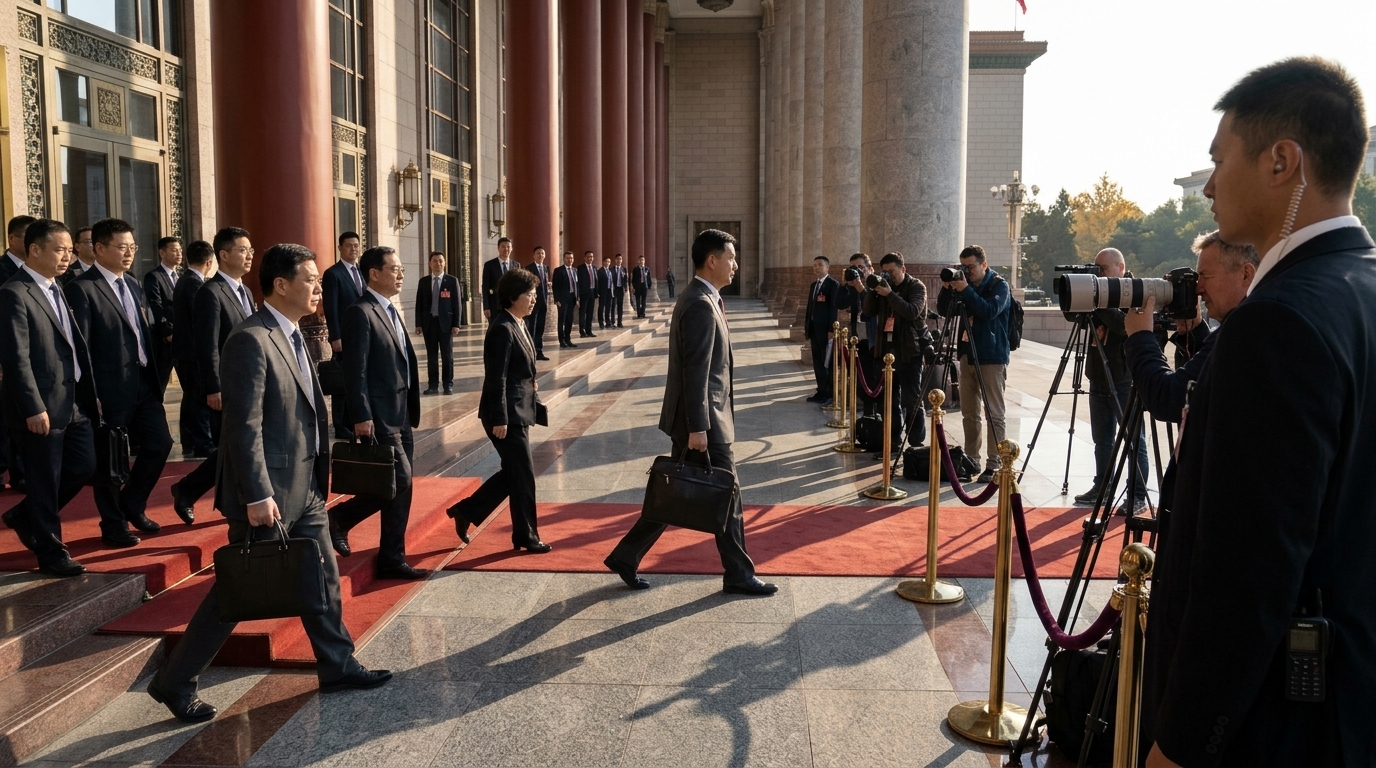
A four-day Plenum begins this Monday in Beijing, convening behind closed doors to address internal governance and governance standards. According to reporting from BBC News, the political gathering could see Xi tighten discipline across the entire Party structure. This confidential assembly will set internal expectations that shape domestic policy for months to come.
Key Takeaways
- A four-day Plenum starts Monday in Beijing to determine high-level political directions.
- Reporting from BBC News indicates Xi could use the assembly to tighten Party discipline.
- Closed sessions conceal procedural deliberations, meaning outside analysts must evaluate official communiqués issued after adjournment.
What Does This Four-Day Plenum Involve?
The four-day Plenum in Beijing serves as a closed-door forum where political leaders review internal organizational conduct. Starting Monday, officials gather to deliberate behind closed doors away from public observation. The assembly provides senior leadership with a direct mechanism to review managerial loyalty and align operational goals across the political establishment.
High-level political conclaves rely on complete secrecy to negotiate structural changes without external friction. You will find that closed sessions let authorities resolve institutional friction privately before presenting an unbroken front. In our experience, strict operational opacity prevents premature speculation from altering public expectations while negotiations proceed behind secured doors.
- Track official releases: Monitor the closing public statements after the four-day gathering concludes to identify shifts in administrative oversight.
Why Is Xi Focusing on Party Discipline?
Xi aims to tighten discipline within the Party to eliminate bureaucratic divergence and secure organizational compliance across all administrative branches. BBC News reported that the Beijing gathering could prioritize strict behavioral enforcement. This strategic push ensures that regional authorities follow central mandates without hesitation or local policy dilution.
Centralized political systems require rigorous oversight to keep lower-level offices aligned with top directives. When leadership enforces strict organizational rules, administrative compliance increases and internal dissent drops. In our experience, stricter supervision forces local officials to prioritize absolute loyalty over regional autonomy, which solidifies executive command during sensitive national policy rollouts.
- Review policy decrees: Examine newly published administrative guidelines for explicit directives concerning bureaucratic conduct and internal anti-corruption measures.
How Will These Secret Talks Impact Governance?
These secret Beijing sessions alter governance by establishing strict compliance baselines that subordinate cadres must adopt immediately. Because delegates deliberate entirely away from the press, published outcomes will carry mandatory political weight across every department. The meeting establishes operational expectations that direct how officials execute core state policies throughout the coming term.
Opaque conferences demand careful post-event analysis because initial disclosures often arrive in dense administrative statements. BBC News highlighted that this four-day assembly remains highly secretive until its conclusion. We've found that tracking linguistic adjustments in state press releases offers the clearest signals regarding how leadership plans to police its vast membership.
- Analyze language changes: Compare post-meeting government communiqués with earlier announcements to detect shifts in enforcement vocabulary.
FAQ
When does the Plenum take place?
BBC News reported that the four-day Plenum begins this Monday in Beijing. The gathering convenes under tight confidentiality for the entire four days, keeping delegates separated from outside observers until leadership delivers its formal summary statements at the close of proceedings.
Why are the Beijing meetings kept confidential?
Confidentiality protects high-level negotiations from external interference and prevents premature public speculation about leadership directives. By keeping discussions private throughout the four-day event, the Party maintains unified messaging and ensures that regional cadres receive finalized decisions only after internal consensus has formed.
What outcome should international observers expect?
International observers should expect tightened organizational discipline and reaffirmed political cohesion under Xi's leadership. Once the four-day Beijing sessions end, published statements will clarify enforcement priorities for regional administrators, signaling how strictly central authorities intend to manage internal compliance moving forward.
Diplomatic analysts will watch Beijing closely as delegates finish their four-day assembly and return to regional posts. The enforcement standards established behind these closed doors will influence administrative actions, economic steering, and internal governance across China well beyond this week.
Stay informed with accurate, up-to-date global news coverage.
Sources
- China's big political meeting could see Xi 'tighten discipline' in Party (BBC News): https://www.bbc.co.uk/news/articles/c6n8djd1078ro?at_medium=RSS&at_campaign=rss