

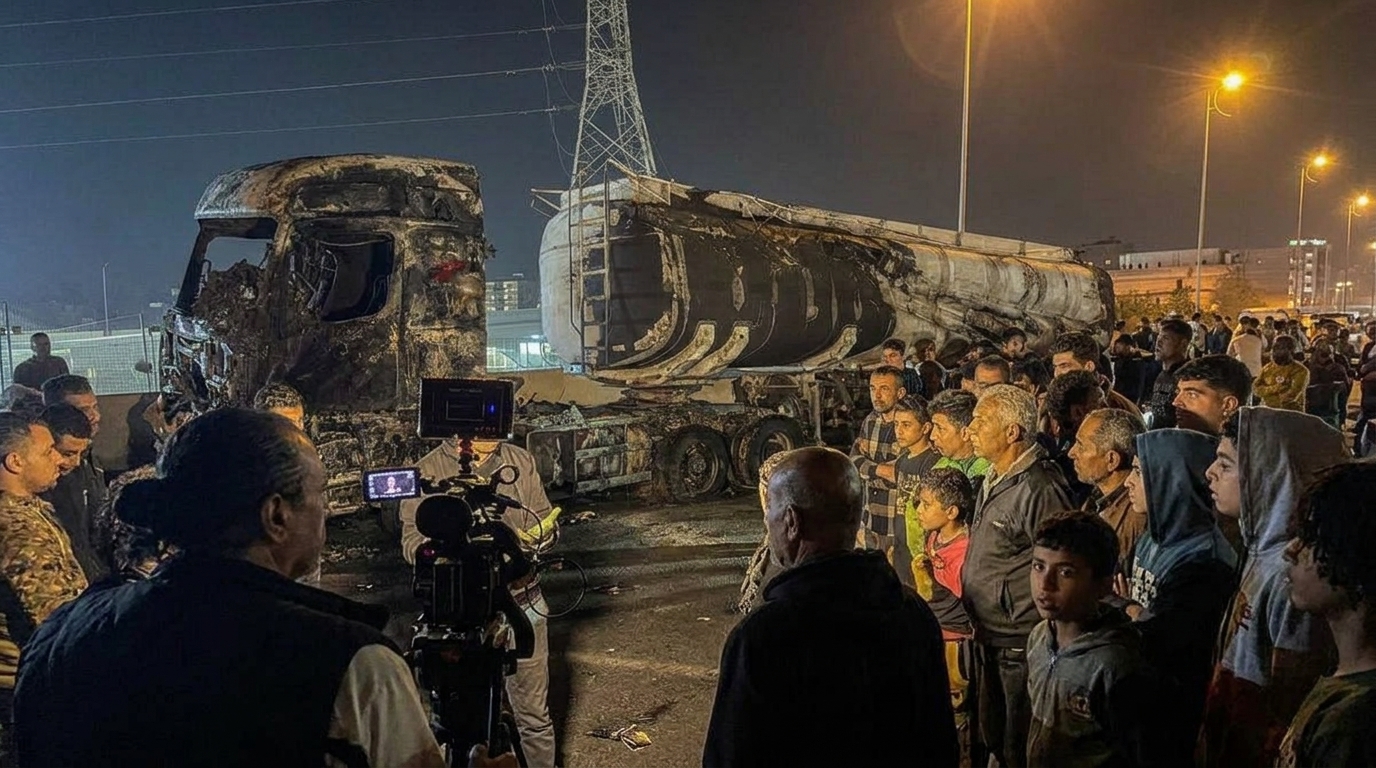
At least 31 people died when a petroleum tanker overturned and caught fire on a Cairo ring road, according to BBC News. The catastrophic collision also injured at least 21 people near Giza beside the Nile River, as reported by The New York Times. Dense traffic along the major bypass prevented nearby motorists from escaping the rapidly spreading flames.
Key Takeaways
- A fuel tanker crash near Cairo killed at least 31 individuals and injured 21 others.
- The incident triggered a massive highway blaze near Giza alongside the Nile River corridor.
- Spilled liquid petroleum quickly vaporizes and ignites, trapping surrounding traffic in intense fires.
- Drivers encountering hazardous transport spills must immediately stop and evacuate upwind.
What Caused the Deadly Highway Fire Near Cairo?
A heavy petroleum tanker overturned on a busy Cairo ring road, spilling combustible fuel that ignited into an enormous blaze across the corridor. BBC News confirmed that 31 people died in the catastrophe, while The New York Times reported that emergency crews treated at least 21 injured victims near Giza beside the Nile River.
The physical impact ruptured the transport vessel, releasing hundreds of gallons of volatile liquid onto the hot asphalt surface. Dense traffic on the ring road restricted driver movement. Vehicles stalled bumper to bumper could not reverse away before escaping petroleum ignited from contact with hot exhaust systems and friction sparks.
- Maintain transit distance: Leave at least three vehicle lengths when following heavy commercial trucks carrying hazardous materials on major transit bypasses.
Why Do Petroleum Tanker Crashes Escalate So Rapidly?
Liquid petroleum fuels escalate rapidly because escaping fuel vaporizes into an explosive atmospheric cloud the instant a containment tank splits open. This expanding vapor layer seeks any nearby ignition source, including hot engine manifolds, electrical arcs, or metal friction sparks, generating a sudden fireball that traps motorists before they can react.
In our experience studying industrial road hazards, liquid spills behave unlike ordinary vehicle fires because fuel runs downhill along road camber. The flaming liquid enters adjacent lanes, drainage gullies, and undercarriages within seconds. This rapid spread cuts off vehicle escape paths and intensifies thermal radiation across the entire roadway.
- Check escape routes: Scan surrounding road shoulders and clear exits immediately whenever you spot thick black smoke or fuel pooling on a motorway.
How Should Drivers Respond to Highway Hazardous Spills?
Drivers should stop their vehicles safely, leave the engine off, and evacuate immediately on foot toward an upwind location away from the spill. Fuel vapors flow downhill and downwind, which means staying inside an enclosed automobile near a ruptured tanker exposes passengers to toxic fumes, secondary explosions, and sudden thermal flashovers.
Moving perpendicular to the wind direction quickly removes you from the path of toxic hydrocarbon vapors. Motorists should never attempt to drive through pooled liquids or smoke plumes. Abandoning the vehicle on the road shoulder preserves lives far more reliably than trying to maneuver through congested traffic during a fire.
- Evacuate upwind immediately: Abandon your car on the roadside shoulder and walk uphill away from the spill rather than waiting inside your vehicle.
FAQ
How many casualties were reported in the Cairo tanker crash?
BBC News reported that 31 people died after the fuel tanker overturned on the highway. Additionally, The New York Times confirmed that at least 21 people suffered injuries near Giza beside the Nile River. First responders transported the wounded to regional medical facilities for urgent treatment of burns and smoke inhalation.
Where did the petroleum tanker collision take place?
The disaster occurred on a busy ring road surrounding Cairo, Egypt, close to Giza alongside the Nile River corridor. Ring roads around the capital handle dense commuter traffic alongside heavy cargo freight, which created severe congestion when the tanker overturned and spilled combustible petroleum across the active travel lanes.
Why are fuel tanker fires exceptionally hazardous on ring roads?
High traffic volume on urban bypasses restricts vehicle mobility, leaving drivers unable to back away when flammable liquids ignite. Petroleum fires burn at extreme temperatures and release thick toxic smoke, creating blinding conditions and spreading across multi-lane expressways faster than standard emergency equipment can arrive to contain the blaze.
Major transit corridors require continuous safety awareness from everyone sharing the road with heavy hazardous haulers. Understanding the immediate physical risks of flammable cargo spills helps travelers react decisively during rare highway disasters.
Stay informed with accurate, up-to-date global news coverage.
Sources
- Thirty-one killed in massive fire as fuel tanker crashes on Cairo highway (BBC News): https://www.bbc.co.uk/news/articles/cqy7rn30v314o?at_medium=RSS&at_campaign=rss