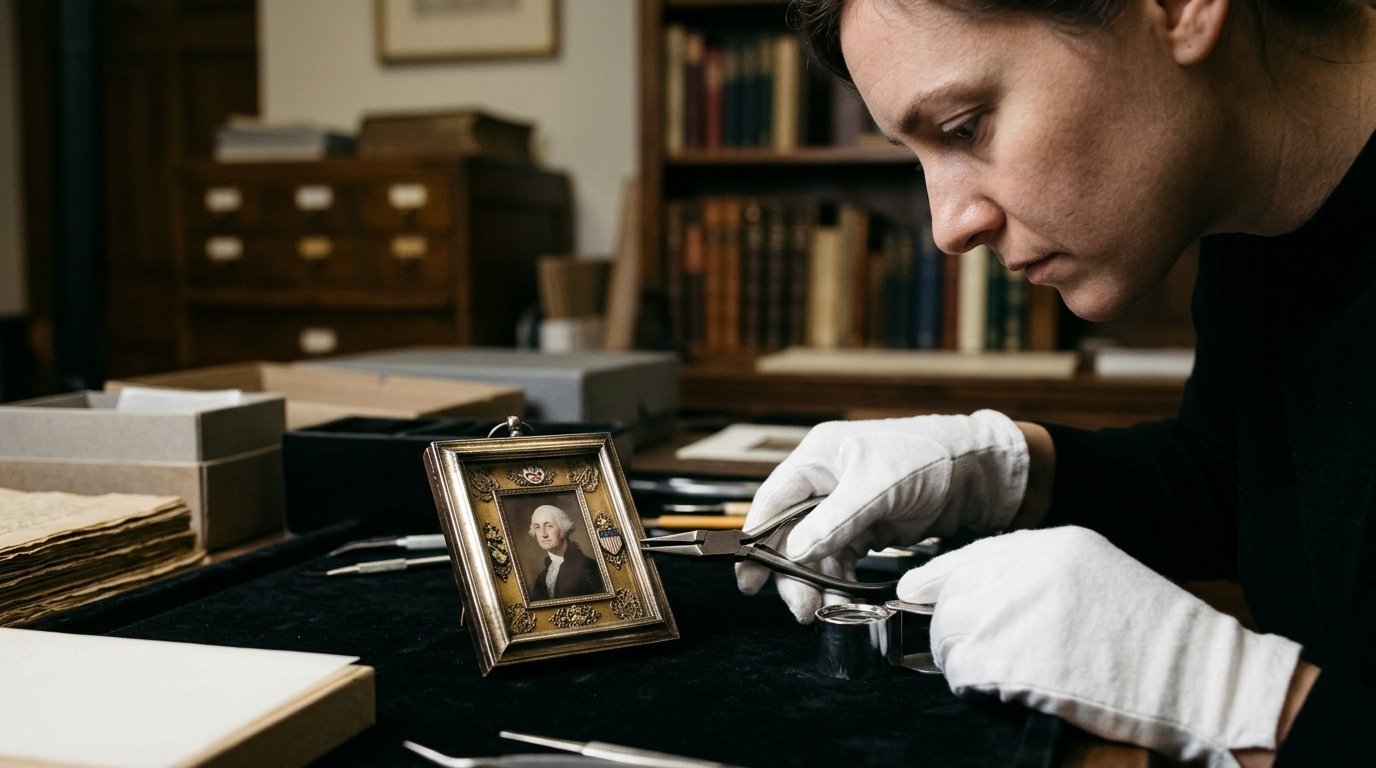
A preserved lock of former US President George Washington's hair has sold for $4,000, highlighting the enduring value of early American personal artifacts. According to reporting from BBC News, the relic was originally presented as an intimate token of friendship shortly before Washington's death in 1799. The sale demonstrates how private family heirlooms transition into valuable historic assets.
Key Takeaways
- An original lock of George Washington's hair achieved a sale price of $4,000.
- Historical records show the hair was presented as a friendship token before his death in 1799.
- Provenance passed directly through a descendant of the original recipient.
- Personal biological relics from founding leaders maintain active commercial interest among modern collectors.
Why Did This Presidential Relic Fetch $4,000?
A direct historical connection to George Washington drove the $4,000 purchase price reported by BBC News. Physical items tied directly to founding leaders remain scarce on the open market, creating steady demand among historical preservationists. When combined with clear custody records from a descendant of the original owner, buyers show willingness to pay substantial sums for authentic personal pieces.
In our experience, early American artifacts derive their primary value from physical condition and traceable custody. Hair mementos from the eighteenth century survived only when owners stored them in protected cases away from humidity, light, and pests. The successful transaction confirms that even tiny tangible connections to major historical figures retain measurable monetary appeal.
- Inspect lineage papers: Verify unbroken generational transfer documentation before placing financial offers on early presidential mementos.
How Did Eighteenth-Century Friendship Tokens Function?
Exchanging locks of hair served as a deeply standard gesture of esteem and affection in 1799 rather than an unusual curiosity. Before photography existed, physical hair pieces acted as tangible reminders between close associates and family members. As BBC News reported, Washington gifted this specific sample to a companion shortly before his passing, cementing a personal bond through a physical keepsake.
These gestures carried serious social significance during the late eighteenth century. Friends carried such locks in lockets, rings, or sealed frames as enduring personal tributes. The custom meant that meaningful physical remnants survived within private households for centuries, long outlasting the original relationships that created them.
- Study cultural customs: Review contemporary social practices from the eighteenth century to properly contextualize early political keepsakes.
How Does Provenance Shape Relic Valuation?
Continuous ownership through a single family line gives historic items credibility, allowing them to secure firm valuations like the $4,000 sale. Without verified ancestry linking back to the original recipient, old artifacts often face heavy skepticism from collectors. A descendant confirming the unbroken line of possession removes doubt and establishes clear legal and historical legitimacy.
Historical transactions rely on paper trails, letters, and familial testimony to confirm authenticity. When an owner provides credible evidence reaching back to 1799, market trust solidifies quickly. Collectors rely on that confidence because fabricated items frequently surface in the memorabilia trade, making proven family custody the primary defense against deception.
- Request archive verification: Demand documented family testimony and written records before accepting the authenticity of uncertified historical items.
FAQ
Who purchased the lock of George Washington's hair?
Public reporting from BBC News did not disclose the private identity of the purchaser. The transaction concluded through private collector channels where buyers often choose anonymity to protect their personal collections, security, and privacy when acquiring notable historical artifacts.
When was the hair originally gifted by George Washington?
Historical records state that George Washington gave the lock of hair shortly before his death in 1799. He offered the keepsake directly to a close acquaintance as a genuine symbol of friendship, following a widespread social tradition of that era.
Why were locks of hair common gifts in the eighteenth century?
People in 1799 lacked photographic technology and preserved locks of hair as durable personal mementos. Giving hair represented deep respect and personal intimacy, enabling friends and relatives to keep a lasting physical piece of someone they admired.
Physical artifacts from early American history continue to capture attention across the collector community. As preserved family keepsakes find their way into public notice, they offer tangible connections to prominent leaders and remind us how personal remembrance has evolved over centuries.
Stay informed with accurate, up-to-date global news coverage.
Sources
- Lock of former US President George Washington's hair sells for $4,000 (BBC News): https://www.bbc.co.uk/news/articles/cwe9k23dpz0do?at_medium=RSS&at_campaign=rss