
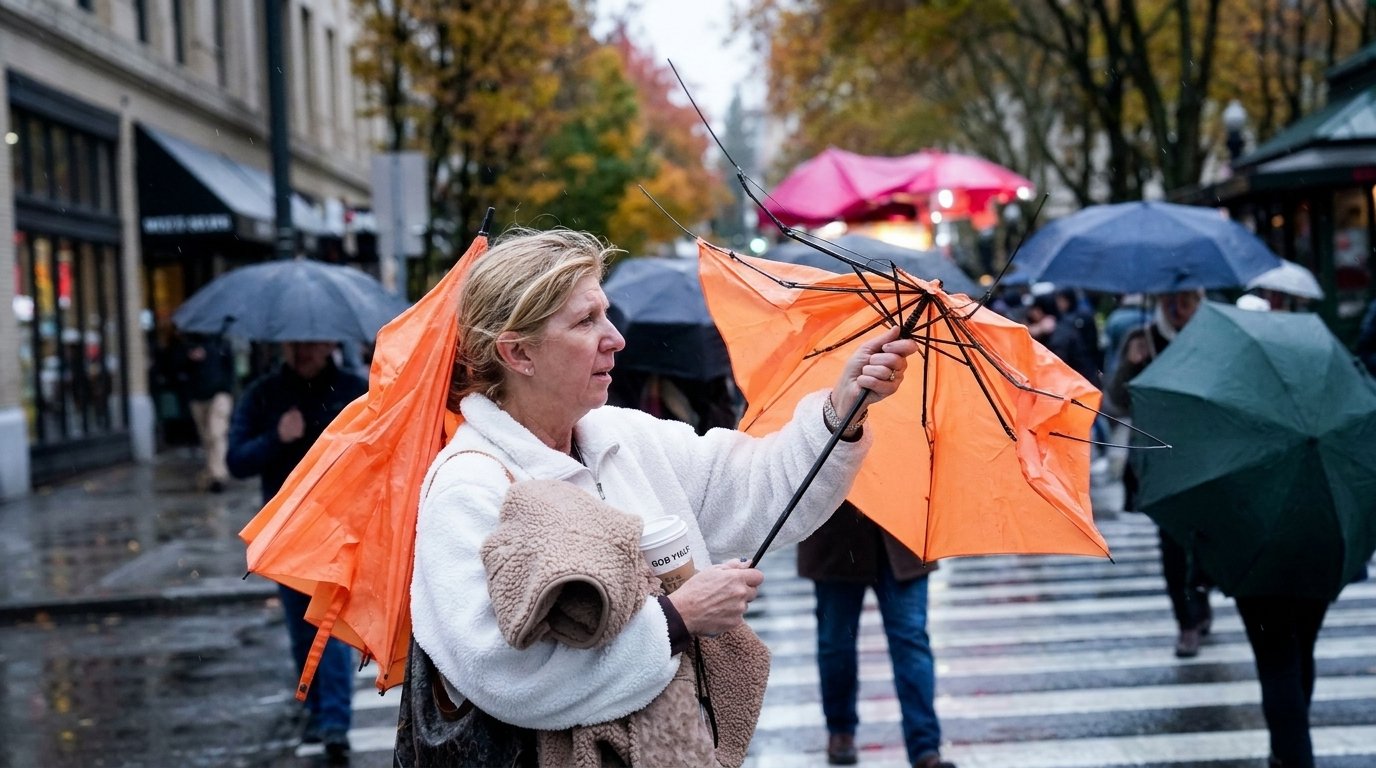
Severe holiday storms cut electrical service to hundreds of thousands of residents across the United States over Thanksgiving. As BBC News reported on Friday, heavy wind and rain hammered both American coasts, leaving Pennsylvania and neighbouring states struggling with widespread infrastructure damage. Repair teams face prolonged restoration delays while adverse conditions persist across the Eastern seaboard.
Key Takeaways
- Severe holiday storms left hundreds of thousands of US residents without electrical power.
- Pennsylvania and neighboring regional areas experienced severe impacts through Friday.
- Heavy rain and high winds battered both the Pacific and Atlantic coasts simultaneously.
- Utility networks face prolonged repair delays due to widespread physical line damage.
Why Did the Thanksgiving Storm Cause Such Massive Outages?
Severe gale-force gusts and saturated soils combined to bring mature trees crashing down across overhead utility lines. When high winds hit waterlogged root systems, trees topple easily onto local distribution circuits. A single fallen trunk often severs lines and snaps wooden utility poles, triggering cascading local grid shutdowns across entire residential subdivisions.
High winds also cause overhead distribution lines to swing into one another. This contact creates powerful electrical short circuits that instantly trip regional circuit breakers. Safety mechanisms automatically disconnect power to prevent fires, leaving entire communities dark until physical inspections confirm that lines are safe to re-energize.
Dense holiday travel and continued rain further complicate the emergency response. Utility crews must physically clear roads before heavy bucket trucks can access severed cables and broken transformers. In rural areas, identifying the exact break in a circuit can take hours of manual inspection through rough terrain.
- Inspect property perimeters: Check trees near service drops today and hire licensed specialists to trim branches threatening private power lines.
Which Regions Suffer the Heaviest Grid Disruptions?
Pennsylvania and neighbouring eastern states bore the brunt of sustained damage through Friday after strong weather lashed both coasts. Coastal regions absorb the initial shock of incoming storm fronts, where intense maritime winds collide with inland infrastructure. Wet ground conditions along the Atlantic corridor weakened soil integrity, accelerating line collapses across multiple states.
Pacific coastal areas simultaneously absorbed heavy rainfall and turbulent winds from offshore frontal systems. When dual storm fronts strike opposite coasts during a major holiday, repair logistics become strained. Utility companies cannot easily shift mutual aid workers between distant regions when both territories experience heavy localized damage.
Urban and suburban pockets in affected states face distinct logistical headaches. Dense vehicle traffic during Thanksgiving week blocks access routes for utility vehicles. At the same time, regional utility substations must isolate damaged local feeders to protect the broader transmission grid from total failure.
- Secure secondary backup: Test portable generators and verify fresh fuel supplies now to sustain essential home heating during extended outages.
How Can Communities Accelerate Grid Recovery After Major Storms?
Grid recovery accelerates when municipalities establish clear operational coordination with regional power companies before severe weather arrives. Emergency agencies prioritize debris removal on primary transportation arteries, which allows utility utility crews rapid access to damaged substations. Without cleared roads, utility specialists cannot replace downed poles or string fresh electrical conductor wire.
Homeowners and businesses speed up restorations by reporting localized line failures through automated utility apps instead of tying up emergency telephone systems. Accurate neighborhood-level reporting pinpoints isolated faults that monitoring computers might overlook. Utility dispatchers deploy line crews efficiently when they have precise data on snapped poles and blown fuses.
Coordinated mutual assistance compacts between state utility operators supply vital reinforcement personnel during major emergencies. Crews travel from unaffected regions to rebuild fallen wires, replace destroyed distribution transformers, and systematically restore power block by block. This structured collaboration cuts restoration delays by days following destructive storms.
- Monitor regional restoration: Track local utility outage maps online to confirm your neighborhood circuit appears on the active repair schedule.
FAQ
What caused the widespread power cuts on Thanksgiving?
Violent winds and heavy rain swept across both American coasts, bringing down trees and power lines. Saturated ground allowed strong gusts to uproot heavy timber directly onto electrical infrastructure. Automatic safety switches then severed power to prevent secondary fires and protect transmission networks.
Why do neighbouring states experience simultaneous disruptions?
Broad atmospheric storm fronts span hundreds of miles, dumping rainfall and high winds over multiple states at once. Regional electricity grids share interconnected transmission paths. When local feeder lines fail across state borders, utility companies must isolate shared circuits to avoid widespread electrical instability.
How long does holiday storm restoration typically take?
Restoration times depend on wind conditions, road blockages, and physical damage severity. When hundreds of thousands lose electricity simultaneously, crews must first clear debris and fix high-voltage distribution lines. Full recovery across secondary residential lines often extends across several consecutive days of continuous field labor.
Utility crews continue repairing damaged electrical infrastructure across the battered eastern states as storm systems clear out. Restoring power to every affected household remains a protracted effort requiring round-the-clock labor and regional coordination. Stay informed with accurate, up-to-date global news coverage.
Sources
- Hundreds of thousands still without power after storms hit US on Thanksgiving (BBC News): https://www.bbc.co.uk/news/articles/cre3dj5n7dpwo?at_medium=RSS&at_campaign=rss