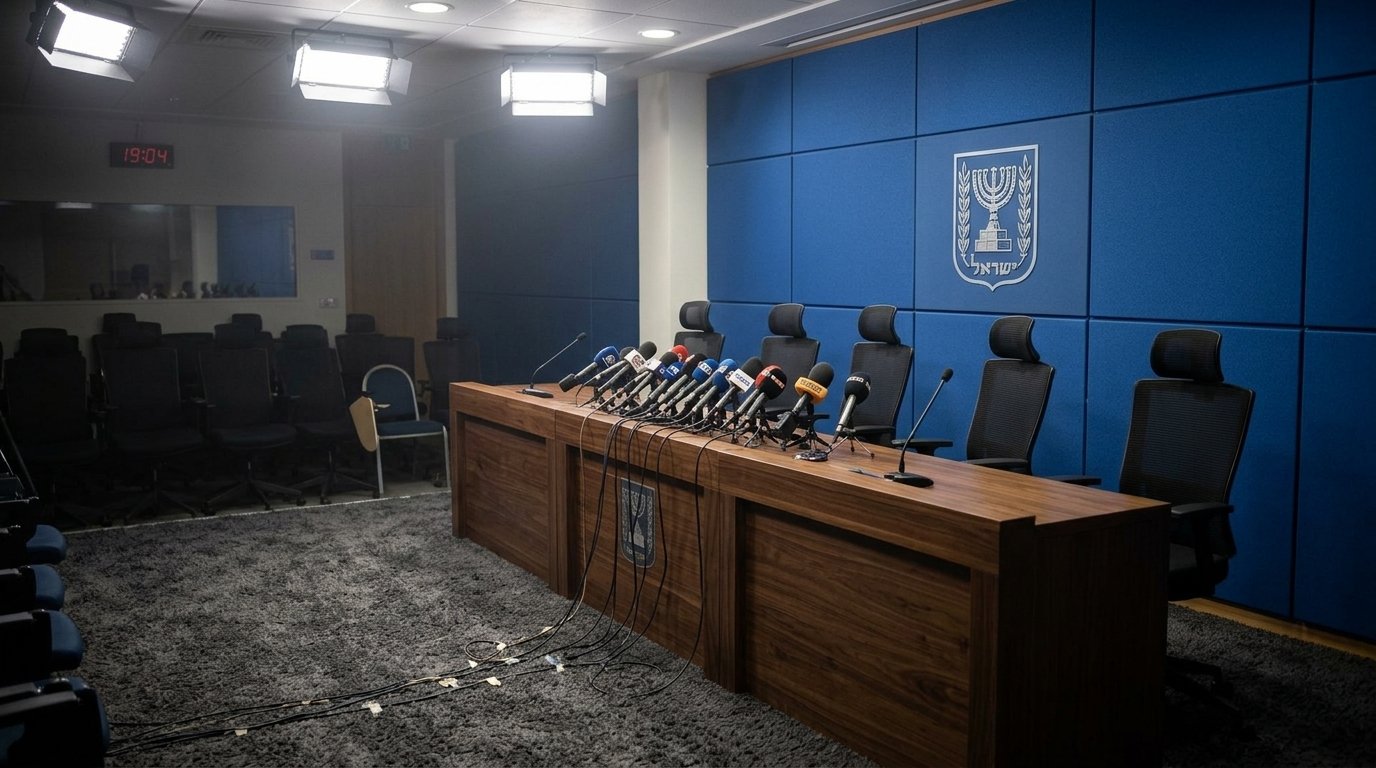
Partial returns show Benjamin Netanyahu and his allied parties taking 53 seats in Israel's 120-seat Knesset with 85 percent of ballots counted. The numbers put the conservative faction in the lead but leave it short of the 61-seat threshold needed for an outright majority. This split outcome points directly toward another prolonged legislative stalemate.
Key Takeaways
- Partial tallies give Benjamin Netanyahu's Likud alliance 53 seats across the 120-member legislature.
- With 85 percent of votes tabulated, neither the governing bloc nor the opposition commands an outright majority.
- The fragmented vote count raises the risk of legislative paralysis and drawn-out political gridlock.
What do the partial election results reveal?
Official tallies reported by BBC News show that Benjamin Netanyahu's Likud party and its partners hold 53 seats after election workers tallied 85 percent of total ballots. That total gives the prime minister's camp the largest unified voting share in the 120-seat Knesset, yet leaves his coalition eight seats short of a working government.
Can any bloc easily cross the finish line without painful concessions? When you look at how parliamentary arithmetic works, an eight-seat gap requires negotiations with unaligned factions. In our experience, counting the remaining 15 percent of votes rarely creates massive swings, meaning the initial seat deficit will likely remain the baseline.
- Track coalition talks: Review the daily shifts in party positions as factions negotiate over the remaining uncounted votes.
Why does an inconclusive vote threaten political stability?
An inconclusive vote deepens political instability because it denies both the incumbent coalition and rival parties a predictable path to power. The New York Times reported that Netanyahu supporters felt relief that he preserved a path to office, while political opponents warned that the mixed vote risks sustained national gridlock.
Without a decisive mandate, rival factions end up deadlocked during mandatory coalition talks. Prime Minister Benjamin Netanyahu faces the challenge of holding disparate conservative allies together while searching for outside support. If talks stall completely, parliamentary factions cannot pass legislation or approve budgets, which leaves state administration frozen in limbo.
- Follow faction statements: Watch the official declarations from rival party leaders to gauge whether compromise talks can succeed.
How could parliament operate without a working majority?
A fragmented parliament can function through shifting cross-party votes even when no faction forms a formal government. Reporting from The New York Times highlights that Israel's political opposition might fail to assemble an executive cabinet while still retaining the combined numerical strength to control key parliamentary votes and block prime ministerial initiatives.
That structural friction means the Knesset can dictate procedural agendas, challenge cabinet appointments, and reject policy bills. If you study parliamentary rules, you see that an opposition-dominated floor can stall a minority cabinet at every turn. When neither camp commands 61 seats, every single vote turns into a high-stakes bargaining test.
- Monitor floor votes: Observe early procedural debates to see which side controls key legislative committees during interim periods.
FAQ
How many seats does Benjamin Netanyahu need for a majority?
Benjamin Netanyahu needs at least 61 seats in the 120-seat Knesset to build a ruling majority. Partial tallies reported by BBC News grant his bloc 53 seats with 85 percent of ballots counted, leaving him eight seats below the required legislative line.
Could the political opposition assemble a viable government?
The opposition faces severe mathematical obstacles in forming a functional government. While The New York Times reports opponents may hold enough collective seats to control parliament, ideological divides among opposing parties make uniting behind a single consensus candidate exceptionally challenging.
What happens if no Israeli coalition secures 61 seats?
If no coalition reaches 61 seats, parliament faces ongoing stalemate. The incumbent cabinet continues in a caretaker capacity while party leaders negotiate. If negotiations completely collapse, lawmakers must dissolve the Knesset and call another general election.
Israel now enters an uncertain political chapter as final votes get verified and party leaders test their bargaining power. Watch the next rounds of coalition bargaining to see whether a governing alliance emerges or another parliamentary deadlock takes hold.
Stay informed with accurate, up-to-date global news coverage.
Sources
- Netanyahu's bloc leading Israel election but short of majority, partial results show (BBC News): https://www.bbc.co.uk/news/articles/cmdx3knq1xexo?at_medium=RSS&at_campaign=rss