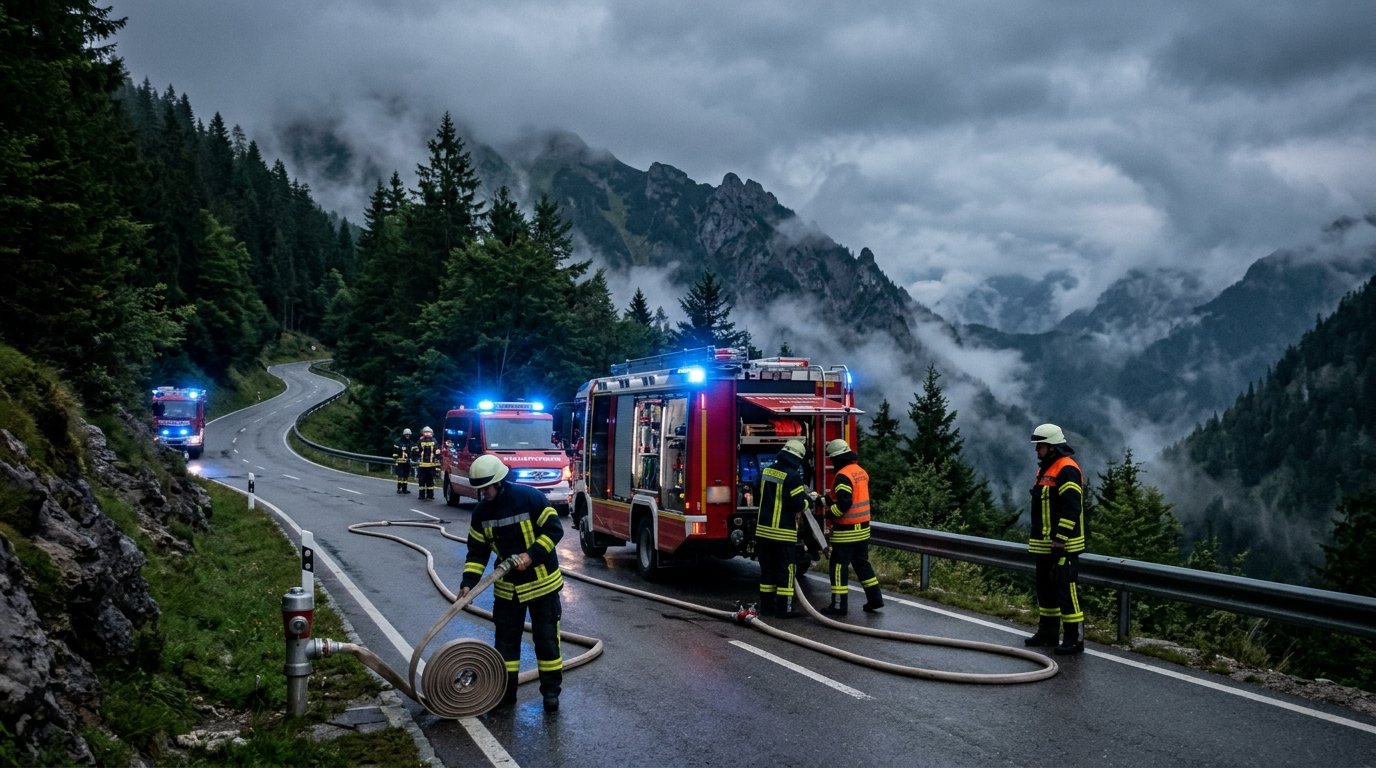
Emergency teams mobilized around 200 personnel in Germany to confront a major blaze at Adolf Hitler's former Eagle's Nest Alpine retreat, as reported by BBC News. Authorities moved swiftly to secure the perimeter and placed one individual under arrest in connection with the incident. The sudden destruction at the mountain site has triggered an immediate investigation into the origin and intent behind the flames.
Key Takeaways
- Emergency agencies deployed around 200 personnel to combat a blaze at the Alpine retreat.
- Police arrested one suspect in connection with the fire at the historic German site.
- First responders focused on perimeter containment to prevent flames spreading across steep mountain terrain.
How Did Emergency Crews Respond to the Alpine Mountain Blaze?
Around 200 emergency personnel deployed rapidly to contain the fire at the German Alpine residence, according to BBC News. Crews confronted steep mountain slopes that restrict vehicle access, forcing responders to stage equipment systematically and establish water delivery relays to halt flame spread before structural damage worsened across the historic complex.
High-altitude firefighting requires distinct containment tactics. Responders must pump water uphill through specialized hoses, while ground personnel clear dry fuel from adjacent ridgelines to prevent forest ignition. That physical barrier isolates the primary building, protecting surrounding woodland from rapid ember travel.
- Perimeter safety monitoring: Check local administrative bulletins before visiting mountain heritage sites during active incident investigations.
What Do Investigators Know About the Suspect in Custody?
Police took one person into custody following the outbreak of the blaze at the Alpine retreat, as BBC News reported. Investigators immediately isolated the suspect to determine motive, movement history, and physical involvement, while forensic specialists began examining structural burn patterns to confirm whether an accelerant triggered the flames.
Criminal investigations at sensitive historical landmarks require rigorous evidentiary handling. Detectives assess surveillance footage from transit pathways and catalog physical residue from the ignition origin. This procedure separates intentional property attacks from accidental electrical failures, ensuring prosecutors establish clear causation before formal charges reach court.
- Public legal records: Review regional court notices to verify formal indictments as evidentiary proceedings advance.
Why Do Historic Mountain Properties Require Specialized Security?
Historic mountain properties face dual hazards from remote geography and symbolic prominence, complicating both civilian safety and structural defense. High-altitude locations lengthen emergency transit times, which demands continuous perimeter surveillance, automated fire sensors, and dedicated evacuation corridors to protect visitors and responders whenever unexpected emergencies arise.
Isolated properties depend heavily on localized fire suppression equipment. Dedicated storage reservoirs and pressurized hydrants allow initial teams to suppress fires before mutual aid arrives from valley stations. Managing historical structures requires balancing public access with defensive security measures to protect the surrounding environment.
- Site risk assessment: Audit remote property firebreaks annually to prevent structure fires from igniting surrounding forests.
FAQ
How many responders fought the Eagle's Nest blaze?
Around 200 emergency personnel deployed to battle the fire at the Alpine residence in Germany, according to BBC News. Teams coordinated across steep mountain terrain to secure water supplies, establish containment perimeters, and protect surrounding woodland from potential sparks.
Has anyone been detained in connection with the incident?
Yes, law enforcement arrested one individual following the fire at the historic German retreat, as confirmed by BBC News. Authorities detained the suspect to investigate potential criminal involvement, assess ignition sources, and determine whether the blaze was set intentionally.
Where is the Eagle's Nest retreat located?
The Eagle's Nest sits atop an Alpine mountain ridge in Germany, where Adolf Hitler used the residence during the Nazi regime. The property now attracts international visitors while presenting serious logistical challenges for emergency services during fires due to its high altitude.
As German authorities complete forensic reviews and evaluate building damage, this incident underscores the severe logistical and security demands of protecting remote mountain landmarks. Future restoration and safety policies will likely reflect the operational lessons learned during this rapid emergency mobilization.
Stay informed with accurate, up-to-date global news coverage.
Sources
- Arrest made after fire at Hitler's Eagle's Nest retreat (BBC News): https://www.bbc.co.uk/news/articles/cr93zwjw1k4qo?at_medium=RSS&at_campaign=rss