
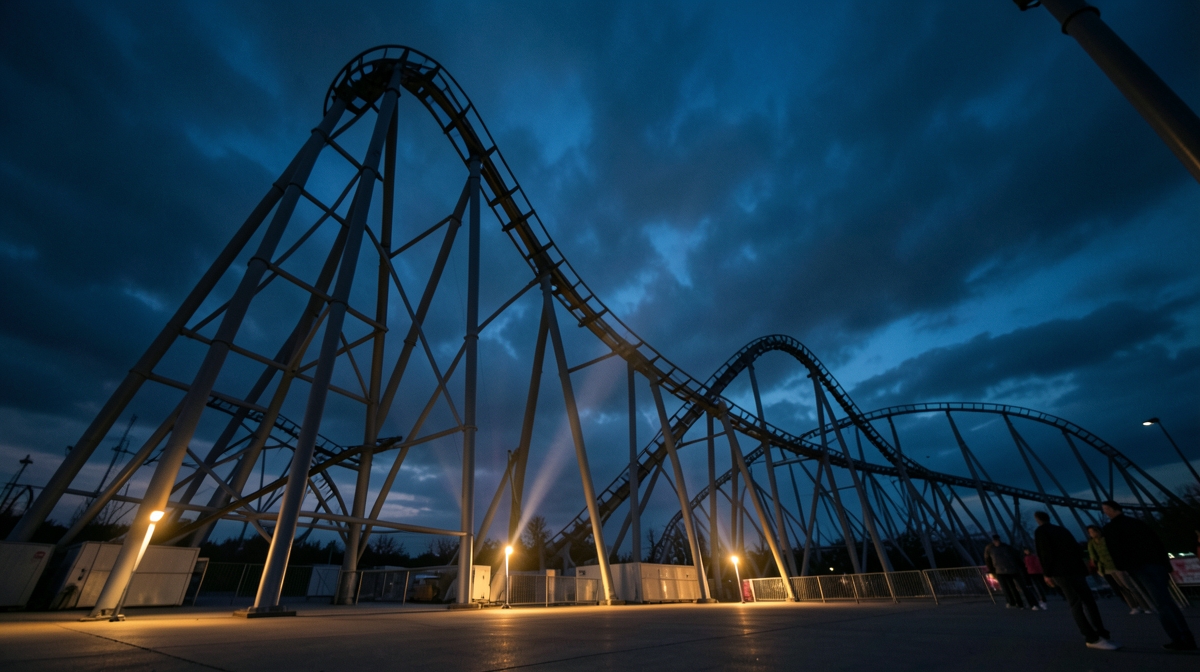
One person died and several riders suffered injuries during a serious rollercoaster incident at a Six Flags amusement park. Aerial footage broadcast by BBC News revealed a stalled train on the tracks while emergency workers assisted stranded passengers down from the ride. Theme park operators and safety inspectors now face urgent questions regarding mechanical safeguards and passenger rescue procedures.
Key Takeaways
- One rider died and several others suffered injuries in a rollercoaster incident at Six Flags.
- Aerial footage showed a stalled ride vehicle where rescue teams helped passengers evacuate safely.
- Emergency teams responded quickly to extract riders from the high structure.
- Theme park safety systems remain under review to determine the exact mechanical failure.
What Happened During the Six Flags Coaster Incident?
One visitor lost their life and several others sustained injuries when a rollercoaster malfunctioned at a Six Flags amusement park. Video recorded from the air showed the ride train halted midway through the circuit, forcing safety personnel to manually reach the trapped guests and assist them off the high structure.
Rollercoaster safety relies on block zones and computer sensors that trigger automatic brakes whenever a mechanical issue appears. When a train stops abruptly outside a station, technicians must deploy harness equipment and maintenance walkways to secure every guest before moving them down to ground level.
- Verify park protocols: Review the published ride evacuation guidelines and safety notices before boarding major theme park attractions.
How Do Emergency Teams Evacuate Stalled Attractions?
Rescue personnel evacuate stranded rollercoaster passengers by deploying ground ladders, mobile lifts, or catwalk access paths to reach stationary cars. They secure riders with individual harnesses, open mechanical seat restraints manually, and guide each visitor step by step down emergency stairs to ensure no further falls occur during descent.
Mechanical failures can occur when brake calipers lose hydraulic pressure or track sensors detect unexpected friction. In those scenarios, safety interlocks prevent subsequent cars from advancing, which traps the train on overhead track sections. Ground teams must isolate power completely before touching mechanical release bars on guest lap restraints.
- Follow crew instructions: Remain seated and keep all safety restraints locked until emergency personnel physically attach your safety line.
What Steps Follow a Fatal Theme Park Accident?
Authorities immediately halt operations across the affected attraction and secure the perimeter for a forensic engineering review. Investigators examine maintenance logs, test structural welds, and inspect sensor telemetry to identify the precise mechanical failure that caused the fatality and injured several other riders at the facility.
Theme park operators must coordinate with civil safety regulators to evaluate ride hardware and emergency training procedures. Independent engineers review hydraulic circuits and structural stress points to verify that fail-safe braking systems behaved as intended. Operations only resume after safety agencies issue complete mechanical clearances.
- Monitor agency bulletins: Check official amusement ride inspection registries and safety updates to track ongoing structural investigations.
FAQ
How many casualties occurred in the incident?
One person died and several individuals suffered injuries during the rollercoaster malfunction, according to reporting by BBC News. Emergency services provided on-site aid and helped stranded riders safely evacuate from the halted train high above the amusement park grounds.
What did aerial footage reveal about the scene?
Aerial footage captured after the event showed a rollercoaster train stranded along the high track structure. The video recorded emergency personnel helping passengers leave their seats and guiding them across maintenance platforms down to safety after the mechanical stop occurred.
How do theme parks handle stuck rollercoasters?
Theme parks use built-in catwalks, specialized harnesses, and manual restraint releases to evacuate passengers from stuck trains. Staff cut electrical power to the track section, secure each passenger individually, and guide visitors along handrails to prevent slips while descending from high track positions.
Amusement parks operate complex mechanical systems that demand continuous maintenance and rigorous oversight to protect visitors. As engineers examine the factors behind this fatal event, operators across the industry will face renewed pressure to reinforce emergency evacuation procedures and transparent inspection standards.
Stay informed with accurate, up-to-date global news coverage.
Sources
- One dead and several hurt after rollercoaster incident at Six Flags (BBC News): https://www.bbc.co.uk/news/articles/c6n4ejx8x1z7o?at_medium=RSS&at_campaign=rss