

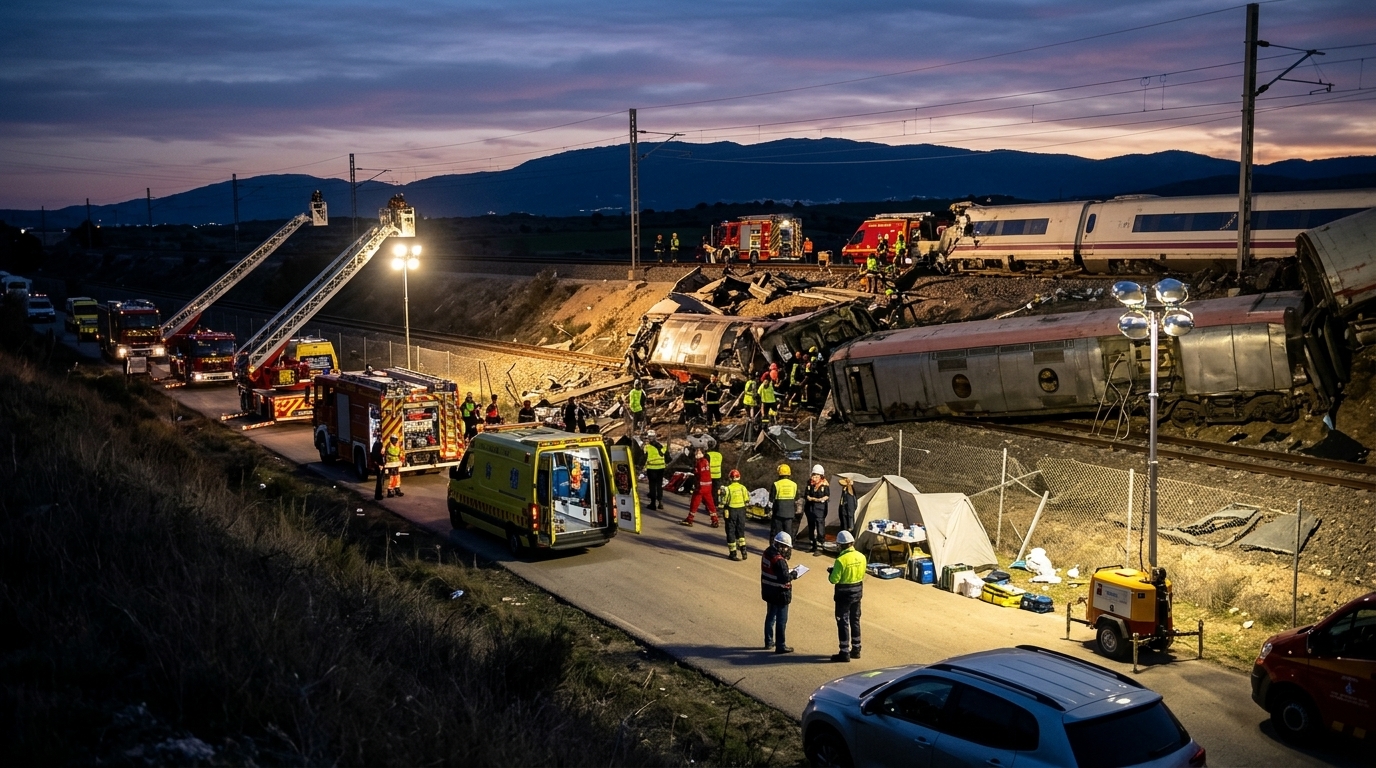
At least 30 people died after a high-speed passenger train rear-ended another south of Madrid in Toledo province. More than 500 passengers were travelling on board the services when the collision occurred. The violent impact sent two carriages sliding down an embankment, sparking a major national emergency.
Key Takeaways
- Officials confirmed at least 30 fatalities in the Toledo rail collision.
- More than 500 passengers were travelling on the two high-speed trains.
- Two carriages tumbled down an embankment following the rear-end collision.
- The disaster involves rail operators linked to a deadly crash months earlier.
What Caused the Toledo High-Speed Rail Disaster?
A direct rear-end collision between two high-speed trains triggered the catastrophic derailment in Toledo province. One convoy struck the rear of another traveling on the same track corridor. The mechanical shock forced two passenger carriages off the rails, sending them over the edge of a steep embankment.
The disaster unfolded south of Madrid along a major transit route. The New York Times reported that officials confirmed at least 30 deaths at the scene. Emergency teams faced difficult terrain while trying to reach trapped survivors inside the overturned carriages.
BBC News reported that more than 500 passengers were on board the trains during the transit. High passenger density compounded the physical danger during the rapid deceleration. Why did automatic signaling fail to halt the approaching train in time?
- Route verification: Check official regional transport bulletins for emergency diversions before booking onward rail connections across central Spain.
Why Does This Collision Heighten Rail Safety Scrutiny?
This latest crash renews fierce scrutiny because the identical train operators suffered another fatal accident mere months ago. Previous collisions involving the same carriers killed dozens of victims and stunned the nation. Repeating a catastrophic failure within months points toward persistent systemic problems in operational supervision.
Rail safety depends on fail-safe spacing controls and automatic train protection protocols. When one train halts or slows, track sensors must alert trailing traffic immediately. If those secondary barriers collapse, passenger trains operating at high velocities cannot stop before impact occurs.
Investigators now focus on mechanical braking efficiency and electronic dispatch logs. Public trust drops sharply when identical transport operators face repeat catastrophes. Transport watchdogs face immediate demands to re-evaluate the carrier safety management systems.
- Operator tracking: Monitor safety inspection findings released by independent transit regulators regarding specific national carrier fleets.
What Operational Changes Follow the Crash?
Authorities will impose immediate track speed restrictions and heightened manual spacing controls along the central transit corridor. Rail networks typically reduce velocity thresholds through collision zones while safety inspectors examine physical track conditions. Transport ministries also commission urgent reviews of signaling software to prevent rear-end collisions.
Secondary inspections will check car chassis integrity and embankment containment barriers. Because two carriages careened down an incline, civil engineers must review physical guard railings alongside raised tracks. Carriers must demonstrate full compliance before normal schedules resume.
- Travel monitoring: Verify operational status updates directly through rail booking systems to identify cancelled departures early.
FAQ
Where did the rail accident in Spain occur?
The accident took place in the province of Toledo, located directly south of Madrid. The collision occurred along a high-speed rail corridor carrying hundreds of daily travelers between central transport centers.
How many passengers were travelling on the trains?
More than 500 passengers were aboard the two trains when the impact happened, according to reporting by BBC News. Rescue crews worked through heavy wreckage along the embankment to evacuate hundreds of surviving travelers.
Have these train operators experienced recent accidents?
Yes, the incident comes only months after a fatal crash involving the same rail carriers killed dozens of people. That earlier tragedy stunned the nation and raised major regulatory questions about carrier fleet maintenance and track signaling.
Investigators will continue examining physical track evidence and electronic monitoring files in Toledo over coming weeks. Transport ministries face growing calls to enforce stricter oversight across high-speed lines to restore passenger confidence.
Stay informed with accurate, up-to-date global news coverage.
Sources
- Live Updates: At Least 30 Killed in Train Crash in Spain, Officials Say (NYT > World News): https://www.nytimes.com/live/2026/10/28/world/spain-train-crash-toledo