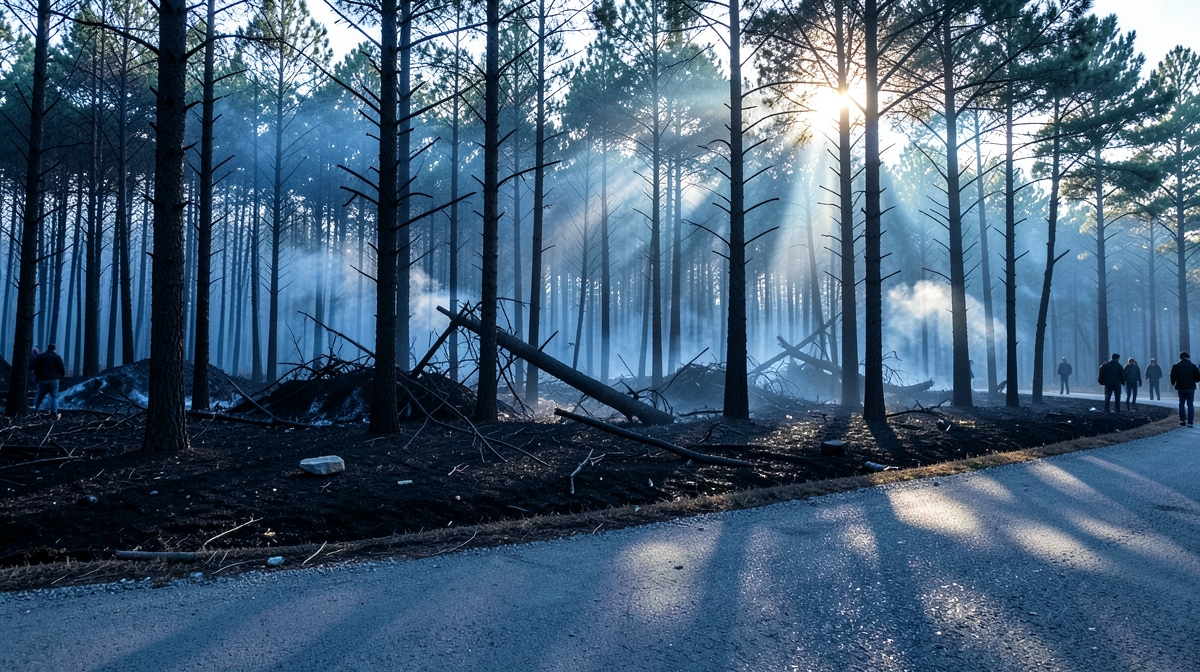
A lethal fire swept across a Canadian military base at catastrophic speed, covering a kilometre in 30 to 60 seconds according to BBC News. The incident killed four men and left dozens injured as flames outpaced emergency responses. Understanding the mechanics of such rapid fire behavior is vital for military and civilian disaster planners.
Key Takeaways
- BBC News reported that a deadly blaze advanced one kilometre in 30 to 60 seconds across a Canadian military base.
- The sudden inferno claimed the lives of four men and injured dozens of other personnel on site.
- Extreme flame velocity outpaced conventional vehicle evacuations and overwhelmed existing defensive firebreaks.
How Fast Did the Military Base Fire Spread?
According to BBC News, the wildfire advanced one kilometre in 30 to 60 seconds across a Canadian military base. That rate equals 60 to 120 kilometres per hour, which outpaces standard vehicle evacuation speeds on unpaved terrain and explains why personnel had almost no warning.
Extreme winds and dry brush create a rapid combustion corridor. Flames do not merely crawl across grass under these conditions; superheated air and airborne embers ignite vegetation hundreds of metres ahead of the main wall. Firefighters call this process spotting, and it accelerates fire fronts beyond normal containment boundaries.
- Evacuation planning: Review emergency perimeter evacuation maps annually to identify secondary escape routes when primary access roads face sudden smoke blockages.
What Casualties Did Defense Officials Confirm?
BBC News reported that the Canadian military base fire killed four men and injured dozens of others during its sudden advance. The extreme speed of the flames prevented victims from reaching reinforced shelter or designated safety zones before intense heat and smoke overwhelmed defensive positions on the base grounds.
Military installations present unique fire hazards because training zones often contain heavy brush alongside combustible materials. When erratic surface winds shift direction suddenly, personnel engaged in field duties cannot anticipate where the blaze will jump. Thermal radiation causes incapacitation within seconds, leaving no time to deploy personal fire shelters.
- Perimeter monitoring: Install automated infrared sensor networks along base boundaries to detect sudden heat surges before physical spotters can see smoke plumes.
Why Do Fast-Moving Wildfires Overwhelm Standard Defenses?
Standard perimeter firebreaks cannot stop blazes that travel a full kilometre in under a minute, as BBC News documented at the site. High-velocity winds loft burning embers directly over cleared soil, establishing new fire fronts behind active emergency lines and cutting off primary transportation paths for base personnel.
When a flame front moves at extreme velocity, oxygen consumption spikes and creates localized firestorms. Crews facing such conditions cannot establish defensible water lines because radiant heat forces vehicles back. Military commanders must rely on immediate pre-emptive evacuations rather than active suppression whenever wind thresholds exceed safe limits.
- Firebreak expansion: Widen exterior defense corridors around sensitive compounds beyond standard buffer requirements to reduce ember ignition hazards during high wind advisories.
FAQ
How quickly did the fire travel across the base?
According to BBC News, the blaze travelled an entire kilometre in 30 to 60 seconds. This velocity translates to speeds between 60 and 120 kilometres per hour, making it impossible for personnel on foot or in slow vehicles to outrun the advancing flame front.
How many people were killed or hurt in the incident?
BBC News confirmed that the fire killed four men and injured dozens of others. The rapid onset of radiant heat and dense smoke overwhelmed individuals before emergency teams could establish secure corridors or reach personnel caught near active training areas.
What makes base fires spread so aggressively?
Severe winds, dry fuel, and radiant heat combine to launch embers far ahead of the fire front. This process bypasses defensive clearings and ignites separate fires almost instantaneously, creating insurmountable barriers that trap personnel and destroy access roads before crews can react.
Rapid-spreading wildfires test the absolute limits of emergency infrastructure. When flames cover a kilometre in under a minute, defensive barriers fail and reaction windows disappear entirely. Defense planners and civic authorities must adapt their evacuation procedures to prioritize automated warning triggers before wind-driven fires reach unmanageable speeds. Stay informed with accurate, up-to-date global news coverage.
Sources
- Deadly fire at Canada military base moved a kilometre 'in 30 to 60 seconds' (BBC News): https://www.bbc.co.uk/news/articles/ckj0ly6qnp1lo?at_medium=RSS&at_campaign=rss