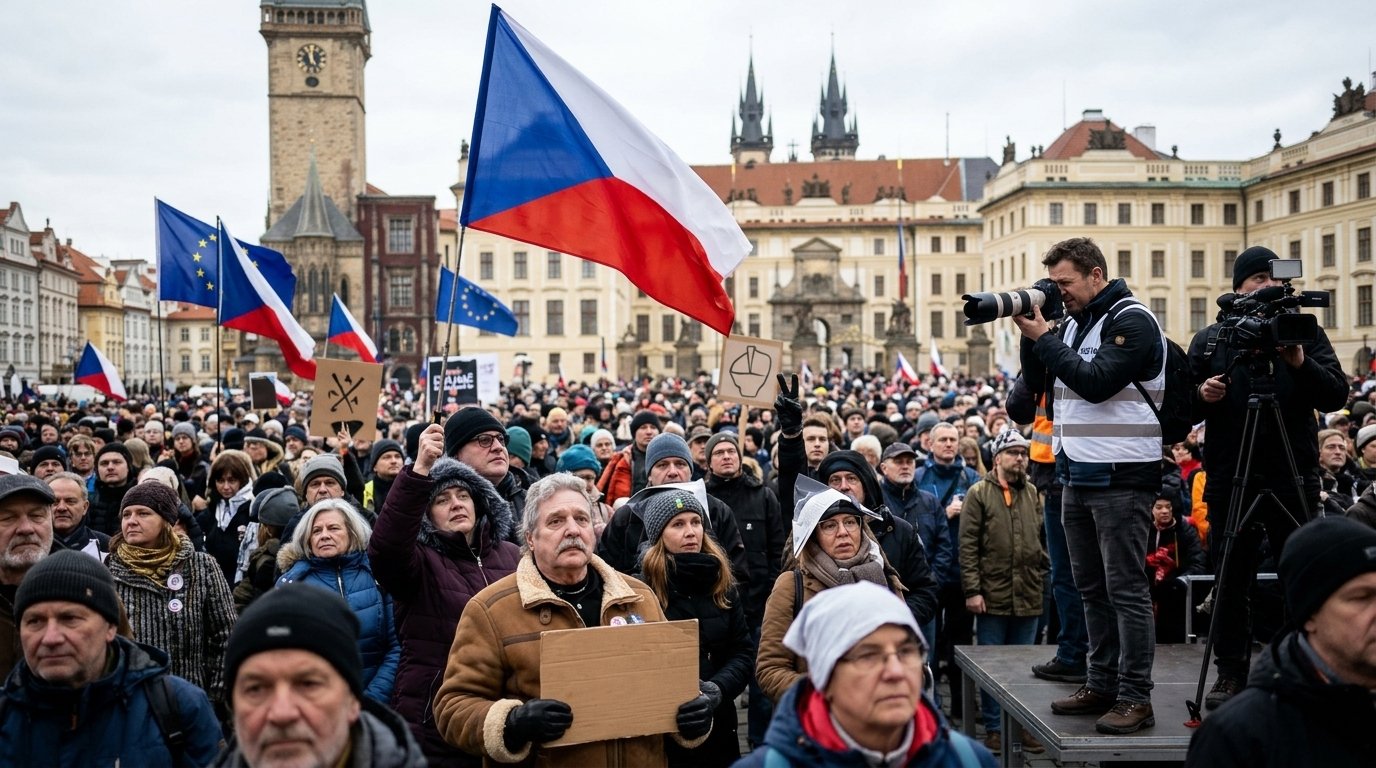
Public demonstrators have taken to the streets across the Czech Republic to oppose state plans altering how national broadcasters receive public money. The demonstrations respond directly to ministerial arguments that public television and radio services must trim operational expenses. Protesters counter that changing the established financial structure threatens basic journalistic independence.
Key Takeaways
- Demonstrators rallied against government proposals to alter public media financing structures.
- Officials defend the policy by asserting that public broadcasters must reduce operational costs.
- Critics argue that shifting funding models undermines editorial independence and media freedom.
- The dispute highlights growing friction over state influence across European public broadcasting.
Why Are Citizens Demonstrating Against the Financing Changes?
Czech citizens are demonstrating because replacing established funding channels creates direct political influence over independent editorial rooms. When state authorities assume closer control over public broadcast revenue, journalists face subtle pressure to soften critical coverage. Protesters maintain that independent news rooms require dedicated, autonomous revenue to protect democratic accountability from shifting political majorities.
The core dispute centers on how public networks sustain daily operations without executive interference. According to reporting from BBC News, civic groups warn that altering funding mechanisms leaves news operations exposed to political whims. If ministerial budget officers control yearly funding allocations, state authorities gain indirect power over investigative departments.
Do civic protests alter legislative momentum during contentious budget votes? Public gatherings signal strong public resistance, forcing lawmakers to weigh public trust against planned financial reductions.
- Monitor policy debate: Track civic announcements from independent journalist unions to observe any legislative amendments before parliament votes.
What Justification Does the Government Present for the Shift?
Government ministers justify the policy shift by arguing that state-backed television and radio institutions must reduce costs during broad economic adjustments. Officials argue that public services cannot remain immune to fiscal restraint when other sectors face spending caps. They maintain that modernizing funding channels allows public broadcasters to streamline operations without diminishing programming quality.
State representatives emphasize that administrative efficiency remains their primary objective. BBC News reported that the government insists public broadcasters need to cut their operating expenses. Officials claim the proposed adjustment updates financial administration rather than interfering with newsroom decisions.
The mechanism relies on restructuring how funds flow from national treasuries to broadcast management. Broadcasters warn that sudden cost cuts disrupt field reporting and documentary production. When resources shrink, editors often reduce regional coverage first, weakening public access to reliable reporting.
- Review administrative audits: Check public accounting summaries published by state audit agencies to compare proposed broadcaster budget caps.
How Could Funding Restructuring Affect Editorial Autonomy?
Restructuring public broadcast funding weakens editorial autonomy by placing newsroom budgets within direct reach of partisan budget approvals. Broadcasters that depend on annual parliamentary approvals become vulnerable to funding freezes whenever investigations scrutinize ruling officials. Media freedom advocates warn that removing protected income streams dismantles necessary firewalls that shield reporters.
In our experience, direct fiscal dependency alters institutional culture long before official directives appear. Reporters become cautious when covering controversial legislative bills, anticipating punitive funding debates during annual reviews. Demonstrators in Prague and regional centers stress that predictable, ring-fenced funding remains the single best defense against editorial interference.
The conflict reflects broader debates across Europe regarding media governance and state influence. When national broadcasters rely on direct state funding, ruling parties often challenge critical reporting. Protecting independent journalism requires legal safeguards that prevent finance ministries from adjusting broadcaster budgets arbitrarily.
- Support independent reporting: Subscribe directly to regional non-profit news outlets that publish verified reporting without state subsidies.
FAQ
Why are demonstrators protesting in the Czech Republic?
Demonstrators are rallying against official plans to change how public media receives funding. BBC News reported that protesters view the shift as a threat to media freedom, arguing that changing funding mechanisms exposes public broadcasters to governmental interference and threatens independent reporting.
What reason did the government give for changing broadcaster funding?
The government asserts that public broadcasters must cut operational costs to improve fiscal efficiency. Officials state that state-backed television and radio networks need budget consolidation, arguing that administrative updates will rationalize expenses without compromising public information duties.
How does public funding protect journalistic independence?
Protected public funding provides television and radio organizations with predictable revenue separate from partisan budget votes. Independent funding prevents ruling politicians from withholding cash to silence investigative coverage, ensuring journalists can report accurately without fear of political retaliation.
The confrontation over Czech public broadcast funding reflects a continuing struggle to protect independent journalism from political pressure. As legislative debates advance, public demonstrations show that citizens consider autonomous newsrooms vital for democratic accountability. Stay informed with accurate, up-to-date global news coverage.
Sources
- Czechs rally against plan to switch funding of public media (BBC News): https://www.bbc.co.uk/news/articles/cm8e0knr7604o?at_medium=RSS&at_campaign=rss