A mid-air bomb alert forced a London-originating Wizz Air commercial flight to make an unscheduled emergency landing in Budapest. Hungarian military authorities scrambled a fighter jet to intercept and trail the passenger aircraft until it touched down safely on the runway. The swift intervention highlights standard civil-military contingency procedures used across European airspace whenever airborne security alarms occur.
Key Takeaways
- A Wizz Air passenger flight departing London diverted to Budapest following a mid-air bomb threat.
- Hungarian military command scrambled a fighter jet to escort the passenger airliner safely to the tarmac.
- Ground crews and emergency personnel secure isolated taxiways to conduct rigorous screening after suspicious airborne warnings.
What triggered the emergency diversion to Budapest?
Flight crew members initiated diversion protocols after receiving an active bomb threat while cruising in European airspace. Pilots must treat every unverified security alert as an immediate peril, immediately contacting regional air traffic controllers to secure rapid descent clearance toward the nearest equipped international runway capable of emergency response.
According to reporting from BBC News, the aircraft departed from London before the security warning emerged mid-flight, prompting the rapid rerouting to Budapest. Aviation safety guidelines mandate that flight crews reduce altitude, isolate suspicious items if detected, and alert sovereign defense networks to clear surrounding flight corridors.
- Monitor travel alerts: Check official airline notifications and airport flight status boards immediately whenever unexpected diversions interrupt your scheduled journey.
How do military fighter jet escorts operate during in-flight threats?
Defense ministries dispatch armed fighter jets to establish visual communication with civil cockpits and protect sovereign airspace during suspected security crises. The escorting jet establishes an adjacent observation position, observing the airliner cabin windows, confirming control responsiveness, and standing ready to assist air traffic authorities with navigation.
BBC News confirmed that a Hungarian fighter jet deployed rapidly to accompany the Wizz Air plane as it approached the runway in Budapest. Fighter pilots inspect the exterior surfaces of the airliner, assess whether the crew retains full navigational command, and help maintain radio relays if civilian communications become compromised.
- Follow crew instructions: Remain seated with your seatbelt fastened while military aircraft operate nearby during mandatory security procedures.
What safety protocols follow an emergency landing on the ground?
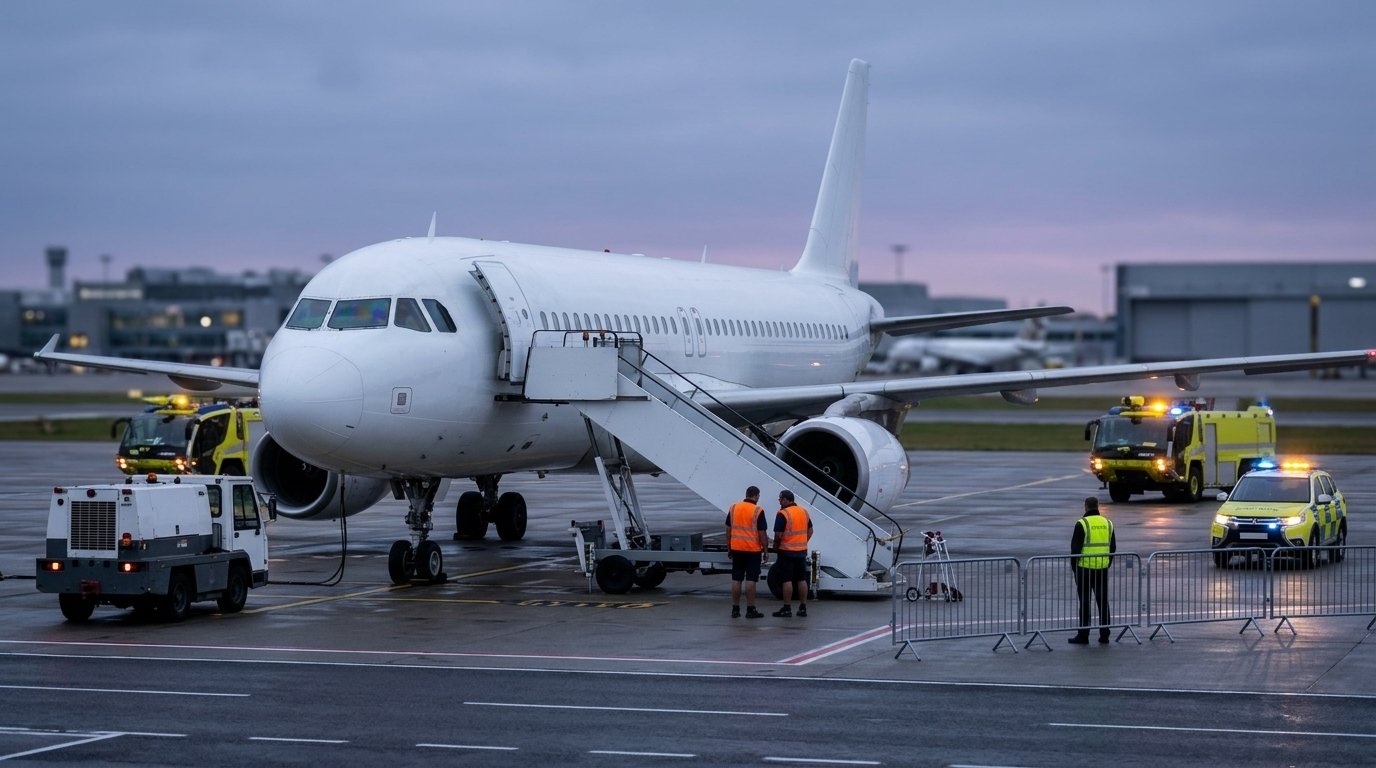
Airports direct threatened aircraft toward remote parking stands positioned far from active passenger terminals and operational runways. Fire engines, explosive disposal specialists, and police detachments surround the grounded plane, evacuating passengers onto buses before technicians and trained canine units conduct systematic luggage and fuselage inspections.
Ground coordinators enforce these physical isolation zones to protect nearby terminal infrastructure from potential blast hazards. Security teams interview travelers, verify luggage manifests against physical cargo, and scan the entire cargo hold before returning the commercial airframe to active service.
- Preserve travel documentation: Keep your identification papers and boarding passes accessible to accelerate secondary airport security checks following an emergency diversion.
FAQ
Why was a Hungarian fighter jet scrambled for this flight?
Hungarian defense authorities scrambled the jet because military interception represents the standard protocol when civil aircraft receive bomb threats in national airspace. The jet visually verifies aircraft control and ensures a secure corridor directly toward the designated emergency runway.
Where did the affected Wizz Air aircraft land?
The airliner landed in Budapest, Hungary, after diverting from its flight path following the mid-air security alert reported by BBC News. Airport officials directed the aircraft to a secure area for specialized inspection procedures.
What happens to passengers after an emergency landing?
Passengers leave the aircraft under the supervision of local emergency responders and undergo identity verification. Security personnel search all cabin baggage and cargo before travelers receive clearance to rebook flights or proceed to arrival terminals.
Aviation defense teams and air traffic managers maintain strict coordination to handle unverified in-flight warnings swiftly. Rigorous drills ensure that passenger airliners reach safe runways under escort without risking terminal facilities.
Stay informed with accurate, up-to-date global news coverage.
Sources
- Wizz Air flight from London in emergency landing after bomb threat (BBC News): https://www.bbc.co.uk/news/articles/c6rryvwre0p5o?at_medium=RSS&at_campaign=rss