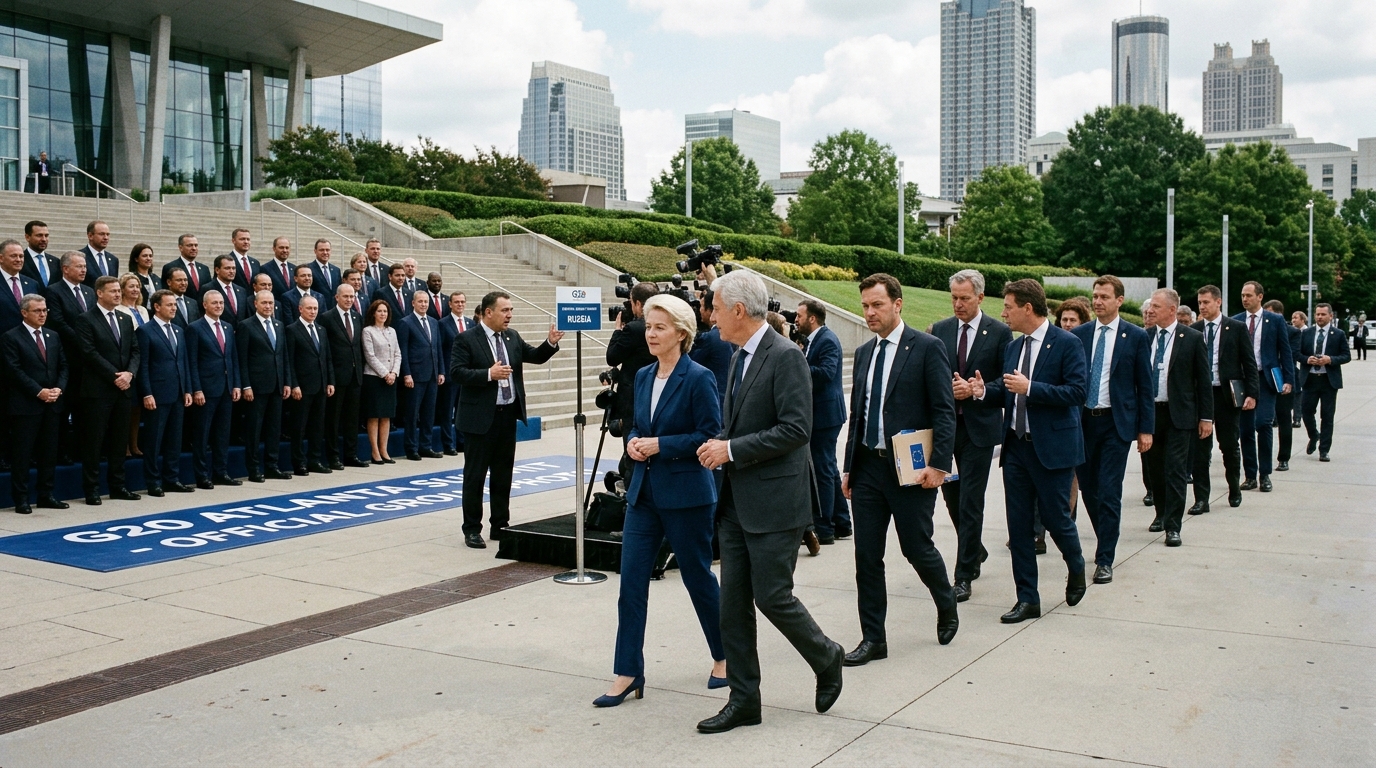
Organizers cancelled the official G20 family photograph in Atlanta after European foreign ministers refused to share a stage with Russian Foreign Minister Sergei Lavrov. The collective walkout disrupted summit protocol, signaling deep diplomatic divisions over Russia within the international forum. As BBC News reported, several European diplomats objected directly to standing beside Moscow's top representative for the customary group portrait.
Key Takeaways
- European ministers boycotted the official G20 group photograph in Atlanta over Sergei Lavrov's attendance.
- Summit organizers abandoned the traditional family picture rather than hold a fractured photo session.
- The incident underscores deepening operational paralysis and diplomatic tension inside the G20 framework.
Why Was the G20 Family Photo Scrapped in Atlanta?
European foreign ministers refused to stand alongside Sergei Lavrov for the summit portrait, forcing organizers in Atlanta to scrap the event entirely. Diplomatic protocol requires unanimous consent for official group staging, so widespread European resistance made a complete gathering impossible. When several delegations declined to appear, summit coordinators chose total cancellation over an visibly incomplete assembly.
Summit gatherings usually rely on the family photo as a visual show of unity. When ministers refuse to line up together, that public demonstration collapses. As BBC News detailed, European officials drew a hard line against sharing the frame with Lavrov. Their stance shows how bilateral acrimony now prevents basic summit courtesies.
- Track summit communiques: Review official host statements after high-level meetings to detect widening policy splits between member nations.
How Does This Walkout Alter Group Diplomacy?
Diplomatic boycotts inside working sessions alter summit proceedings by turning symbolic routines into contentious public disputes. Rather than focusing solely on economic agreements, host delegations now spend critical negotiation hours managing seating charts and staged appearances. As tensions grow, standard multilateral choreography gives way to open confrontation on the international stage.
Have you noticed how symbolic gestures often expose real diplomatic deadlock? Refusing a photo op removes the polished facade that multilateral institutions rely upon to project stability. When delegations refuse visual association with peers, it reveals that ordinary diplomatic normalization remains stalled across major international institutions.
- Observe bilateral meetings: Follow bilateral corridor discussions to identify which regional blocs maintain direct communication channels during summits.
What Does the Atlanta Standoff Signal for Future Summits?
Host nations organizing upcoming summits will likely rethink ceremonial traditions to avoid similar public boycotts and operational embarrassment. Organizers may replace open photo sessions with smaller working groups or separate arrivals to prevent direct standoffs between rival delegations. Without structural adjustments, future ministerial meetings risk repeating the Atlanta confrontation.
Diplomatic coordination depends on predictable rituals that give opposing governments room to engage without public embarrassment. When standard ceremonies fail, hosts face logistical friction that distracts from substantive negotiation. In our experience, international bodies must rethink traditional protocols whenever fundamental geopolitical divisions make unified stagecraft impossible.
- Monitor protocol adjustments: Watch future international conference agendas to spot when organizers remove traditional ceremonial events from official schedules.
FAQ
Why did ministers boycott the G20 family photo?
European foreign ministers refused to appear in the picture because of Russian Foreign Minister Sergei Lavrov's presence. As BBC News reported, their refusal to share a ceremonial stage with Moscow's delegation led host organizers in Atlanta to cancel the traditional group photograph entirely.
Where did the G20 summit dispute take place?
The diplomatic protest occurred during the G20 summit held in Atlanta. European representatives used the gathering to register immediate objections to standing beside Sergei Lavrov, triggering a disruption that forced officials to abandon the scheduled family photo session.
Has a G20 family photo been cancelled before?
Summit organizers have faced comparable protocol crises during prior geopolitical disputes. When diplomatic friction prevents full participation, host governments regularly adjust or drop symbolic photo events to avoid showcasing glaring member absences on camera.
International summits will continue to test the limits of multilateral cooperation as major powers clash over protocol and representation. Watch how host countries adapt ceremonial routines in future gatherings to keep working sessions operational.
Stay informed with accurate, up-to-date global news coverage.
Sources
- G20 'family photo' cancelled after protests over presence of Russian minister (BBC News): https://www.bbc.co.uk/news/articles/cmd6dp2y576do?at_medium=RSS&at_campaign=rss