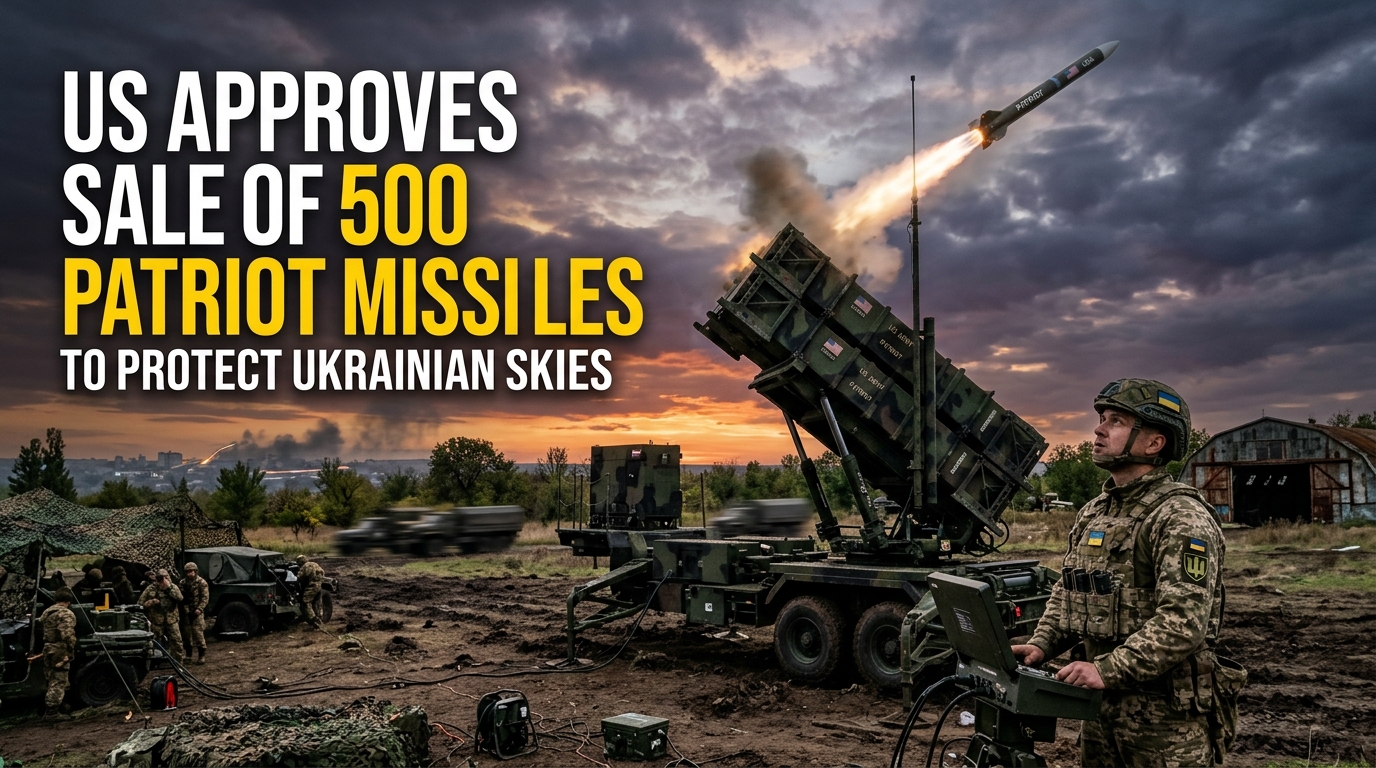
Washington has cleared the transfer of 500 Patriot missiles to Ukraine, providing a substantial replenishment for Kyiv air defense battalions. These interceptors serve as the primary operational shield capable of tracking, tracking down, and destroying incoming Russian ballistic attacks. The decision directly addresses sustained pressure on critical defensive stockpiles.
Key Takeaways
- Washington authorized the foreign military sale of 500 Patriot interceptor missiles to Ukrainian forces.
- American-produced Patriot munitions represent Ukraine's only confirmed operational capability to shoot down Russian ballistic missiles.
- High-velocity ballistic trajectories demand specialized kinetic interceptors to neutralize incoming warheads before impact.
- Sustained regional security depends on establishing predictable supply pipelines for long-term defensive inventory replenishment.
Why Are Patriot Interceptors Crucial Against Ballistic Attacks?
Patriot missiles remain the only verified defensive weapon in the theater that can consistently intercept incoming Russian ballistic strikes, according to BBC News reporting. Traditional surface-to-air missiles track aerodynamic targets well, but ballistic missiles plunge at extreme velocities along steep terminal trajectories that bypass conventional regional air defenses entirely.
When a hostile ballistic launcher fires, the projectile arches high into the upper atmosphere before plunging toward ground coordinates at hypersonic speed. Standard surface defenses cannot compute the firing solution fast enough. Patriot guidance systems calculate collision points in seconds, launching interceptors that collide directly with the warhead to trigger mid-air destruction.
Without this specialized kinetic hit-to-kill mechanism, descending warheads strike energy grids, command installations, and civilian population centers without resistance. Ukrainian forces rely on these American-made batteries to deny hostile forces uncontested missile superiority over key metropolitan zones.
- Defensive audit: Track battery expenditure rates against incoming strike volumes to optimize defensive coverage across contested urban sectors.
How Will 500 Missiles Reshape Kyiv Defensive Capabilities?
Securing an allocation of 500 interceptor missiles provides Ukrainian defense planners with operational breathing room to sustain defensive shields against intense saturation bombardments. Sustained saturation attacks deliberately exhaust regional interceptor stockpiles, forcing air defenders to ration fire units and leave critical municipal infrastructure exposed to secondary waves.
In our experience analyzing air defense operations, missile replenishment alters strategic risk calculations immediately. When interceptor reserves drop to critical margins, commanders face brutal trade-offs between shielding frontline military logistics or protecting power plants.
A dedicated supply of 500 units restores defensive stamina. Defensive crews can engage coordinated salvos without fear of running their launchers empty before the next logistical transfer arrives. It ensures that defensive shields remain active during extended strike campaigns.
- Supply monitoring: Review logistics schedules continuously to coordinate battery maintenance before interceptor inventories face acute depletion.
What Comes Next for Air Defense Integration?
Integrating 500 additional interceptors requires disciplined deployment around high-priority sectors where Russian ballistic threats concentrate most heavily. Distribution networks must ferry interceptor containers from secure arrival points to dispersed launchers, keeping batteries concealed from hostile reconnaissance while maintaining rapid readiness postures.
Logistical handlers must position reloads close enough to firing sites to permit prompt reloading while dispersing storage bunkers to avoid single points of failure. Radar operators also synchronize detection parameters with neighboring surveillance units to conserve munitions.
Ukrainian units must balance ammunition conservation with aggressive interception protocols. Because ballistic threats offer only minutes of flight warning, automated handoffs between radar arrays and missile crews determine whether an incoming warhead is stopped cleanly in the sky.
- Readiness check: Inspect tactical transport corridors and secure staging sites to accelerate turnaround times between battery launches.
FAQ
Why can only Patriot missiles defeat Russian ballistic strikes?
Ballistic missiles travel on steep, high-speed trajectories that evade standard air defenses. As BBC News reported, American-made Patriot interceptors are the only effective weapon Ukraine possesses to defeat them, using advanced radar targeting and kinetic impact to destroy warheads before they touch the ground.
How large is the newly authorized missile package?
The United States approved the sale of 500 Patriot missiles directly to Ukraine. This allocation focuses specifically on replenishing interceptor munitions rather than delivering new radar arrays, allowing existing operational batteries to maintain steady defense against continuous aerial bombardments.
How do interceptor supplies affect civilian infrastructure protection?
Adequate interceptor reserves allow air defense commanders to engage hostile ballistic salvos consistently. When inventories decline, defense personnel must prioritize high-value military targets over electrical infrastructure, whereas stable ammunition levels ensure broader protective coverage over civilian municipal centers.
Sustained air defense remains central to regional stability as missile engagements dictate the protection of essential civil networks.
Stay informed with accurate, up-to-date global news coverage.
Sources
- US approves sale of 500 Patriot missiles to Ukraine (BBC News): https://www.bbc.co.uk/news/articles/c3vgxznlx7jzo?at_medium=RSS&at_campaign=rss