

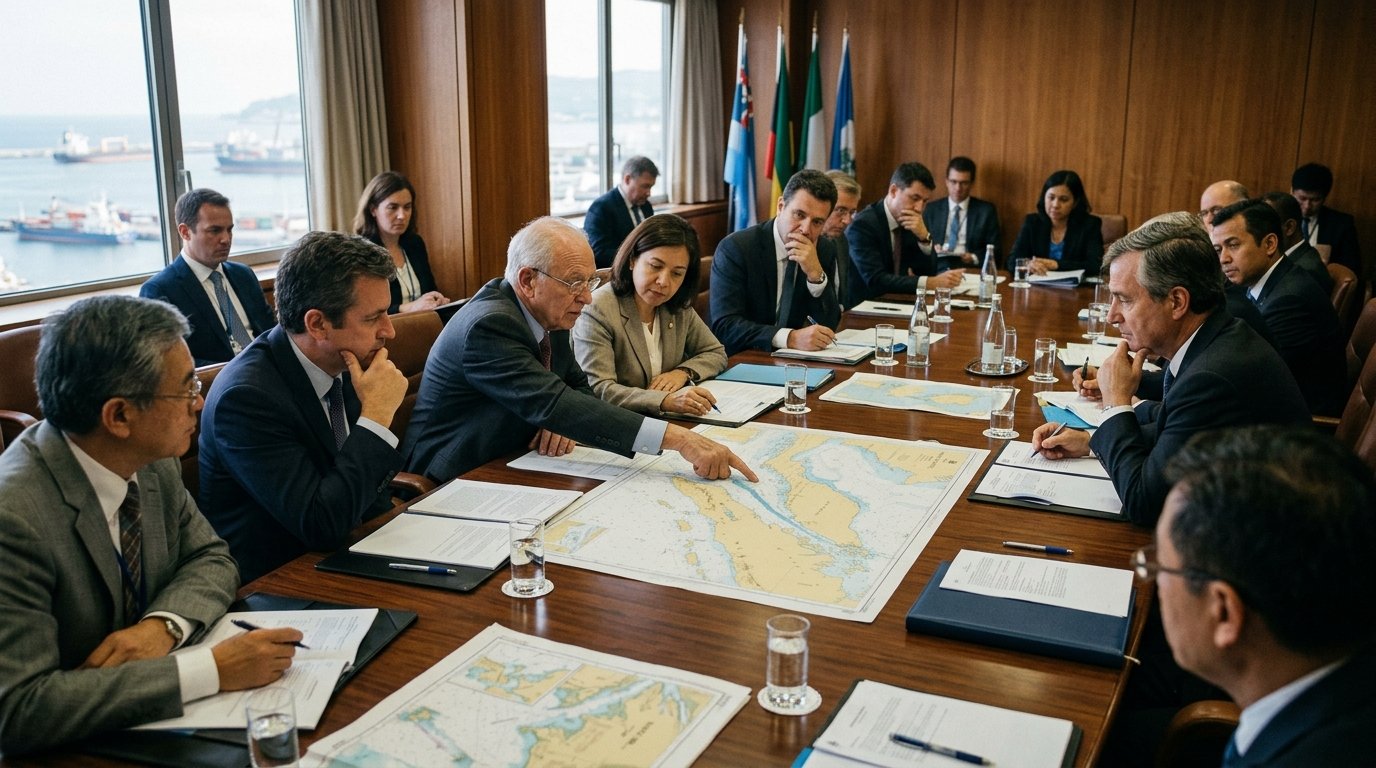
Iran has presented an offer to the United States to reopen the Strait of Hormuz within seven days. Indirect diplomacy between the two nations is actively moving through third-party intermediaries to evaluate the proposed terms. The maritime passage remains one of the world's most critical transit corridors for commercial energy shipping.
Key Takeaways
- Iran offered a deal to reopen the Strait of Hormuz in seven days.
- A US official confirmed constructive discussions are underway through third-party mediators.
- Negotiations rely on indirect communication channels between Washington and Tehran.
What Are the Terms of the Seven-Day Proposal?
Iran framed its proposal around a strict seven-day window to restore maritime access through the vital waterway. This timeline establishes an immediate framework for indirect diplomatic exchanges between Tehran and Washington. According to reporting from BBC News, a US official confirmed that constructive discussions are taking place through diplomatic mediators to address the terms.
The use of intermediary channels allows both governments to negotiate maritime security without requiring direct bilateral meetings. Mediators pass draft terms, verification requirements, and operational steps between the parties. When maritime transit halts in major straits, even a temporary timetable helps create a baseline for diplomatic engagement.
- Track diplomatic channels: Monitor mediator statements to verify whether initial timelines yield concrete operational agreements.
How Are Diplomatic Mediators Managing the Talks?
Third-party intermediaries manage the exchange of positions because Washington and Tehran lack formal direct diplomatic lines. These mediators shuttle technical requirements and operational commitments between the two governments to test whether the seven-day framework is viable. According to BBC News, US officials view these initial indirect exchanges as constructive steps forward.
Indirect talks function by isolating specific maritime transit protocols from broader geopolitical disagreements. Intermediaries focus on clarifying the sequence of events needed to restore normal shipping traffic. In our experience, structured mediation keeps communication channels open while reducing the immediate risk of operational miscalculation.
- Review maritime advisories: Check official commercial shipping bulletins for updates on route safety and passage clearance.
Why Is the Reopening Timeline Crucial for Global Transit?
The seven-day window creates a defined benchmark for resolving the corridor closure before trade disruptions compound. Clear timelines force negotiating teams to address core conditions quickly rather than allowing talks to stall. Restoring access through this strategic corridor stabilizes commercial passage and reduces uncertainty for international shipping operators.
Commercial shipping networks require predictable access to schedule routes, secure maritime insurance, and ensure crew safety. When a primary chokepoint faces disruption, transport logistics become strained across international supply chains. A concrete timetable gives logistics operators and regional authorities a target date to assess security and plan vessel movements.
- Assess supply contingencies: Evaluate transport schedules and alternative cargo routing while negotiations proceed through mediators.
FAQ
What did Iran propose regarding the Strait of Hormuz?
Iran offered a deal to the United States to reopen the Strait of Hormuz within a seven-day period. The offer sets a specific operational timeline for resolving the waterway closure through ongoing mediated talks.
How are the United States and Iran conducting these discussions?
The two nations are communicating through indirect diplomatic channels. According to a US official cited by BBC News, third-party mediators are facilitating constructive discussions between Washington and Tehran regarding the proposed terms.
Why is the Strait of Hormuz significant to international commerce?
The Strait of Hormuz serves as a vital international shipping channel for global energy and freight. Any closure or reopening directly impacts commercial vessel traffic, regional navigation security, and worldwide transport schedules.
As indirect negotiations continue through diplomatic mediators, the upcoming seven-day window will reveal whether both parties can convert initial discussions into durable maritime stability.
Stay informed with accurate, up-to-date global news coverage.
Sources
- Iran offers US deal to reopen Strait of Hormuz in seven days (BBC News): https://www.bbc.co.uk/news/articles/cqgmrr9ekr7ko?at_medium=RSS&at_campaign=rss