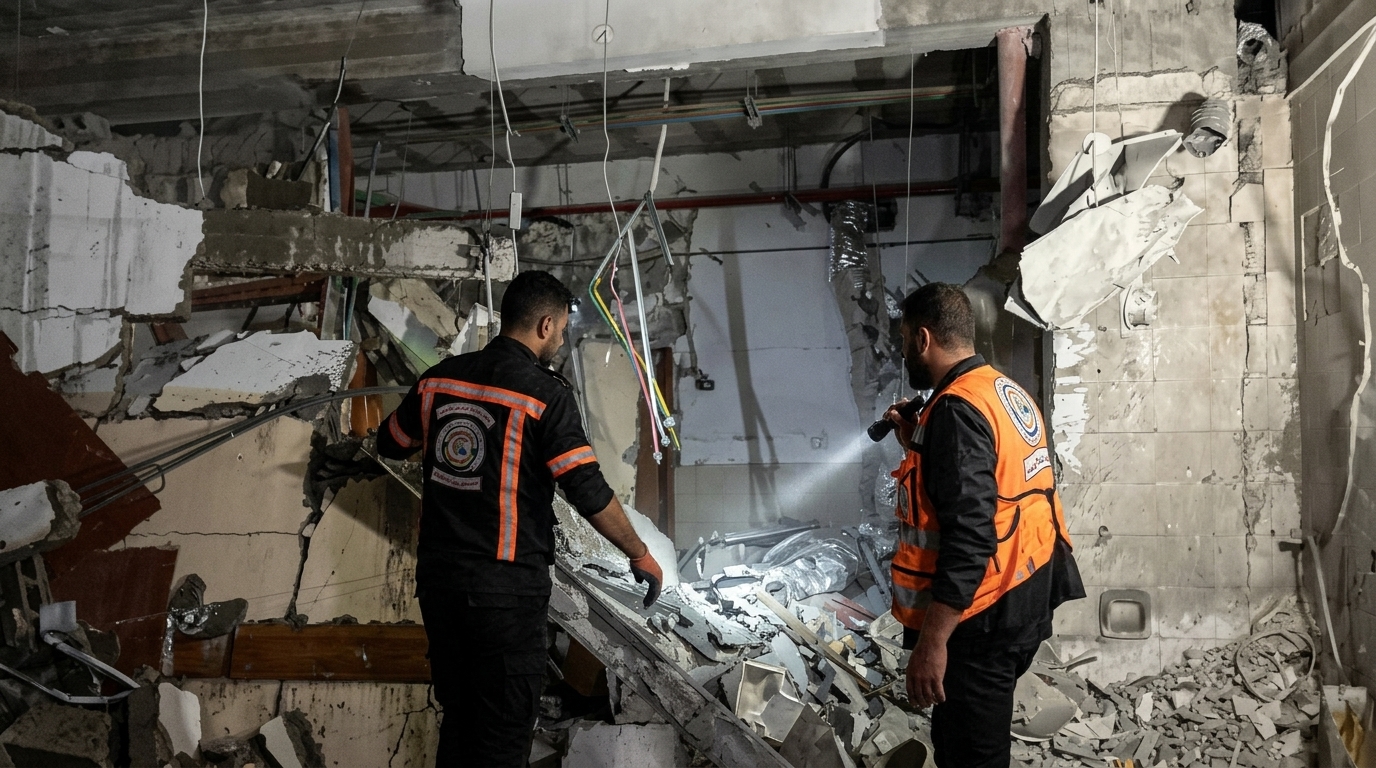
An Israeli strike hit the surgery department of Nasser Hospital in Khan Younis, killing at least six people and injuring 20 others. The attack caused extensive structural destruction to the medical facility despite an active 2025 cease-fire agreement. Gaza civil defence officials and independent witnesses confirmed that medical staff and vulnerable patients were among the casualties.
Key Takeaways
- An attack on Nasser Hospital's surgery ward in Khan Younis killed six and wounded 20.
- A surgeon, an official, and a disabled patient died in the incident.
- The strike occurred despite an existing 2025 cease-fire agreement.
- Extensive physical damage has severely disrupted emergency operations at the facility.
What Happened Inside the Surgery Department at Nasser Hospital?
The military strike directly struck the surgery ward of Nasser Hospital in Khan Younis, destroying critical treatment rooms and killing at least six people. Gaza civil defence personnel reported that the blast injured at least 20 others and wrecked essential medical equipment during routine clinical operations.
Witnesses reported immediate chaos inside the medical complex as debris collapsed on staff and patients. A surgeon, an administrative official, and a disabled patient were among the six victims killed in the ward, according to reporting by The New York Times. Rescuers struggled to clear rubble and move injured survivors to safer wings.
- Track verified humanitarian bulletins: Follow direct statements from recognized relief agencies to assess civilian impacts and medical supply shortages in Khan Younis.
Why Does This Strike Threaten the 2025 Cease-Fire Agreement?
The attack directly fractures the stability of the 2025 cease-fire by hitting a protected medical center with high civilian presence. Striking inside an active hospital creates diplomatic friction, complicates humanitarian coordination, and risks triggering wider retaliatory actions from regional factions that observe the truce.
Cease-fire frameworks rely on mutual restraint around critical civil infrastructure like hospitals and clinics. When a direct strike hits an operational surgery department, trust between negotiating parties collapses rapidly. Regional intermediaries face mounting diplomatic resistance as they try to keep cross-border communication open amid heavy casualties and property destruction.
- Review international diplomatic briefs: Examine formal responses from mediating governments to gauge whether current cease-fire terms will hold or undergo renegotiation.
How Will Khan Younis Medical Facilities Manage the Aftermath?
Local healthcare services face severe operational strain because Nasser Hospital serves as the primary medical hub in southern Gaza. The loss of surgical capacity and specialized medical personnel immediately limits treatment for incoming emergency trauma patients, forcing existing clinics to absorb an unmanageable caseload.
BBC News confirmed that the blast caused extensive structural damage across the surgical wing, disabling critical care space. When major trauma wards lose surgical staff and sterile operating rooms, patient mortality rises sharply. Emergency teams must now reroute critically injured individuals across damaged transport corridors to overwhelmed neighborhood centers.
- Support emergency medical logistics: Coordinate with international aid channels that deliver trauma kits and surgical supplies directly to frontline healthcare personnel.
FAQ
What was the casualty count from the Nasser Hospital strike?
According to the Gaza civil defence agency and hospital rescuers, the strike killed at least six people and wounded at least 20 others. Victims identified by witnesses included an on-duty surgeon, a local official, and a disabled patient receiving care in the surgery department.
Where did the attack take place?
The strike hit the surgery department of Nasser Hospital, located in the southern Gaza city of Khan Younis. The complex serves as the major medical center for the area, treating both local residents and displaced individuals seeking emergency medical care.
Did the strike occur during an active truce?
Yes, reporting from The New York Times confirmed that the strike struck Nasser Hospital despite an active 2025 cease-fire. The incident raises urgent questions among regional monitors and mediators about the durability of the truce and the protection of healthcare infrastructure.
Healthcare facilities require strict protection under all international conventions, yet incidents like the strike on Nasser Hospital illustrate how fragile humanitarian safeguards remain. International monitors must continue tracking truce compliance to prevent further breakdown of vital medical services.
Stay informed with accurate, up-to-date global news coverage.
Sources
- Israeli strike on Nasser Hospital kills at least six, Gaza civil defence agency says (BBC News): https://www.bbc.co.uk/news/articles/ckzd9p7e4eqeo?at_medium=RSS&at_campaign=rss