A temporary ceasefire allowed dozens of civilians to complete a grueling 24-hour journey out of Russian-occupied Oleshky. Evacuees endured years of direct combat conditions, severe isolation, and intense deprivation before humanitarian transport finally moved them to safety. How did these families manage to survive against such impossible odds?
Key Takeaways
- Evacuees completed a difficult 24-hour transit out of occupied Oleshky after years under occupation.
- Civilians crossed dangerous minefields on foot simply to search for daily food supplies.
- Convoys of buses and ambulances reached the northern Ukrainian border with Belarus under a temporary ceasefire.
How Did Civilians Survive Years Trapped in Oleshky?
Civilians survived years trapped in Oleshky by relying on mutual aid and taking extraordinary risks to secure basic necessities. Families faced intense supply cutoffs in the frontline city, forcing residents into desperate daily choices. One evacuated couple described crossing active minefields on foot just to search for food before transit routes opened.
The New York Times reported that residents lived under constant bombardment and deep isolation. Frontline conditions cut off commercial supply lines, leaving people without clean water, electricity, or standard medical assistance. Survival depended entirely on finding leftover food in deserted sectors while dodging unexploded ordnance across frontline paths.
- Monitor civilian transit: Follow verified corridor updates from regional agencies when tracking ongoing civilian extractions.
What Logistics Enabled the 24-Hour Evacuation?
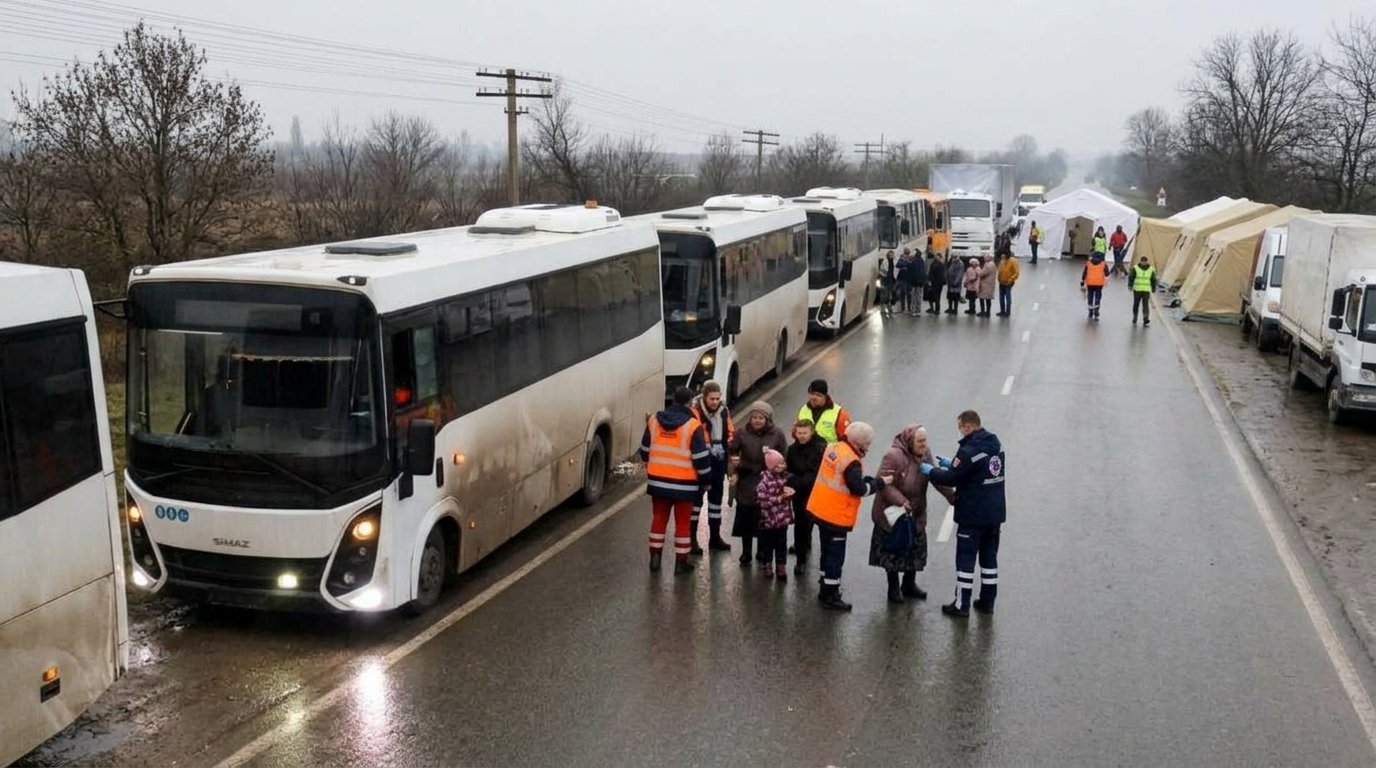
A temporary ceasefire made the 24-hour evacuation possible by pausing artillery strikes and opening an emergency transit window. Coordinated fleets of buses and medical ambulances collected vulnerable residents, moving them along designated passage routes. BBC reporter Dan Johnson confirmed these transport convoys safely reached the northern Ukrainian border with Belarus.
Moving injured and elderly residents out of an active combat pocket required continuous medical monitoring on board. Ambulances provided stabilization for frail survivors who had gone without routine healthcare for years. The long overland detour ensured vehicles skirted active battle sectors, turning an otherwise short distance into a day-long journey.
- Track humanitarian corridors: Verify official ceasefire windows through cross-border monitoring groups before assessing safe transit feasibility.
How Are Families Reconnecting After the Crossing?
Families are reconnecting after the crossing through coordinated reception points staffed along the border with Belarus. Weary evacuees met relatives and support teams after years of forced separation under occupation. Many residents arrived in tears, telling waiting aid workers and reporters that they had finally come back from hell.
These arrival posts provide immediate trauma screening, warm food, and emergency communication services. Relatives who had lost contact with loved ones for months gathered at transit hubs to receive arriving buses. Rebuilding communication links and arranging transitional shelter now form the primary focus for reception teams on site.
- Support family tracing: Check official municipal registry channels if you need to trace displaced relatives from front-line zones.
FAQ
How long did the evacuation trip take for Oleshky residents?
The journey took approximately 24 hours of overland travel from the occupied city of Oleshky. Convoys of buses and ambulances navigated complex security checkpoints and long transit detours before arriving at the northern Ukrainian border with Belarus under an agreed temporary ceasefire.
What extreme conditions did residents face before leaving?
Residents endured years under military occupation directly inside an active combat zone. Food and medical shortages became so acute that civilians regularly risked their lives. One evacuated couple reported crossing active minefields on foot simply to locate basic food supplies to survive.
Who monitored the arrival of evacuees at the border?
International journalists and regional aid teams monitored the crossing. The BBC reported that correspondent Dan Johnson met the arriving convoys of buses and ambulances at the northern Ukrainian border with Belarus, where evacuees reunited with relatives following their departure from the city.
Reception teams continue to register arrivals and arrange ongoing medical care for those who survived years of frontline isolation. Reconnecting displaced families remains an urgent priority as border crossings process these arrivals. Stay informed with accurate, up-to-date global news coverage.
Sources
- ‘We Are Coming From Hell’: A Ukrainian City’s Evacuees Tell Survival Stories (NYT > World News): https://www.nytimes.com/2026/10/31/todayspaper/we-are-coming-from-hell-a-ukrainian-citys-evacuees-tell-survival-stories.html