

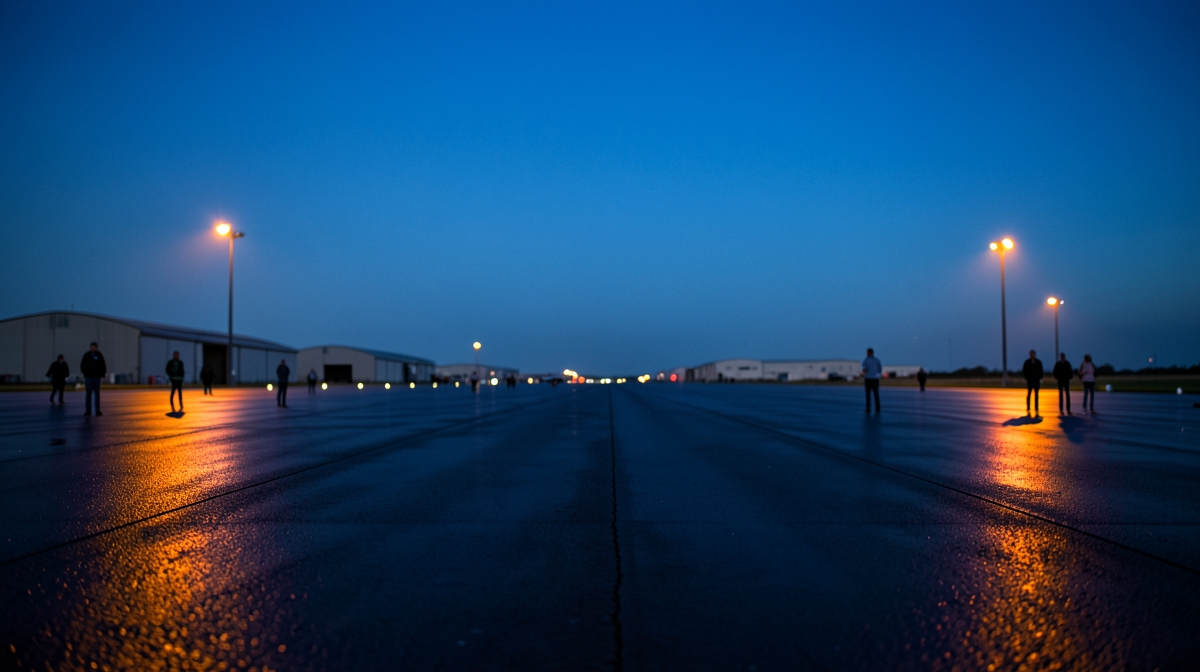
The Pentagon confirmed on Sunday that American military officials withdrew B1 bombers from RAF Fairford in England back to their home stations in the United States. Donald Trump stated that a specific threat prompted the sudden relocation of the heavy aircraft. This unexpected shift marks an immediate change in forward deployment posture across European airfields.
Key Takeaways
- The Pentagon confirmed the return of B1 bombers from England to the United States on Sunday.
- Donald Trump cited an active threat as the reason behind pulling the aircraft from RAF Fairford.
- Military analysts track new low-intensity conflict methods targeting Western air bases.
Why Did the US Military Pull B1 Bombers from Fairford?
Military leadership ordered the immediate departure of the B1 bomber fleet from RAF Fairford after assessing critical security warnings. Donald Trump highlighted that an active threat forced the sudden redeployment back to domestic bases in America. BBC News reported that the Pentagon formally confirmed the relocation on Sunday.
Strategic repositioning protects long-range assets when local defensive postures face unconventional vulnerabilities. Moving the aircraft back across the Atlantic removes high-value targets from emerging risk areas until security teams finish their ground assessments.
- Operational monitoring: Track official Pentagon statements regarding bomber redeployment schedules.
How Are Base Vulnerabilities Changing?
Recent security evaluations indicate that military installations face unconventional pressures from low-intensity conflict tactics. The New York Times noted that an incident at a British air base demonstrates emerging risks where external actors exploit local vulnerabilities around perimeter zones without launching traditional military strikes.
Modern defense planners must now counter decentralized operational hazards alongside conventional aerospace threats. Have allied installations adapted their perimeter protocols quickly enough to prevent sudden disruptions?
- Base security review: Assess airfield defense measures against non-traditional ground intrusions.
What Comes Next for Allied Air Defense?
Allied forces must adjust operational planning while the aircraft remain at their home stations in the United States. Withdrawing the bombers allows American command structures to evaluate intelligence reports and eliminate local vulnerabilities before resuming standard rotations.
In our experience, temporary pullbacks signal deep reviews of intelligence pipelines and immediate protective upgrades across shared operational bases in Europe.
- Strategic readiness: Follow bilateral security coordination between British and American defense officials.
FAQ
Which aircraft were moved from RAF Fairford?
The Pentagon confirmed on Sunday that the United States removed its B1 bombers from the RAF Fairford base in England, sending them directly back to their domestic home stations.
What reason was given for the bomber withdrawal?
Donald Trump stated that an identified threat led the military to withdraw the B1 bombers from the British air base back to the United States for safety.
Is the relocation permanent?
Military officials have not stated whether the redeployment is permanent, as defense planners continue evaluating security conditions and potential unconventional risks surrounding allied European air facilities.
Allied commands continue to monitor global defense facilities closely as security environments evolve.
Stay informed with accurate, up-to-date global news coverage.
Sources
- Trump says 'threat' led US to pull bombers from RAF Fairford (BBC News): https://www.bbc.co.uk/news/articles/cwj3413e5m1lo?at_medium=RSS&at_campaign=rss