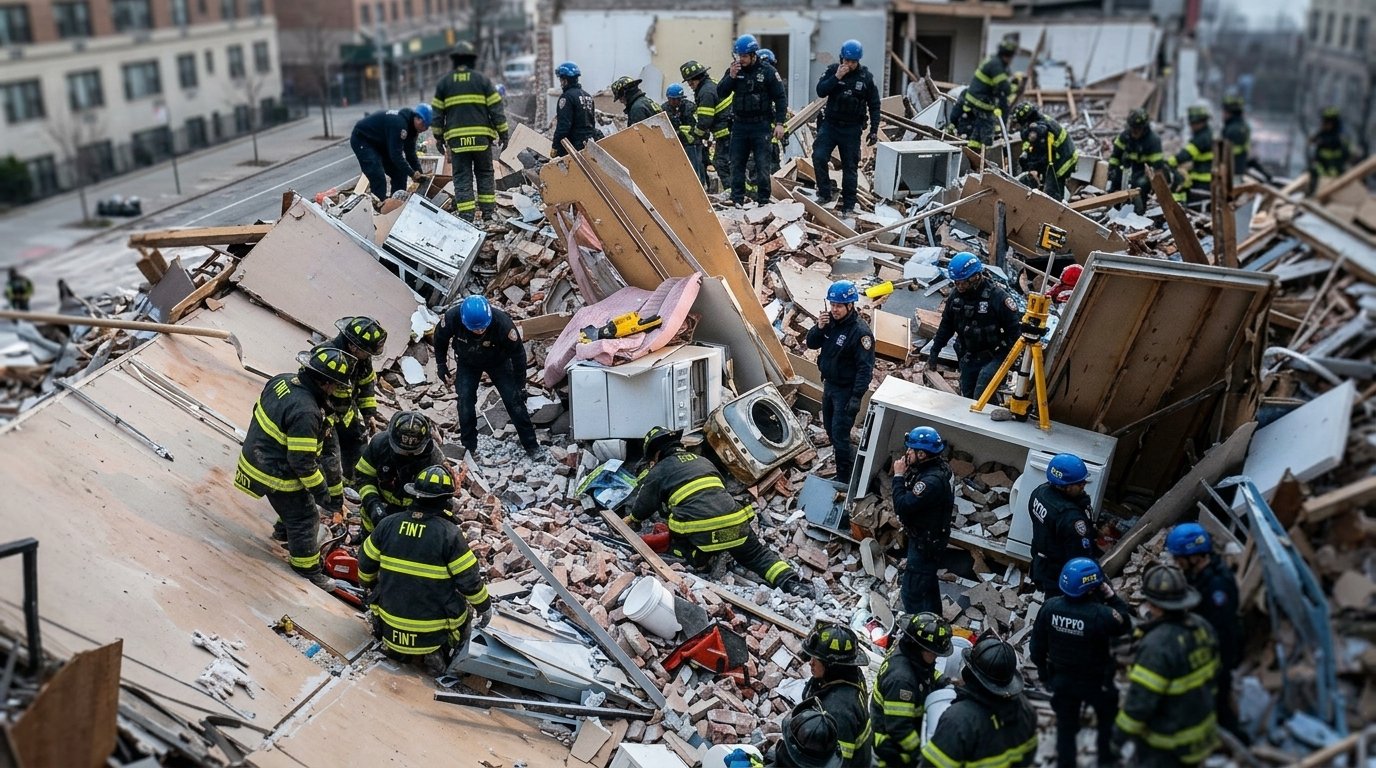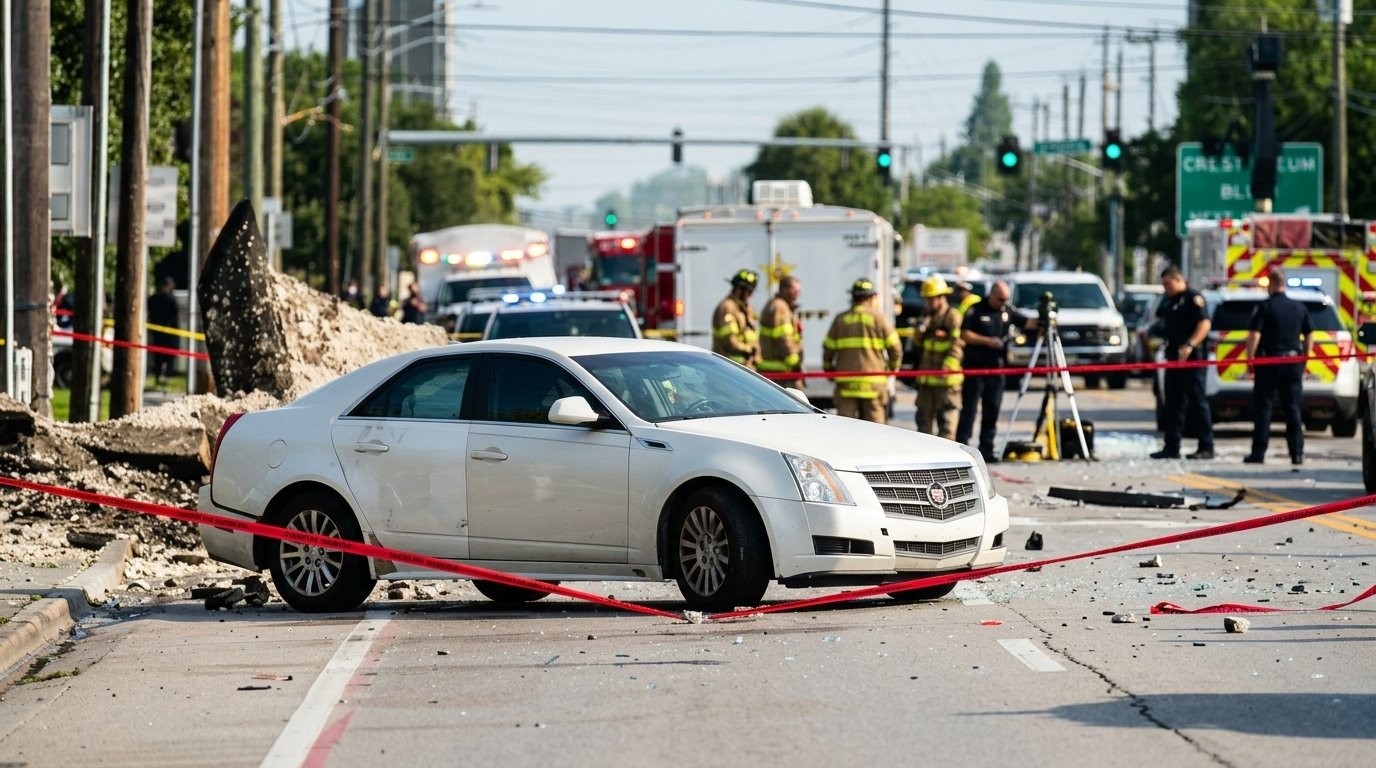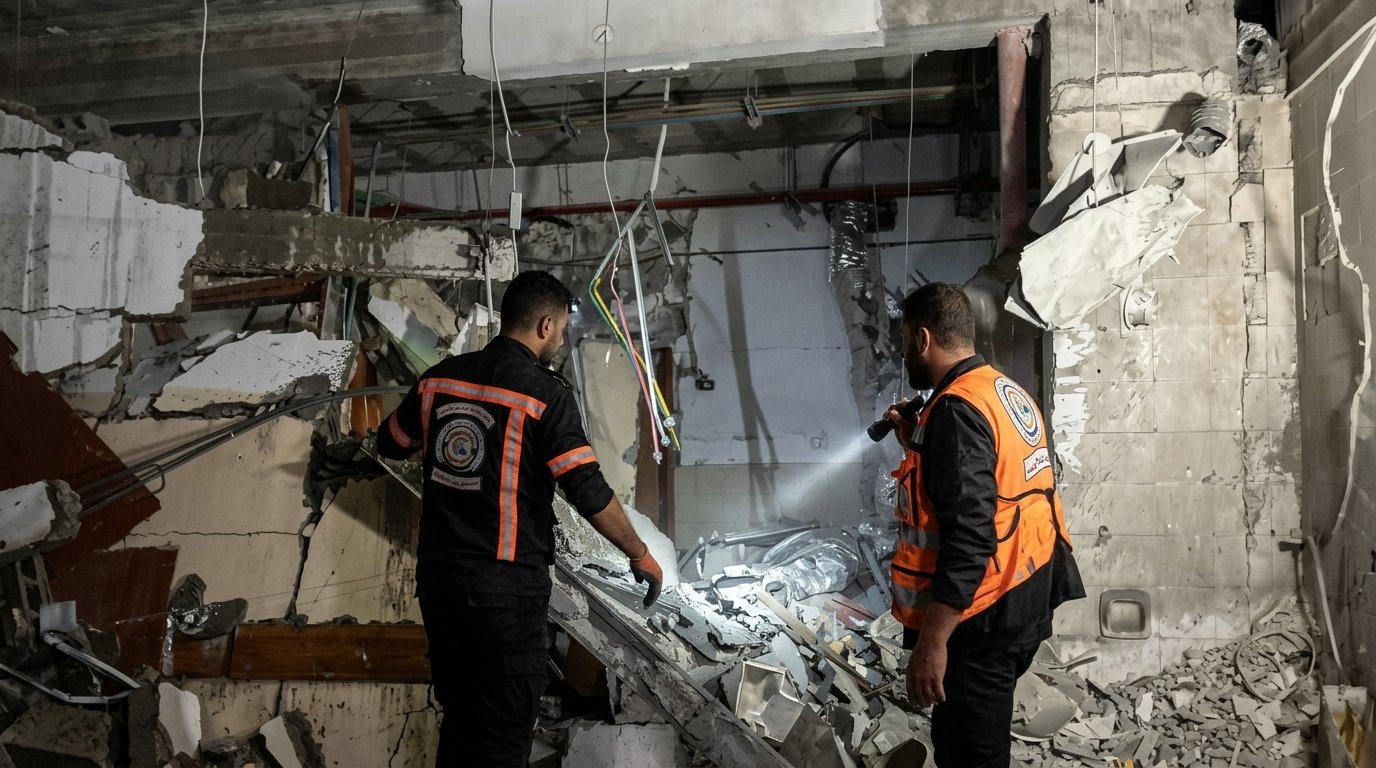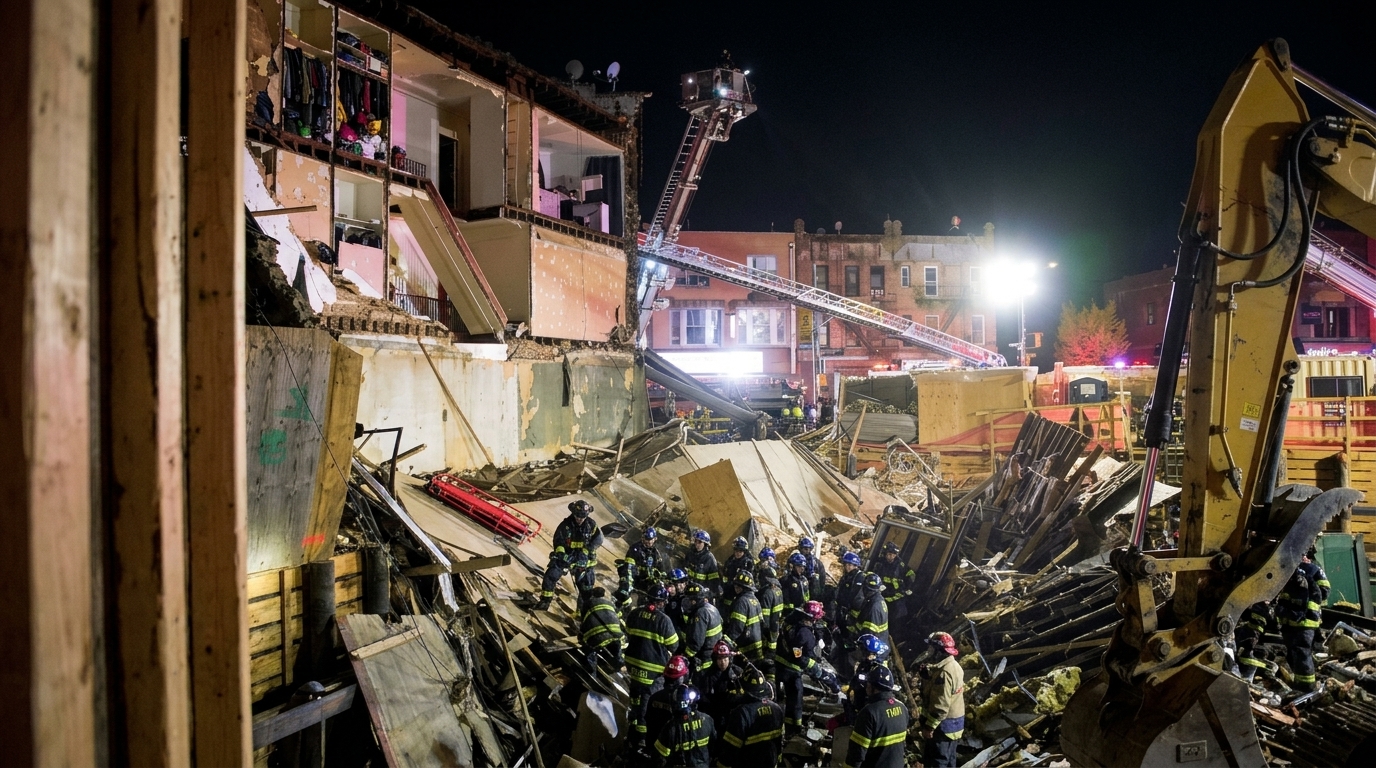
At least two people died after a three-storey building suddenly collapsed in Brooklyn on Wednesday afternoon, according to emergency officials reported by BBC News. First responders rushed to the scene immediately while debris created an active rescue zone. Search crews continue a dangerous operation to locate potential survivors beneath the wreckage.
Key Takeaways
- Officials reported by BBC News confirmed at least two fatalities following a Brooklyn building collapse on Wednesday afternoon.
- Emergency crews are actively conducting dangerous search operations through unstable debris from the three-storey structure.
- Local residents should avoid surrounding transit corridors to maintain open pathways for heavy emergency equipment.
What happened during the Brooklyn building collapse?
A three-storey building collapsed in Brooklyn on Wednesday afternoon, killing at least two people according to municipal officials cited by BBC News. Emergency crews faced severe hazards immediately as the entire structure gave way. The sudden structural failure left unstable masonry across the site, forcing specialized rescue squads to mount an urgent survivor search amid falling debris.
Structural collapses of multi-level properties happen fast when foundational integrity fails. In our experience, load-bearing exterior walls shift outward, causing interior floors to pancake downward in rapid succession. That violent downward displacement traps air pockets where victims might survive, but it also leaves upper perimeter walls completely unsupported. Have you ever considered how delicate such rescue scenes become within seconds?
- Monitor local advisories: Check municipal emergency notification feeds right now to steer clear of affected Brooklyn blocks.
How do rescue teams conduct survivor searches in unstable rubble?
Rescue specialists search shifting debris by establishing secure search corridors before moving heavy masonry, ensuring trapped survivors remain unharmed. BBC News reported that responders in Brooklyn face dangerous conditions while combing the collapsed three-storey property. Teams deploy acoustic listening devices, technical cameras, and physical shoring to stabilize fractured building elements before clearing deep void spaces.
First responders cannot simply haul away large chunks of concrete with excavators during early operations. Rushing that physical clearance risks triggering secondary structural cave-ins across fragile survival pockets. Instead, crews stabilize overhead hazards using timber or hydraulic braces, working inward by hand to reach trapped individuals. We have found that cautious manual extraction preserves vital survival voids.
- Clear emergency lanes: Pull your vehicle off designated access avenues immediately whenever emergency vehicles approach transit corridors.
What should property owners do to prevent structural hazards?
Property owners prevent catastrophic structural failures by scheduling routine professional inspections and repairing visible foundation stress before exterior walls degrade. The Brooklyn collapse highlights how rapidly older multi-storey properties can deteriorate into lethal hazards. Regular structural assessments identify expanding masonry cracks, sagging floor joists, and moisture infiltration long before a full building failure occurs.
Environmental moisture and shifting ground beneath foundations steadily erode load-bearing masonry over time. When water penetrates outer brickwork, seasonal freeze cycles widen mortar joints and loosen structural ties between floors. How often do property managers overlook subtle wall fissures before extensive damage occurs? You protect your occupants by treating diagonal cracks and stuck door frames as urgent warnings.
- Schedule structural audits: Hire a certified building engineer today to inspect exterior load-bearing walls for deep settling fractures.
FAQ
What caused the Brooklyn building collapse?
Officials have not yet publicly released the exact root cause behind the collapse. BBC News confirmed that the three-storey building came down on Wednesday afternoon, leaving at least two people dead. Investigators prioritize securing the perimeter and finishing survivor operations before structural engineers inspect foundation remnants to determine why the failure happened.
How many casualties have officials confirmed so far?
Authorities confirmed that at least two people lost their lives in the incident, as reported by BBC News. Search teams continue to comb through the rubble in dangerous conditions to ensure no other victims remain trapped. Casualty figures may adjust as recovery specialists carefully clear debris from the three-storey site.
How can neighbors stay safe near collapsed buildings?
Neighbors should immediately maintain distance from perimeter fences and follow street closure directions from local emergency officers. Collapsed structures often leave adjacent walls unstable and sever utility lines. If you smell gas or notice widening cracks in your own building walls, evacuate immediately and contact local emergency dispatchers.
Urban structural failures present immediate dangers to surrounding neighborhoods and demand meticulous safety vigilance. First responders in Brooklyn continue their critical work under perilous conditions, reminding urban communities that building integrity remains essential for public safety.
Stay informed with accurate, up-to-date global news coverage.
Sources
- New York building collapse kills at least two, officials say (BBC News): https://www.bbc.co.uk/news/articles/c8zx964glvwxo?at_medium=RSS&at_campaign=rss