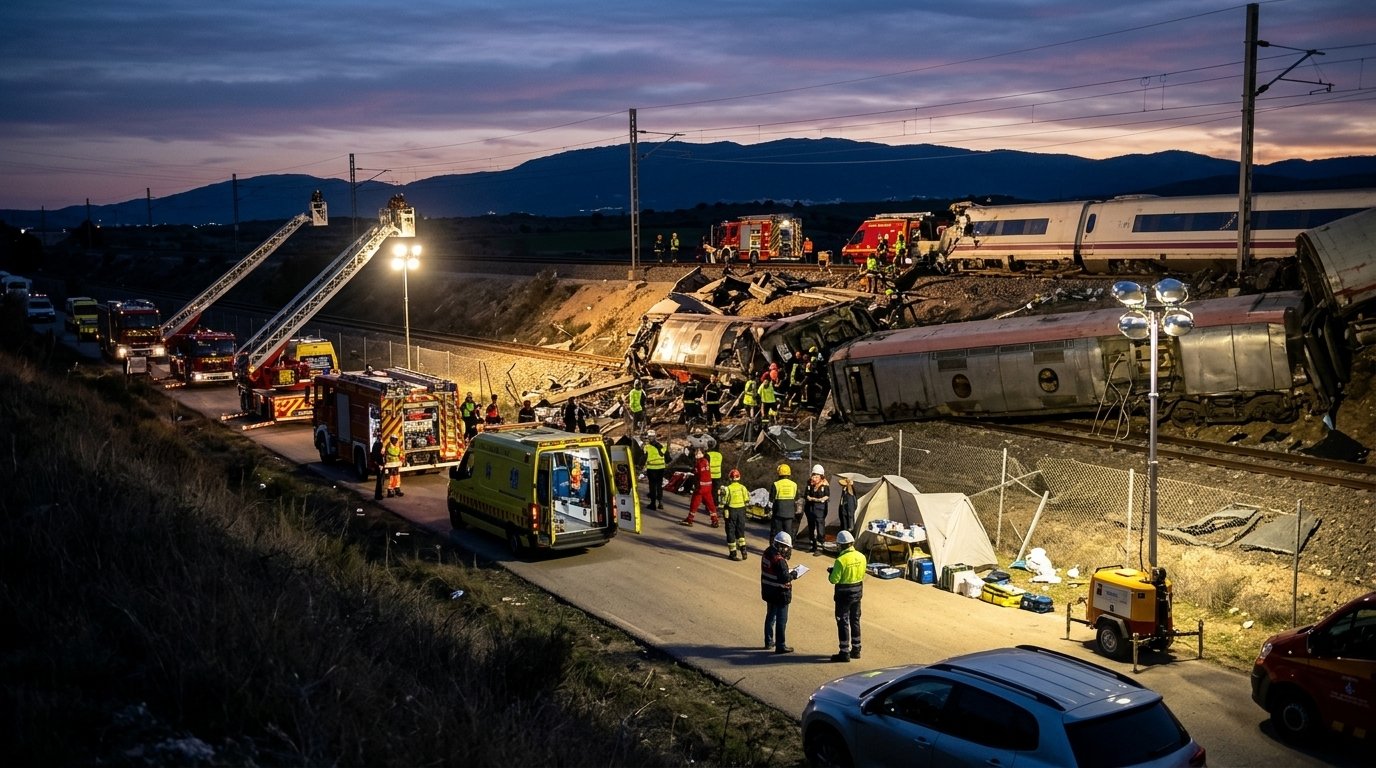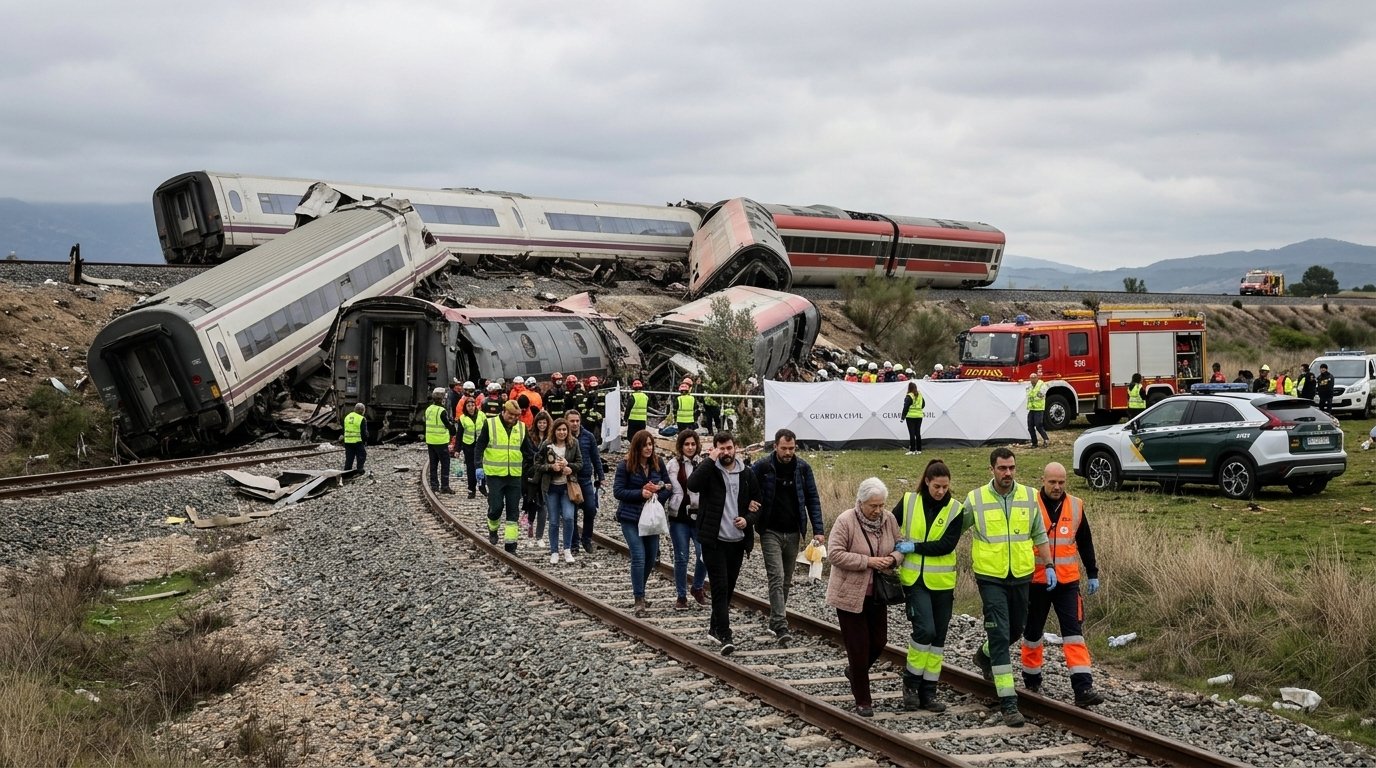
A severe train collision struck Toledo province on Wednesday, leaving travelers stranded amid damaged carriages and debris. Eyewitnesses describe immediate chaos as survivors worked directly alongside fellow passengers to pull injured people out from crushed metal before emergency crews could reach them.
Key Takeaways
- A passenger train crash occurred in Spain's Toledo province on Wednesday.
- Sixty-two-year-old survivor Fernando Seco helped carry at least a dozen wounded victims from the wreckage.
- Evacuees used shattered pieces of the train structure as makeshift stretchers.
- Passengers voiced deep shock and anger following the catastrophic journey.
What Happened at the Rail Crash Site in Toledo?
The collision occurred on Wednesday in the province of Toledo, transforming a routine passenger journey into an immediate disaster. Impact forces shattered rail cars and threw travelers across compartments, causing widespread shock and visible physical trauma across the entire passenger manifest as coaches ground to an abrupt halt.
According to survivor testimony collected by BBC News, passengers described feeling overwhelming panic as the train sustained catastrophic structural damage. The force of the impact tossed luggage and shattered fixtures across the aisles. Uninjured travelers found themselves disoriented in dark, dust-filled compartments immediately after the primary deceleration stopped.
- Emergency Route Check: Monitor local transport authority bulletins in central Spain to confirm operational status before traveling through affected corridors.
How Did Survivors Manage Evacuation Efforts?
Survivors took immediate control of rescue efforts by converting broken carriage debris into emergency carrying boards to lift wounded passengers. Working in small groups, travelers carefully extracted trapped individuals from bent metal compartments and carried them across unstable ground toward safety away from the twisted wreckage.
Passenger Fernando Seco, 62, told The New York Times that he and several volunteers personally transported at least a dozen wounded victims from the crash site. Because commercial stretchers were unavailable in the initial moments, the rescue group dismantled fragments of the shattered cars to haul injured travelers across the ballast.
- Volunteer Rescue Protocol: Clear accessible pathways and support injured passengers without twisting injured limbs when assisting during transit evacuations.
Why Are Rail Passengers Demanding Explanations?
Widespread anger followed the incident as bloodied travelers questioned how a high-volume passenger service could suffer such catastrophic trauma on an active line. Survivors expressed intense frustration to international reporters, insisting that modern safety protocols and signaling mechanisms should have prevented such a violent failure entirely.
Passengers interviewed by BBC News expressed distress over the trauma they endured during the journey. They emphasized that public transit networks carry an absolute obligation to maintain reliable fail-safes. In our experience, serious transport incidents generate urgent demands for operational accountability, and travelers now expect immediate administrative investigations into trackside conditions.
- Transit Safety Inquiries: Review official transport ministry accident preliminary releases to track technical safety findings as regulators conclude site inspections.
FAQ
Where did the rail accident take place?
The rail crash occurred in Toledo province in central Spain on Wednesday. The impact derailed carriage sections and damaged railway infrastructure, forcing passengers to evacuate directly onto adjacent terrain alongside the rail corridor while waiting for regional assistance to arrive.
Who coordinated the initial extraction of wounded travelers?
Uninjured passengers organized the initial rescue before organized responders arrived. Sixty-two-year-old survivor Fernando Seco reported that he and other passengers evacuated at least a dozen wounded travelers using parts of the shattered train carriage as makeshift litters to move victims safely.
What emotions did passengers express after the collision?
Passengers expressed intense shock, confusion, and anger according to reporting from BBC News. Survivors questioned how such a dangerous crash happened on a standard transit route, demanding clear answers from rail operators regarding systemic failures that led to the incident.
Regional rail transport continues to face intense public scrutiny as investigators evaluate physical evidence from the Toledo track line to establish precise causes for the catastrophic failure.
Stay informed with accurate, up-to-date global news coverage.
Sources
- Spain Crash Survivor Describes a ‘Twisted Tangle of Metal’ (NYT > World News): https://www.nytimes.com/2026/10/28/world/europe/spain-train-crash-survivor.html