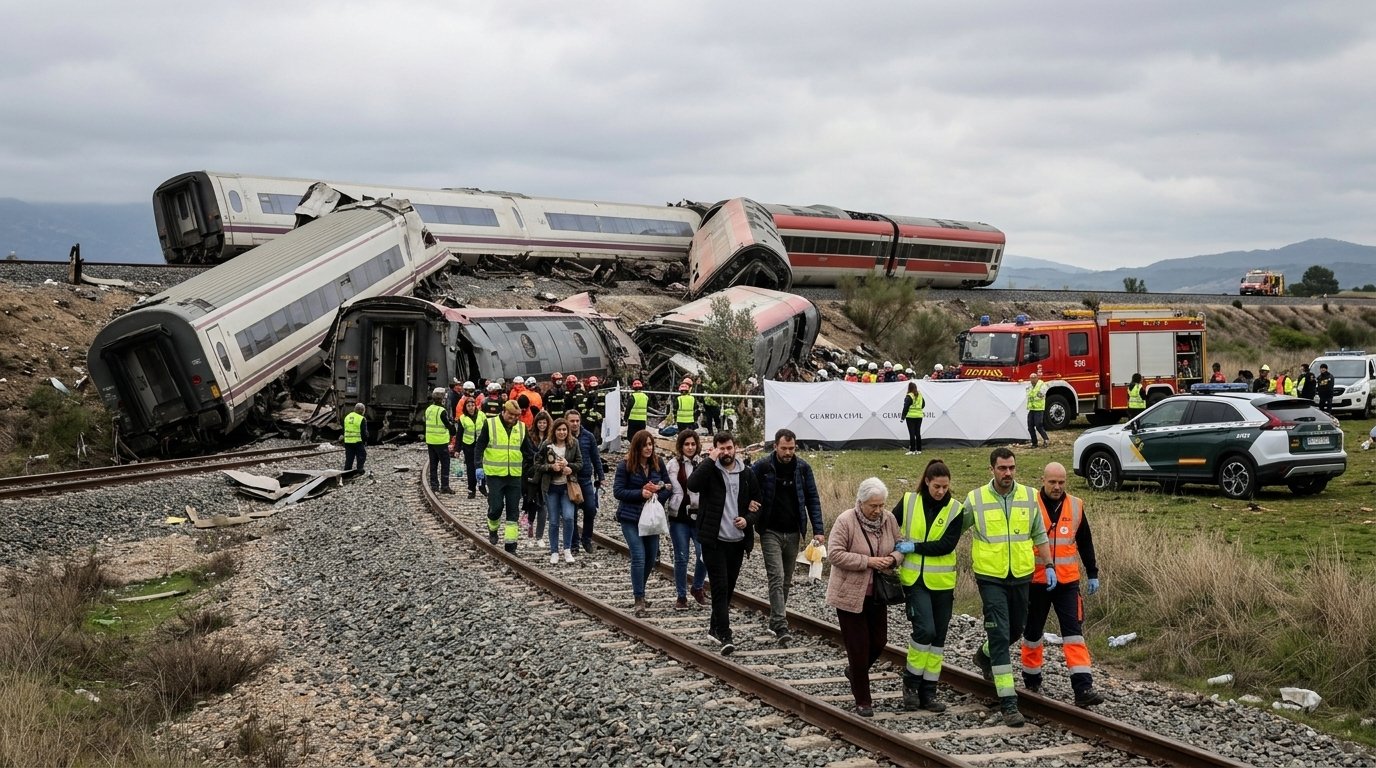
Spain opened a formal judicial inquiry after transport officials confirmed traffic control errors triggered a fatal train collision. The transport minister revealed that controllers cleared a passenger train to proceed at high speed along a sector occupied by a stalled convoy. The New York Times reported that judicial authorities will now scrutinize dispatch records to establish individual criminal liability.
Key Takeaways
- Judicial authorities opened an investigation into traffic control actions behind a fatal Spanish train collision.
- Transport officials confirmed controllers authorized maximum speed clearance despite a stalled train occupying the track ahead.
- The inquiry centers on communication breakdowns and human failure within centralized dispatch operations.
What Caused the Fatal Spanish Train Collision?
Traffic controllers mistakenly authorized an oncoming train to travel at high track speeds even though an earlier train remained stalled directly in its path. Transport authorities identified this clearance error as the direct trigger for the deadly crash. Human operators failed to maintain proper separation before granting track clearance.
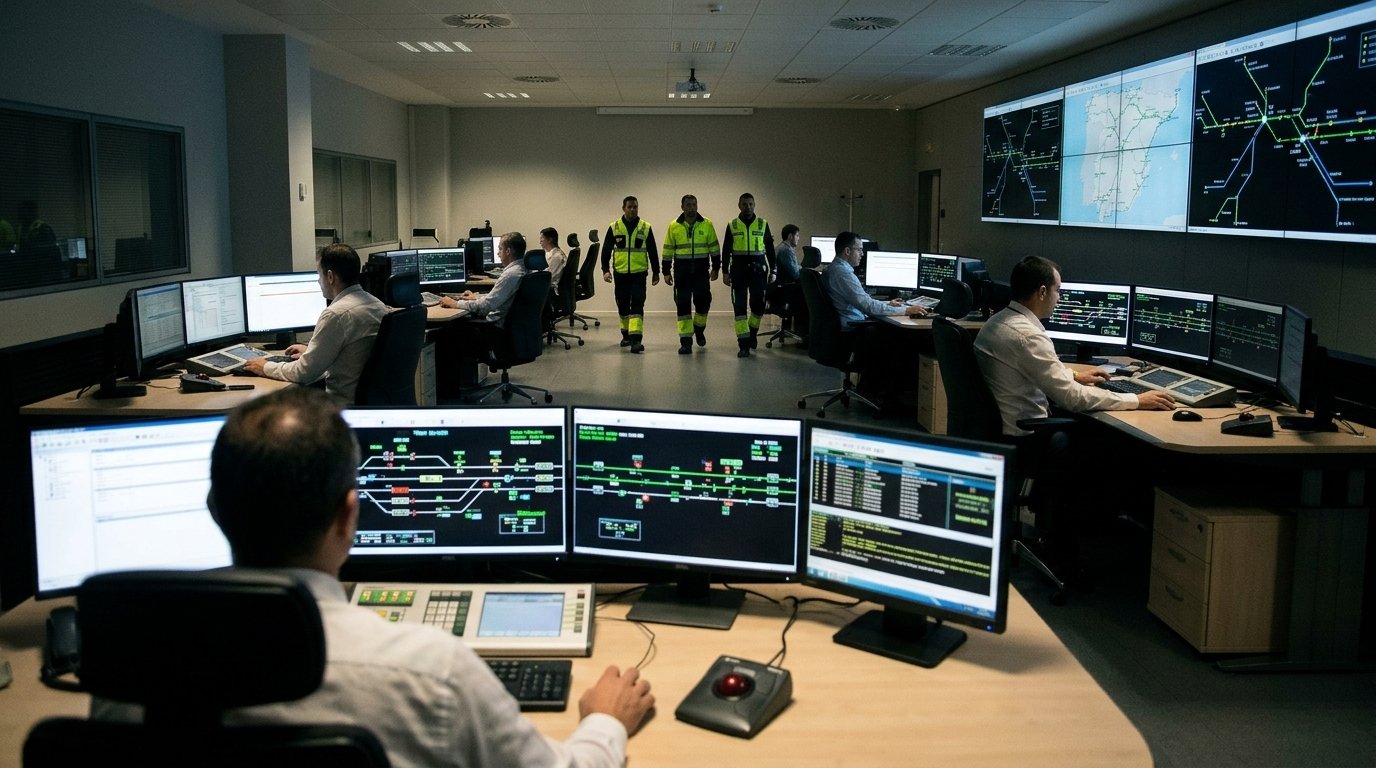
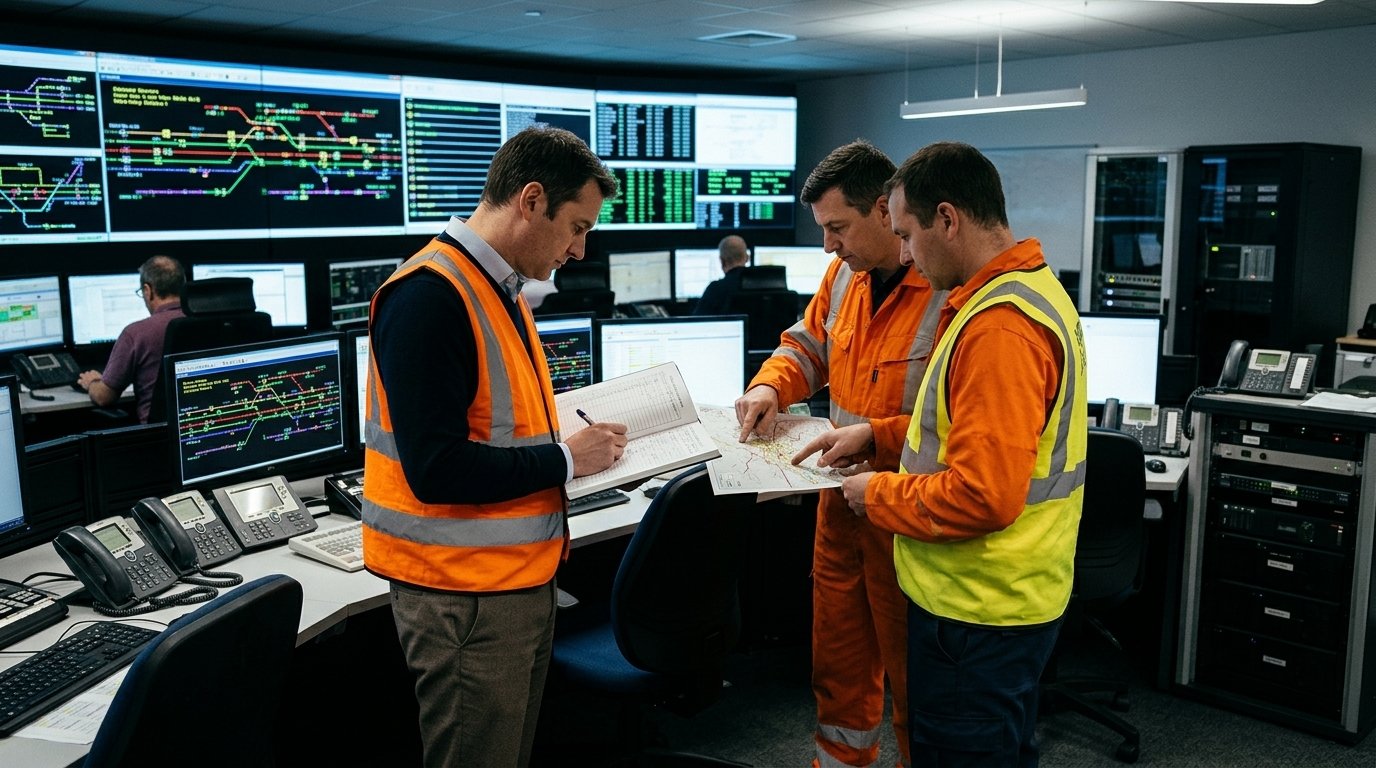
Signaling systems normally rely on automated track occupancy detectors, but manual overrides allow dispatchers to force signals green during unexpected delays. When controllers bypass safety interlocks without verifying an empty line, catastrophic collisions occur within minutes. In our experience, technical automation fails whenever human operators override safety barriers without independent confirmation.
- Track safety monitoring: Follow official judicial reports to see whether manual dispatch overrides bypassed automatic track protection systems.
Why Are Judicial Investigators Scrutinizing the Dispatch Center?
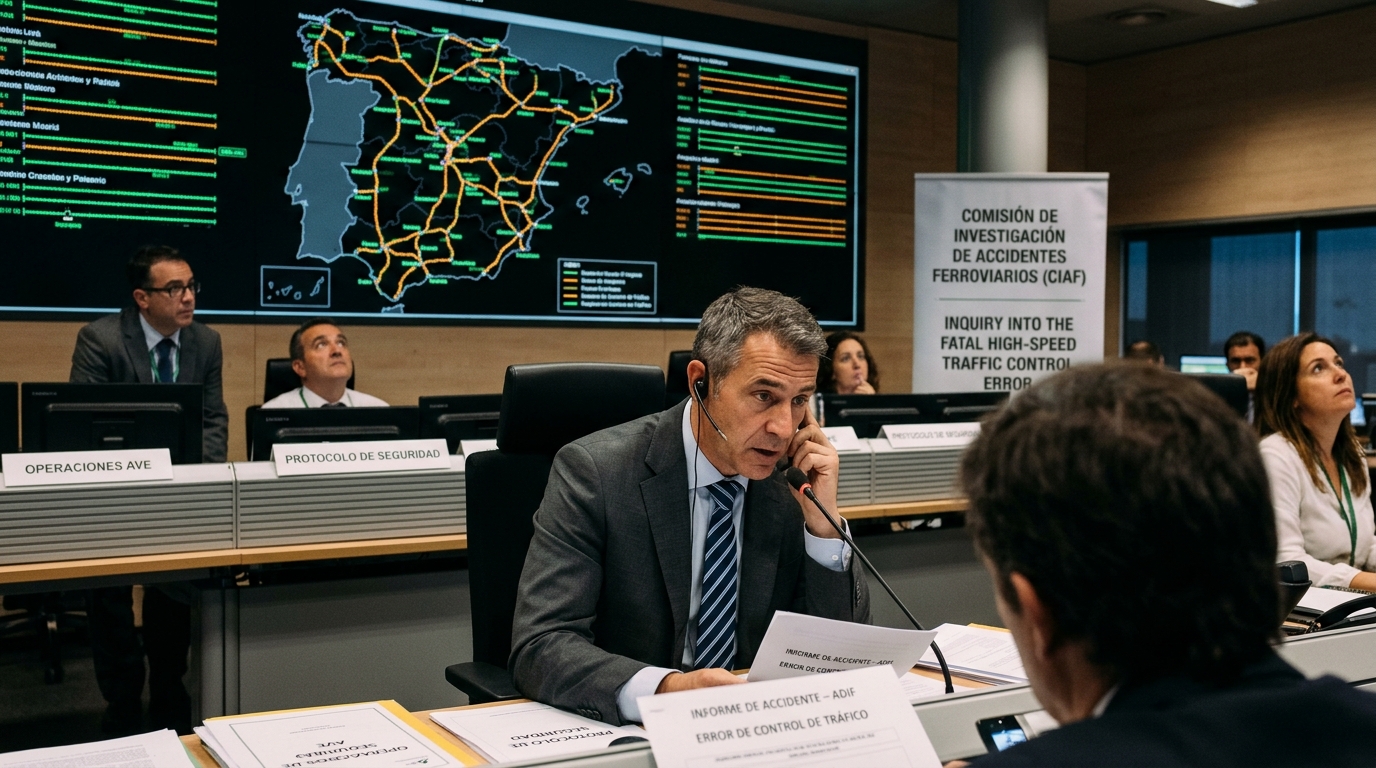
A designated judge will review dispatch audio, console logs, and supervisory decisions to determine whether controllers bear direct criminal responsibility for the collision. The transport minister announced the judicial intervention to examine how controllers authorized travel onto an occupied segment. Investigators seek to pinpoint where procedural protocols collapsed.
Judicial inquiries in public transit disasters establish whether disaster stems from individual negligence or systemic operating failure. Magistrates dissect communication recordings between dispatchers and drivers second by second. This rigorous legal review strips away institutional deflections and holds operational personnel directly accountable under transport safety statutes.
- Regulatory compliance checks: Review public inquiry announcements to verify whether rail operators update emergency communication protocols following judicial findings.
How Do Rail Systems Prevent Similar Routing Failures?
Railway networks depend on layered fail-safes where automated track sensors, physical block signaling, and strict controller verification protocols prevent overlapping train movements. When one mechanism falters, backup redundancies must halt approaching traffic automatically. The Spanish disaster shows that human override errors can dismantle these vital safety barriers.
Secondary safety nets require continuous electrical track circuits that detect wheel axles and instantly throw warning signals to red. If controllers bypass automated alarms during unexpected stalls, safety disintegrates. Transit agencies must eliminate single-operator override authority so no individual controller can clear a high-speed path into occupied space.
- System redundancy audits: Insist that regional transit boards require dual-operator authorization for every manual override of track occupancy warnings.
FAQ
Who is conducting the investigation into the crash?
A judicial magistrate is leading the inquiry into controller conduct, as confirmed by Spain's transport minister. The judge will examine dispatch records, console actions, and communications to establish whether individual operators committed criminal negligence by clearing high-speed travel into an occupied track.
Why was high speed authorized for the train?
Controllers issued a high-speed authorization despite an earlier convoy stalling directly on the track ahead. The New York Times reported that transport officials identified this directive as a central failure, prompting legal investigators to examine why operators bypassed or ignored standard spacing procedures.
How do manual overrides affect railway safety?
Manual overrides allow dispatch staff to bypass automated red signals during track maintenance or switch malfunctions. When controllers misuse these manual commands without physically confirming that a line is vacant, they disable automatic train protection and place trains on direct collision courses.
Rail travel remains one of the safest transport modes globally, but human error inside control hubs exposes severe systemic vulnerabilities. As judicial investigators examine the exact commands that led to this tragedy, railway authorities across Europe must enforce stricter manual override protocols to protect passenger lives.
Stay informed with accurate, up-to-date global news coverage.
Sources
- Traffic Control Errors Caused Spain’s Deadly Train Crash, Official Says (NYT > World News): https://www.nytimes.com/2026/10/30/world/europe/spain-crash-contoller-errors.html