

Key Takeaways
- At least thirty seven people died following a destructive missile strike on a military depot near civilian housing in Kyiv.
- Hundreds of local residents evacuated their homes after explosions triggered structural collapses and severe property damage.
- Authorities launched an immediate formal investigation into why heavy weaponry was stored close to populated neighborhoods.
- International security observers note that urban military logistics remain a critical vulnerability in the ongoing conflict.
What Caused the Devastating Kyiv Weapons Depot Strike?
A massive missile strike hit a heavily stocked military weapons depot situated near a densely populated residential zone in Kyiv, resulting in thirty seven confirmed fatalities and hundreds of emergency evacuations. Investigators from the state security apparatus confirmed that munitions stored on site detonated sequentially, producing secondary blasts that shattered windows and damaged apartment blocks across a wide radius.
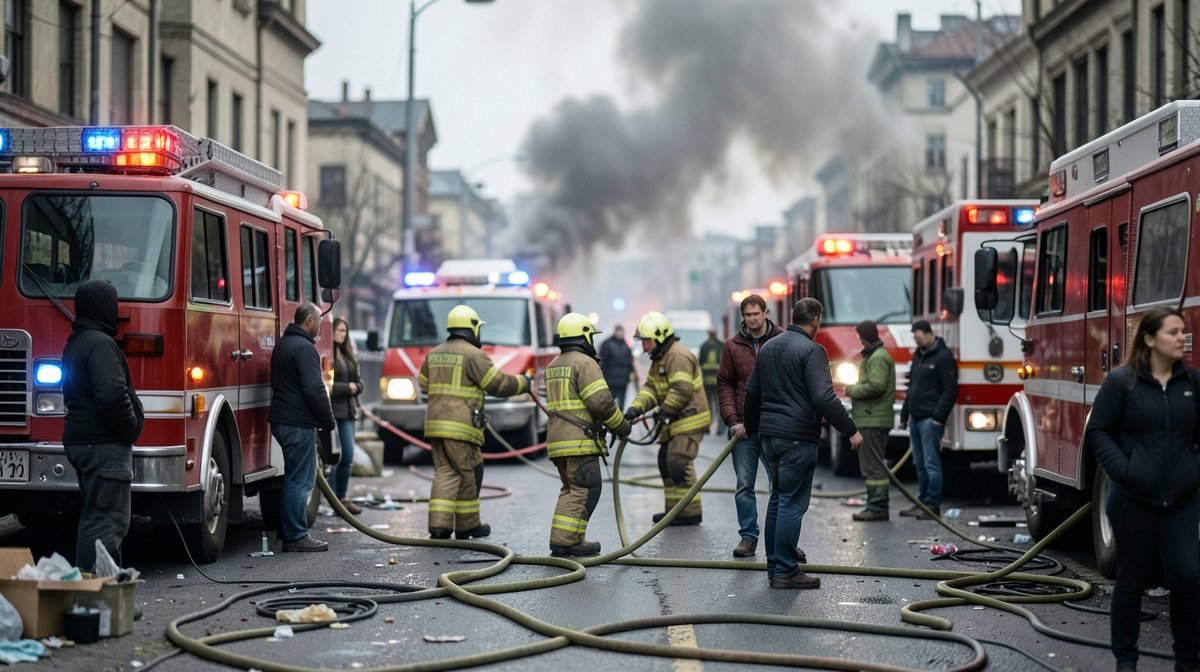
Emergency services responded within minutes, establishing rescue perimeters while firefighters battled secondary blazes triggered by the cascading explosions.
- Watch for: Official updates from municipal authorities regarding structural safety assessments and temporary shelter locations for displaced families.
How Are Local Authorities Managing the Emergency Evacuations?
Municipal disaster response teams relocated hundreds of displaced residents to community centers and temporary schools established outside the blast radius. Transport units deployed buses to clear the immediate hazard zone while medical personnel treated dozens of patients for smoke inhalation and shrapnel injuries at nearby hospitals.
City officials coordinated with utility providers to shut off gas and electrical lines near the impact site to prevent secondary fires from damaging surviving residential structures.
- Do this: Monitor municipal emergency channels for instructions on safe return routes and restricted exclusion zones.
What Lies Ahead for Urban Defense Logistics?
Government ministers announced a sweeping military audit to review the placement of defense supply hubs within municipal boundaries across the country. Military planners face mounting pressure from civilian lawmakers to relocate heavy ordnance storage facilities away from civilian population centers to prevent similar tragedies. Independent defense analysts suggest that decentralizing supply chains will increase operational complexity but remain necessary to protect urban populations from collateral damage during future aerial engagements.
- The move: Track upcoming parliamentary debates on defense infrastructure reform and urban security zoning laws.
FAQ
How many casualties resulted from the Kyiv depot strike?
Official reports confirm at least thirty seven fatalities alongside hundreds of injuries and widespread displacements among nearby civilian residents.
Why was a military depot located near residential areas?
Investigators have opened a formal inquiry into the operational decisions that placed munitions storage facilities inside urban municipal zones.
What assistance is available for evacuated residents?
Local authorities established emergency shelters offering food, medical care, and temporary housing for everyone displaced by the explosions.